The Seoul-Kyiv agreement to keep the transfer of two North Korean prisoners of war confidential was to be kept indefinitely to protect the soldiers and their families, a senior government official said Friday.
The official said the government had never planned to publicly announce the transfer, stressing that confidentiality had been a central condition of the agreement between the countries.
"We intended to keep it confidential until the very end, if possible," the official told reporters, on condition of anonymity.
The remarks came as South Korean Foreign Minister Cho Hyun and his Ukrainian counterpart, Andrii Sybiha, continued discussions over how Kyiv should respond to Seoul's demand for an acknowledgment and apology following Ukrainian President Volodymyr Zelenskyy's disclosure of the transfer at the UN General Assembly last month.
The official said the two ministers had been communicating through text messages to discuss the wording and manner of a possible Ukrainian statement, including an apology.
"We have been discussing how Ukraine will make its announcement, including an apology," the official said, adding that the ministers had been coordinating the tone and level of the response.
The discussions have sought to reconcile Seoul's demands with what Kyiv is prepared to accept, taking into account Ukraine's ongoing war with Russia and other diplomatic considerations, including the Ukrainian government's need to save face, according to the official.
He emphasized that the two governments had explicitly agreed to keep the entire matter involving the North Korean prisoners confidential, rejecting Kyiv's earlier denial that such an agreement existed.
The official said the final agreement on the transfer had been reached during a meeting between the two countries' foreign ministers in South Korea in June.
During those discussions, Seoul made clear that the transfer was being pursued in accordance with both international law and South Korea's Constitution, and that it would not be linked to any compensation or concessions for Ukraine, he added.
The two North Korean soldiers were captured in January 2025 while fighting alongside Russian forces in Russia's Kursk region. They arrived in South Korea in mid-September, according to South Korean officials and lawmakers.
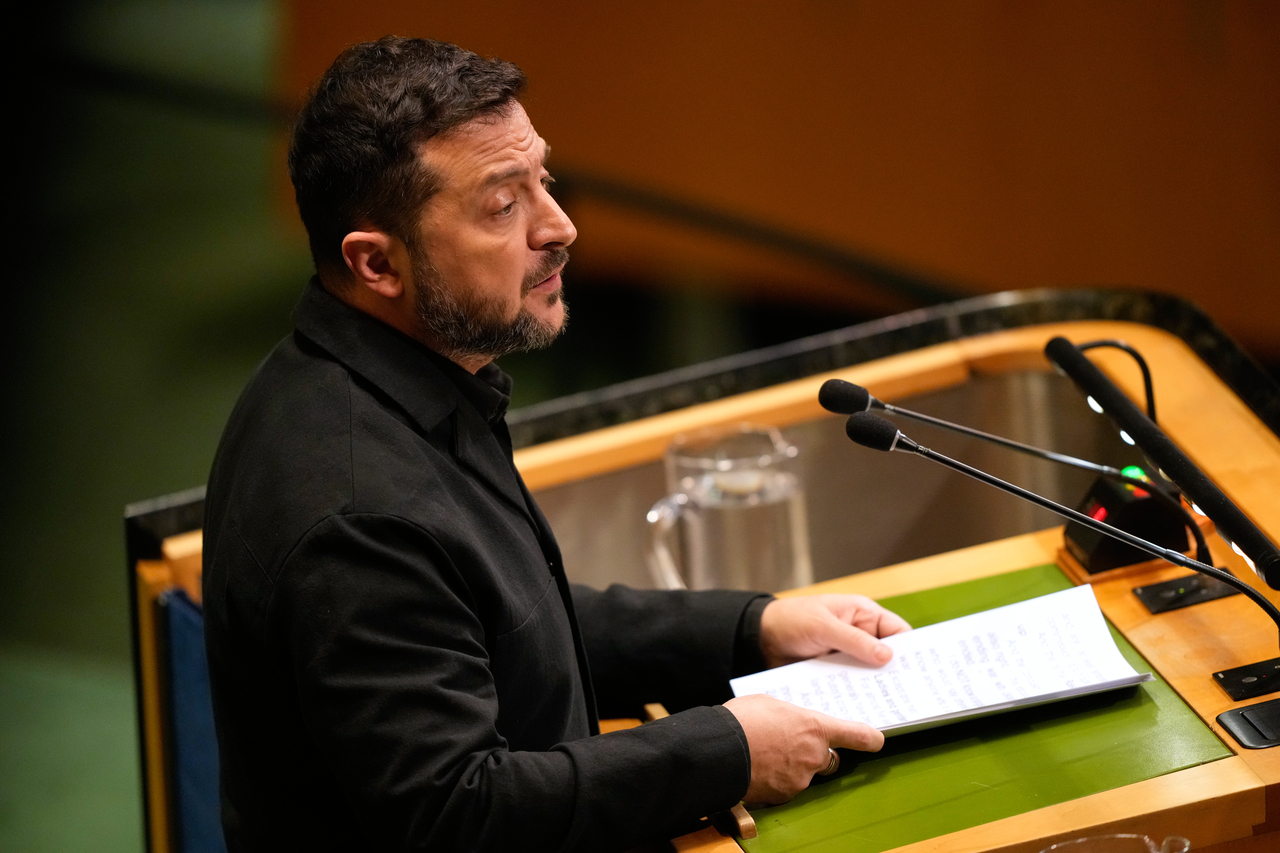
The transfers became public after Zelenskyy disclosed them during his address to the UN General Assembly in New York on Sept. 23, despite what Seoul maintains was a mutual agreement to keep the operation confidential.
The disclosure subsequently escalated into a diplomatic dispute after Ukraine's presidential office denied that had been any confidentiality agreement.
President Lee Jae Myung sharply criticized Ukraine in a post on X on Friday, accusing Kyiv of unilaterally disclosing the transfers and then effectively portraying him as a liar by denying the agreement.
Lee said Ukraine had initially requested confidentiality and that Seoul had agreed, only for Kyiv to make the information public.
He also expressed anger over subsequent Ukrainian remarks concerning the possibility of a military confrontation between the two Koreas.
The president appeared to be referring to comments by Kyrylo Budanov, head of Ukraine's presidential office, who recently suggested that North Korea's participation in Russia's war against Ukraine was intended primarily to prepare its military for potential combat operations closer to home.
Lee accused Ukraine of raising the prospect of an imminent inter-Korean military clash rather than acknowledging the confidentiality agreement and issuing an apology.
He warned that South Korea would take additional measures if Kyiv continued to refuse to acknowledge the agreement and apologize publicly, describing the dispute as a matter involving the South Korean people and the country's national dignity.
Despite the increasingly sharp exchange, Ukraine's foreign minister signaled a willingness to resolve the disagreement.
Speaking to reporters Thursday, Sybiha described the dispute as a diplomatic misunderstanding and expressed hope for a swift resolution, while emphasizing South Korea's importance to Ukraine and his desire to maintain bilateral cooperation, according to RBC-Ukraine.
The senior South Korean official similarly stressed that Seoul wanted to address the dispute without allowing it to develop into broader friction with Ukraine.
While maintaining its demand for an acknowledgment and apology, the government was also considering Ukraine's circumstances and the importance of preserving bilateral relations, he said.
Seoul seeks to accelerate security talks with Washington
Separately, Cho said Friday that South Korea would seek to accelerate security negotiations with the United States following the formal announcement of the first projects under Seoul's strategic investment commitments.
Cho described the investment initiative as a historic milestone in efforts to transform the bilateral alliance into a future-oriented comprehensive strategic partnership.
He said progress on investment negotiations had helped create momentum for follow-up discussions on the agreements reached by Lee and US President Donald Trump, as outlined in their joint fact sheet issued in November 2025.
Seoul intends to intensify consultations on conventionally armed nuclear-powered submarines, civilian uranium enrichment and spent nuclear fuel reprocessing, shipbuilding cooperation and the transfer of wartime operational control, Cho said.
The senior Foreign Ministry official acknowledged that working-level security discussions had continued but had not advanced as quickly as Seoul had expected.
The official said the latest summit between Lee and Trump had helped address concerns surrounding the pace of negotiations and that Seoul intended to resume substantive discussions as soon as possible.
The government also played down concerns that differences over a proposed investment in Alaska's liquefied natural gas project could complicate security negotiations.
The official said Seoul had not had sufficient time to comprehensively review the project's commercial viability before the latest investment announcements, rather than the two countries having fundamentally different positions.
He added that Industry Minister Kim Jung-kwan had informed US Commerce Secretary Howard Lutnick that South Korea would follow the necessary procedures before deciding whether to invest.
The official said he saw little possibility of the Alaska issue developing into another major point of contention between the two countries.
The first confirmed project under the bilateral strategic investment initiative is a $22.3 billion combined-cycle gas power plant in Texas intended to supply electricity to artificial intelligence data centers.
The two countries have also reached a broad agreement on a framework for cooperation involving eight nuclear reactors, although final investment decisions on individual projects remain pending. They have agreed to begin reviewing the commercial viability of the proposed Alaska LNG project.
mkjung@heraldcorp.com