South Korea plans to invest in Honam AI infrastructure to create a new industrial growth axis outside the Seoul metropolitan area, linking data centers with advanced manufacturing and region-specific industries, a senior industry ministry official said Thursday.
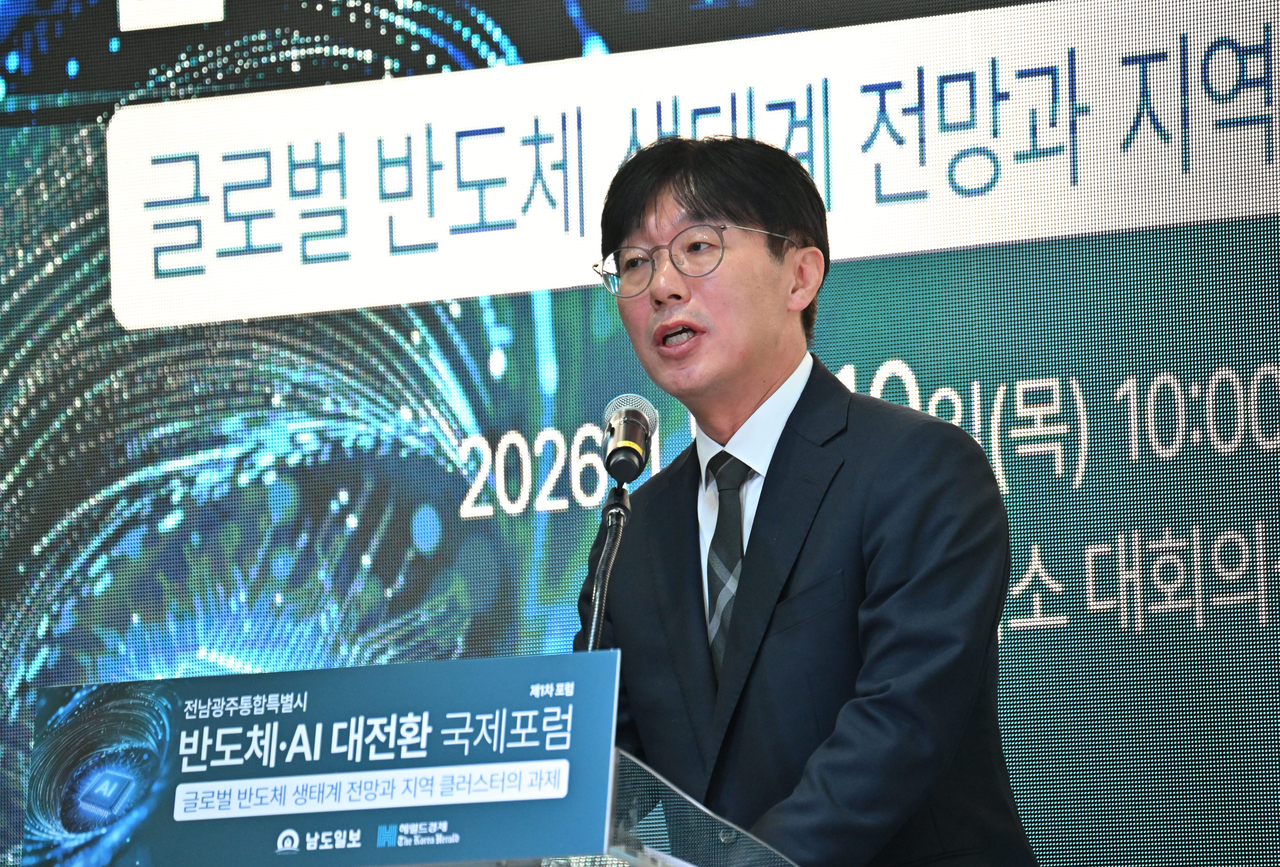
Lee Min-woo, head of the industrial growth office at the Ministry of Trade, Industry and Resources, said the government sees regional investment as part of its response to slowing potential growth and the rapid restructuring of global industry around AI.
“As growth centered on the Seoul metropolitan area reaches its limits, we believe the answer for Korea’s future industrial competitiveness lies in the regions,” Lee said at the Jeonnam-Gwangju Integrated Special Metropolitan City Semiconductor and AI Transformation Global Forum.
The government’s strategy combines three major projects in semiconductors, physical AI and AI data centers with growth industries tailored to different regions.
Honam is expected to host significant AI computing investment. Lee said SK plans to invest 70 trillion won in a 1-gigawatt AI data center, while Samsung SDS is planning a 210-megawatt facility involving about 17 trillion won.
“We want to build AI data centers in Korea so domestic companies have a place to train and run AI models,” Lee said, adding that the government wants to build an AI business ecosystem around that infrastructure.
The strategy extends beyond computing capacity. Lee said domestic suppliers should capture demand for the power, cooling and other equipment required by data centers.
“AI data centers themselves are important, but we also need to localize related industries such as power and cooling,” he said.
Honam’s designated growth areas also include future power systems, advanced semiconductor manufacturing, AI and autonomous driving, next-generation vaccines and precision medicine.
Lee framed the regional push as part of a larger economic test.
“Whether Korea can break out of low growth and gain the upper hand in the AI transformation,” he said, “the answer could come from here in Jeonnam-Gwangju.”
mjh@heraldcorp.com