Middle schoolers retrace steps of detainees at former state interrogation site ahead of anniversary of June 10 Democratic Uprising
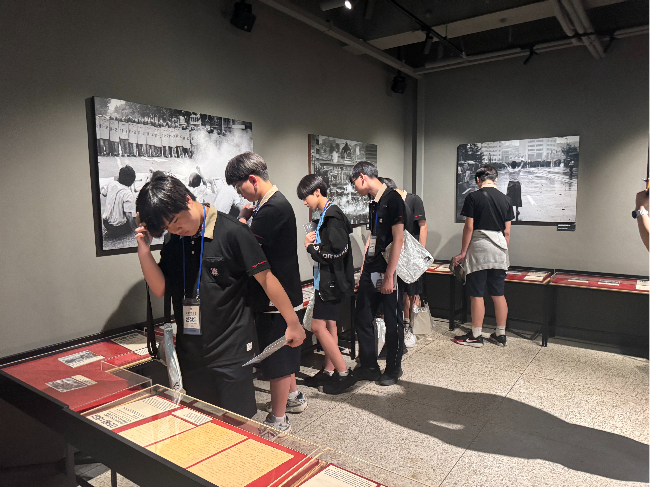
Taking in the exhibits on activists who fought for and won democracy in South Korea before he was born, one middle schooler doubted he could have done the same.
“If I had been a college student in 1987, I don’t think I would have been able to join the protests or take a leading role in the pro-democracy struggle because I would have been afraid of torture, guns and tear gas,” said 15-year-old Kang Hyun-joon.
“But I think I would have tried to work for democracy in less visible ways.”
Kang had just finished touring the Democratization Movement Memorial Hall in Yongsan-gu, central Seoul. The site had once served as an anti-communist investigation office and became a symbol of state violence under South Korea’s authoritarian rule.
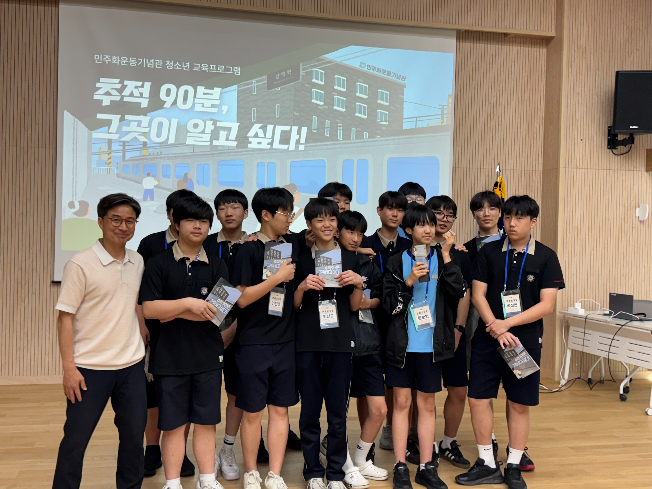
Kang was one of 14 members of Peacemakers, a history club at Youngsung Middle School in Seongnam, Gyeonggi Province, who visited the memorial on June 1 as part of a school field trip ahead of the 39th anniversary of the June 10 Democratic Uprising.
The memorial stands on the site where Park Jong-chul, a Seoul National University student activist, was tortured to death in 1987. His death helped ignite nationwide protests against South Korea’s military-backed authoritarian rule, helping bring an end to then-President Chun Doo-hwan’s regime.
Walking the path of detainees
During the visit, students were asked to take on the role of reporters, recording traces of Korea’s democratization movement embedded in the site.
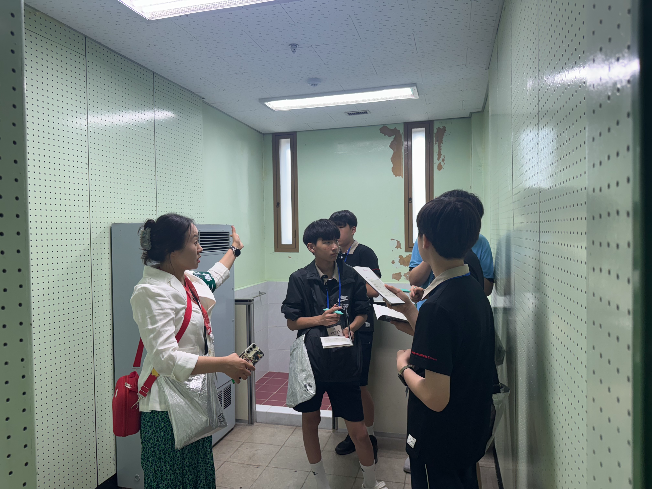
They followed the same route once taken by those brought to the facility for questioning, retracing what detainees would have experienced after arriving at the former investigation office.
Detainees, often blindfolded, were brought in through the back entrance before being led up a narrow, steep spiral staircase designed to disorient them.
The students then rode a prisoner transport elevator, barely large enough to fit five adults, to the fifth-floor interrogation rooms, where 15 rooms have been restored to their original form.
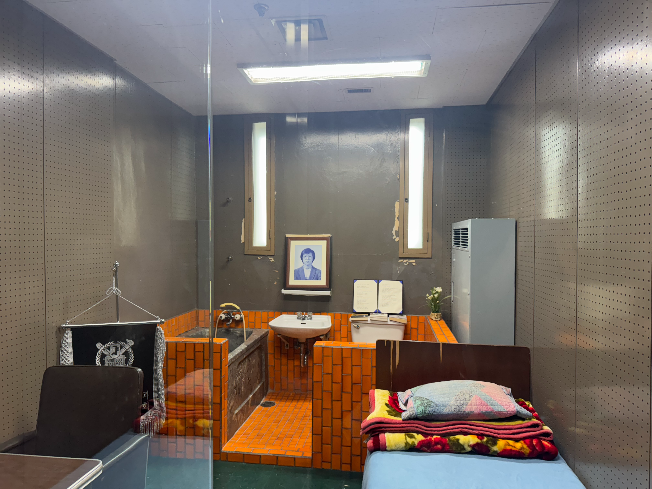
The rooms had thick walls, and windows less than 30 centimeters wide — a structure designed to prevent escape.
The students stepped into the interrogation rooms and examined a bathtub used to torture detainees, carefully documenting the conditions they would have faced.
The chatter that had filled the group faded when they reached Room 509, where Park’s photo and a memorial banner marked the place where he died.
They later viewed exhibits on Park and other figures in Korea’s democratization movement, along with records of state violence and objects used in torture, gaining a closer look at the brutality of the era.
“I knew the incident was serious, but I did not fully understand its gravity because I had learned about it only through books and movies,” Kang said.
“Experiencing it firsthand here made me realize how much more tragic it was, and how strongly people desired democracy back then.”
When history leaves the textbook
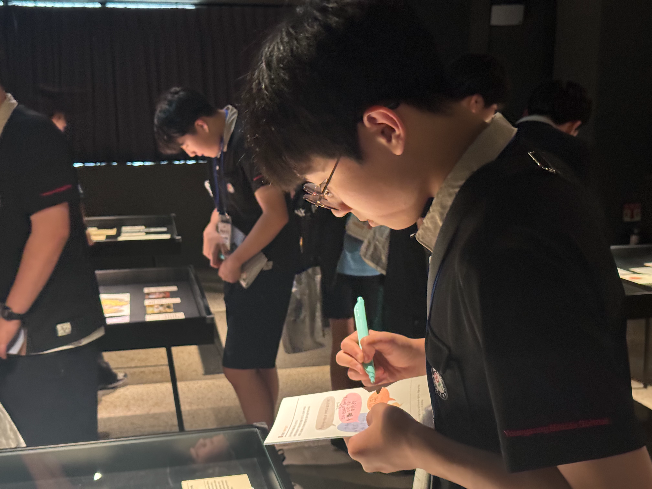
“I realized it was an even more depressing and heartbreaking incident than I had previously thought,” said Kim Soo-hyun, a 14-year-old student from the same middle school. “I wish there were more field trips like this.”
Peacemakers was founded to help students better understand and experience history outside the classroom.
In April, members ran 4.3 kilometers to commemorate the April 3 massacre in Jeju and operated booths at school to explain historical events to their peers.
“I personally believe students can truly learn history only when they leave the classroom and go beyond textbooks,” said Lee Jong-kwan, a 46-year-old history teacher at the middle school who oversees the club.
“Students understand better when they witness a place themselves and experience it with their senses.”
But Lee said such field trips were a challenge to organize.
“There is a lot of apprehension surrounding student safety,” he said.
He added that it was difficult to set aside a school day for such events, especially when curricula across subjects are tightly packed.
“That means we have to take students on a weekend, but teachers may have plans, and students are also busy attending private academies,” Lee said.
He also cited limited school budgets as another obstacle.
The Education Ministry has been expanding support for hands-on history learning, providing financial support for field trip expenses and history club activities. Youngsung Middle School also received transportation funding.
The ministry plans to support more than 200 history-related field learning programs at schools nationwide this year and expand the number to more than 300 next year. It also plans to increase the number of sites available for such programs.
Learning about 1987 late
Lee said many middle school students are unable to learn about the June Democratic Uprising properly, even though it is an integral part of Korea’s modern history and is included in the curriculum.
According to Lee, the June Uprising is usually taught in the second semester of the third year of middle school.
However, many schools are unable to cover the material in depth because third-year students begin preparing for high school admissions around the same time.
“As a result, many teachers end up teaching the event through special occasion-based lessons around June 10,” Lee said.
Otherwise, he added, students may not encounter the material until their first year of high school.
Experts say a reform of the school curriculum is needed to better teach democratic citizenship to students.
“According to the current curriculum, middle school history education is focused on pre-modern history, while high school education is focused on modern and contemporary history,” said Ku Kyeong-nam, a history education professor at Dankook University. “That is why the proportion of modern and contemporary history education has decreased in middle schools.”
“Meaningful modern and contemporary history education can only occur after the curriculum is amended.”
seungku99@heraldcorp.com