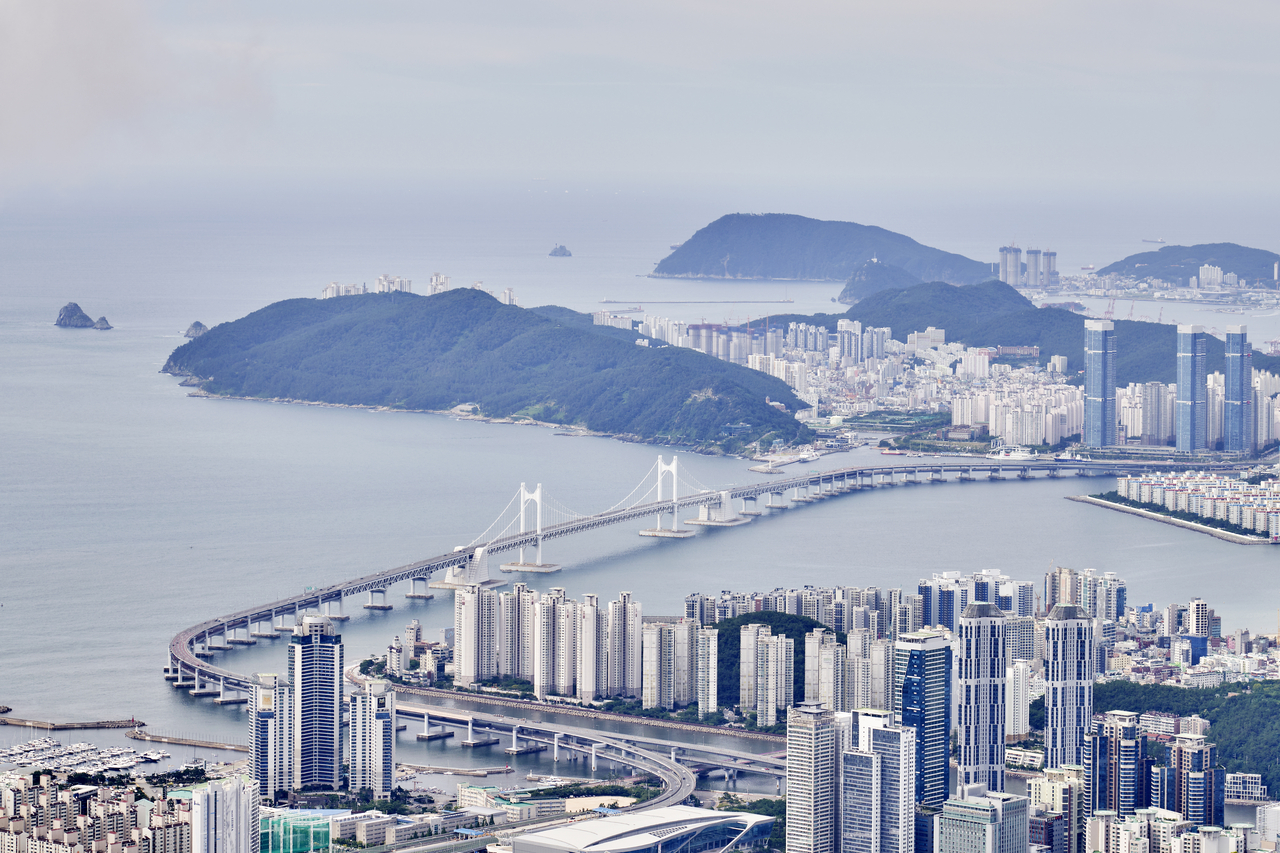
Busan seeks to capitalize on its growing tourism industry amid a surge in international visitors, but connections to the city continue to hinder its goal of attracting 5 million overseas tourists annually.
With the city’s foreign tourist base increasingly diversifying beyond its traditional Northeast Asian markets, experts say Busan needs more airlines operating direct routes and expanded access from the sea, alongside the long-delayed construction of a new international airport.
Heading to Busan, still through Seoul
According to Busan city government data, the number of foreign visitors who entered Korea through other cities before traveling to Busan surpassed those arriving directly through Gimhae International Airport between January and March this year, accounting for 43.5 percent and 42.2 percent, respectively.
For all of last year, visitors entering through Gimhae accounted for 43 percent, while those arriving via other cities made up 42.9 percent.
As more travelers from regions outside Northeast and Southeast Asia visit Busan, many have had to rely on indirect routes through Seoul because of the lack of direct air connections to the city.
In March, the number of foreign visitors to Busan jumped 53.7 percent from a year earlier to 467,763. Travelers from France, the United States, Australia and Germany saw even sharper increases, rising 165.4 percent, 84.6 percent, 66.5 percent and 60.9 percent, respectively.
For visitors from those countries, Gimhae Airport remains one of the least-used entry points, as its international routes are still largely concentrated on nearby Asian destinations.
The airport has gradually expanded its international network in recent years, adding routes to Bali and Kazakhstan, while discussions continue over a possible Dubai connection. Still, limited flight frequencies and the lack of broader long-haul coverage continue to constrain Busan’s direct global connectivity.
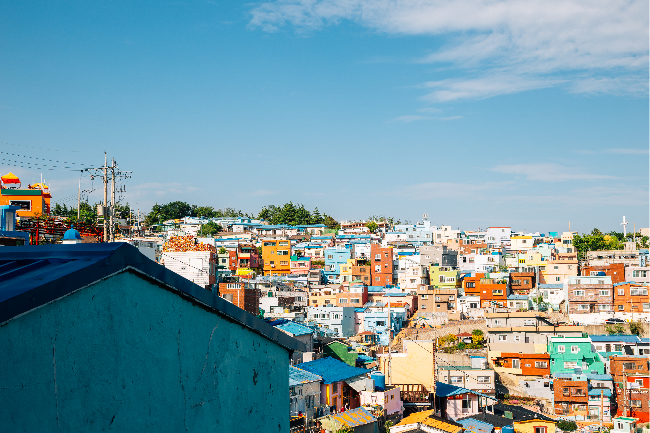
Gimhae bottlenecks cloud ambitions
Transport Minister Kim Yun-duk said in February that the government would expand international flights from regional airports to ease concentration in Seoul and Incheon. Busan has also set a target of attracting 5 million foreign visitors annually by 2028.
However, Gimhae Airport is already operating near full capacity.
Located close to densely populated residential areas, the airport is subject to a curfew from 11 p.m. to 6 a.m. Attempts to shorten the restriction by allowing flights from 5:30 a.m. faced strong opposition from nearby residents. The mountainous terrain around the airport also limits operations.
The airport’s aircraft handling capacity had already reached around 90 percent utilization in the 2010s, and it is now facing growing pressure amid surging travel demand to Korea’s second-largest city, known for its mountains, beaches and dense urban scenery.
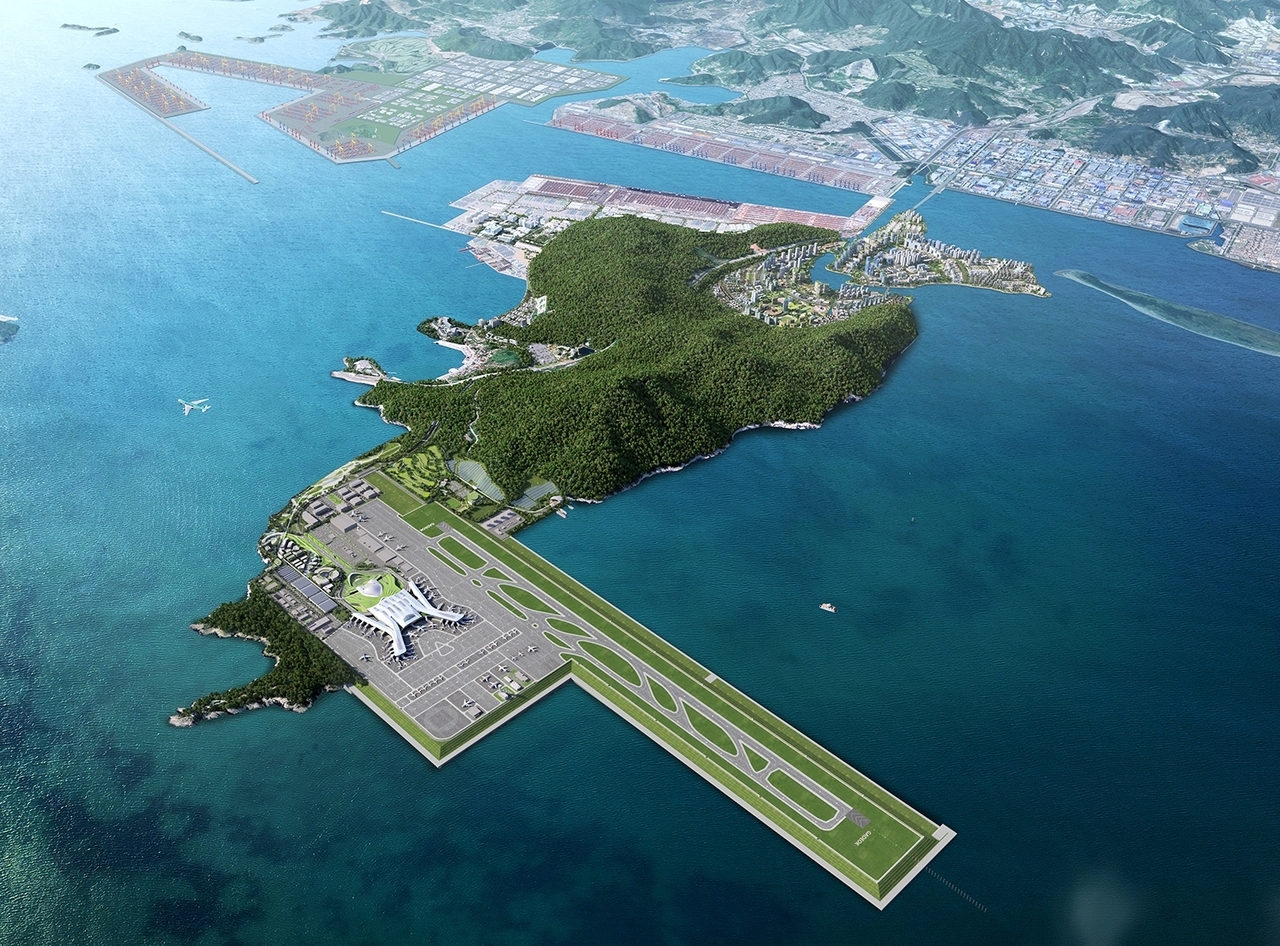
Plans to build a new airport on Gadeokdo, an offshore island less affected by residential noise concerns, gained momentum only after decades of delays and cancellations caused by political disputes and feasibility concerns. The project advanced after the National Assembly passed a special act supporting its construction in 2021.
Calls grow for short-term solutions
As travel demand spreads beyond Seoul, experts say immediate measures are needed to make better use of existing infrastructure before the new airport opens.
“Currently, Gimhae Airport’s international routes are largely designed around domestic demand for overseas travel and are mainly operated by Korean carriers,” Choo Seung-woo, a professor of hotel and convention management at Dong-Eui University, told The Korea Herald.
“Korean airlines have inherent limitations in significantly expanding the number of foreign visitors. Bringing in more foreign carriers that can directly transport overseas tourists to Busan would be a game changer.”
Experts also said that alongside steady progress on the Gadeokdo airport project, Busan should make greater use of its maritime infrastructure by attracting more cruise operators and expanding alternative direct entry routes into the city.
“If Busan succeeds in attracting cruise ships that use the city as a home port, it could bring in thousands of tourists at once,” Choo said. “Even before the new airport opens, cruises could help develop and sustain the region’s tourism infrastructure.”
He added that if Busan continued to develop its aviation and maritime sectors in a balanced way, the two could create long-term synergy even after the new airport opens, similar to the role maritime tourism continues to play in Tokyo.
forestjs@heraldcorp.com