South Korea’s Defense Ministry has resumed efforts to recover the remains of four members of the infamous “Silmido unit.”
The search comes more than five decades after they were secretly buried following their executions over a failed covert mission linked to inter-Korean tensions during the Cold War.
The ministry said Monday it held a ceremonial ground-breaking rite at Byeokje Municipal Cemetery in Goyang, Gyeonggi Province, before beginning excavation work at a site believed to contain the remains of the four operatives.
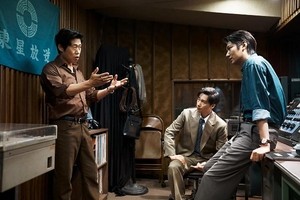
The excavation marks the latest attempt to locate the missing members of the unit, whose story later became widely known through the 2003 South Korean film Silmido. The case remains one of the country’s most controversial episodes involving state violence and human rights abuses during the authoritarian era.
The Silmido unit was established in April 1968 by South Korea’s intelligence authorities and the Air Force following a North Korean commando raid on Seoul earlier that year led by Kim Shin-jo. The secret unit consisted of 31 men trained for a retaliatory infiltration mission aimed at North Korea.
According to the Defense Ministry, seven members died during harsh training, while the remaining 24 were kept in near-total isolation on Silmido, a small island off South Korea’s west coast, for more than three years.
In August 1971, amid reports of brutal treatment and uncertainty over the mission’s future, the operatives killed guards and escaped the island, heading toward Seoul in an armed uprising now known as the “Silmido incident.” Most were killed during clashes with military and police forces in Seoul’s Daebang-dong area.
Four surviving members were later sentenced to death and executed in 1972. Authorities at the time neither informed their families of the executions nor returned the bodies, instead secretly burying them, according to the ministry.
The remains of 20 operatives killed during the clashes were previously recovered from Byeokje Municipal Cemetery, but the whereabouts of the four executed members have remained unknown for decades.
The Defense Ministry said excavation work at Byeokje cemetery will continue through Thursday before expanding later this year to two additional suspected burial sites: a former Air Force intelligence unit site in Seoul’s Guro-gu district and an area near the octagonal pavilion inside Incheon Family Park in Incheon.
Kim Mi-sung, the ministry’s director general for military human rights affairs, said during the ceremony that the government hoped the excavation would finally return the remains to their families.
“We pray for the souls of those who lost their lives in the Silmido incident and extend our deepest condolences to the bereaved families who have endured decades of pain and grief,” Kim said. “We sincerely hope the remains of the four men can finally be found.”
A Defense Ministry truth commission in 2006 recommended that the government apologize for human rights violations related to the incident and carry out efforts to recover the remains. The ministry formally issued an apology in the defense minister’s name during a memorial ceremony held in 2024.
flylikekite@heraldcorp.com