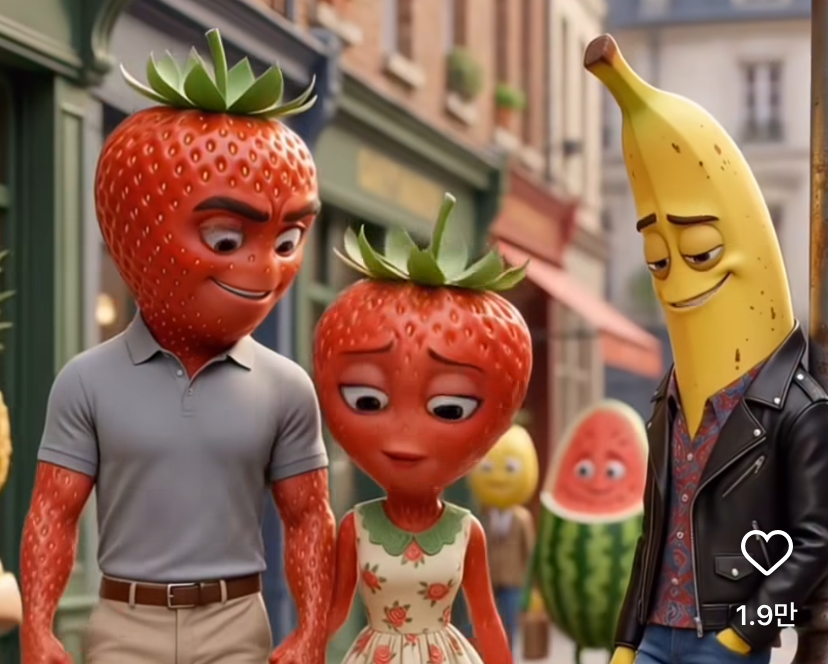
Artificial intelligence-generated videos featuring personified fruits caught in affairs and broken relationships are drawing millions of views on Korean social media, turning bizarre melodrama into one of the latest short-form trends.
But the trend is now facing scrutiny after a major fried chicken franchise copied the format in an advertisement, then deleted the video and apologized following criticism that it had borrowed from provocative content easily accessible to children.
Pelicana, a nationwide chicken franchise, posted an apology on its Instagram account Saturday after removing an AI-generated short-form video depicting human characters with fried chicken-shaped heads engaging in extramarital affairs.
In the video, a husband represented by plain fried chicken discovers that his wife had an affair with a piece of yangnyeom chicken, or spicy seasoned fried chicken, after their newborn baby is shown covered in the sauce. The husband later falls in love with a pelican, the brand’s mascot, who appears as a doctor during the delivery scene.
“The video was posted without sufficient consideration regarding the appropriateness of its expressions and the social perception surrounding such content during the production process,” the company said in its apology.

The ad parodied a recent wave of AI-generated videos featuring human-like fruit characters involved in affairs with other fruits. Many follow a similar plotline, with a partner discovering infidelity after a baby is born who resembles a different fruit, leaving the betrayed character heartbroken.
The trend, which first appeared on Korean social media earlier this year through videos produced in foreign languages, has recently spread further with Korean subtitles.
Its presence became particularly noticeable in early May, with searches for “adultery fruit” in Korean on social media platforms showing multiple videos with millions of views.
Many reaction videos and posts describe the provocative plots and imagery as entertaining or addictive. Others have voiced discomfort over the content, as reflected in criticism of Pelicana’s deleted advertisement.
Some critics have also raised concerns over misogynistic undertones, noting that many of the videos portray female characters cheating on their husbands.
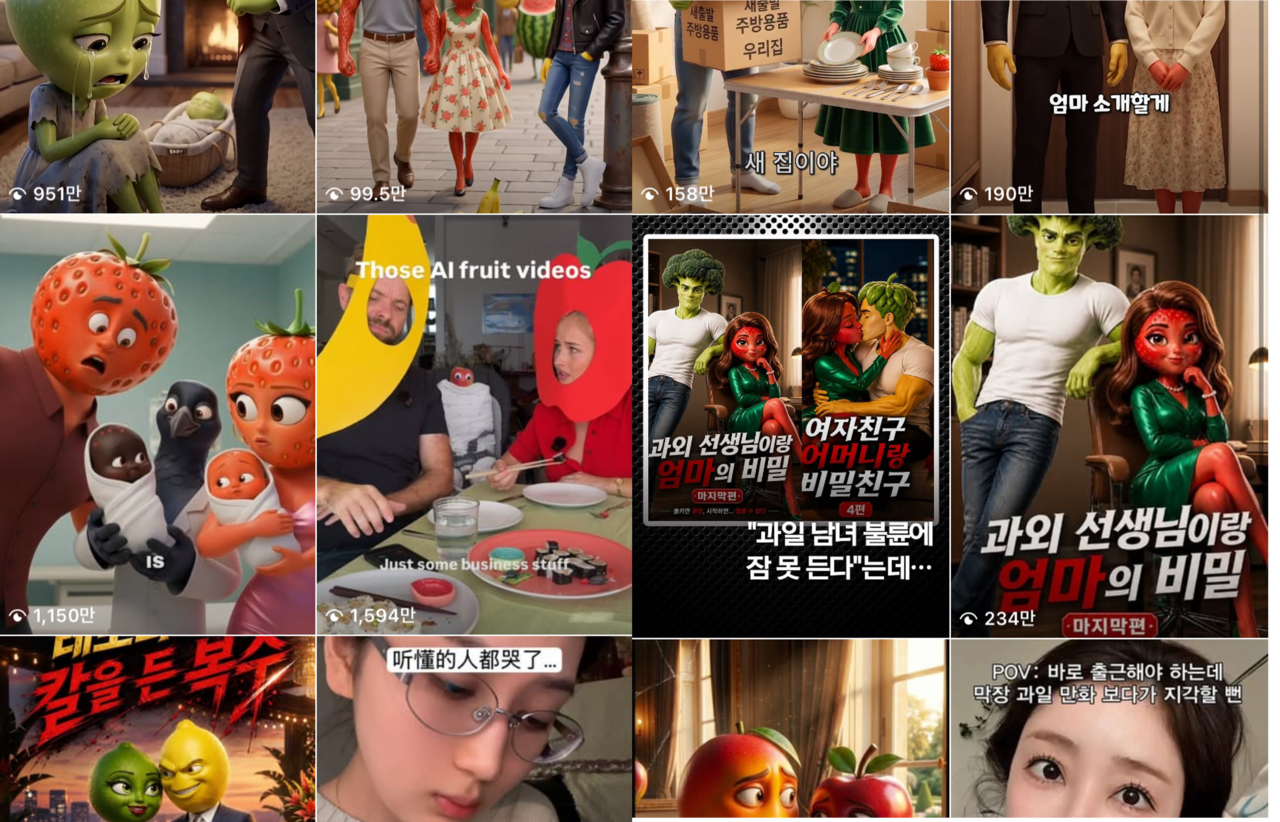
Experts have warned that the animated format may make the content more accessible to children, potentially exposing them to sexualized or morally confusing storylines. Nearly half of upper-grade elementary school students use smart devices, such as smartphones and tablets, for more than two hours a day, according to the Korean Teachers and Education Workers' Union.
Lim Myung-ho, a psychology professor at Dankook University, told local media that repeated exposure to sensational and unethical content from a young age could affect children’s cognitive and emotional development. He said adolescents are shaped not only by direct experiences but also by indirect exposure.
“Not only during the ages of 6 to 12, when the frontal lobe is actively developing, but even after the age of 14, when brain development continues, parental intervention to limit exposure to unethical social media content is necessary,” he said.
forestjs@heraldcorp.com