Parents’ Day on May 8 brings carnations, gifts and family meals across S. Korea, a yearly ritual of thanking one’s parents
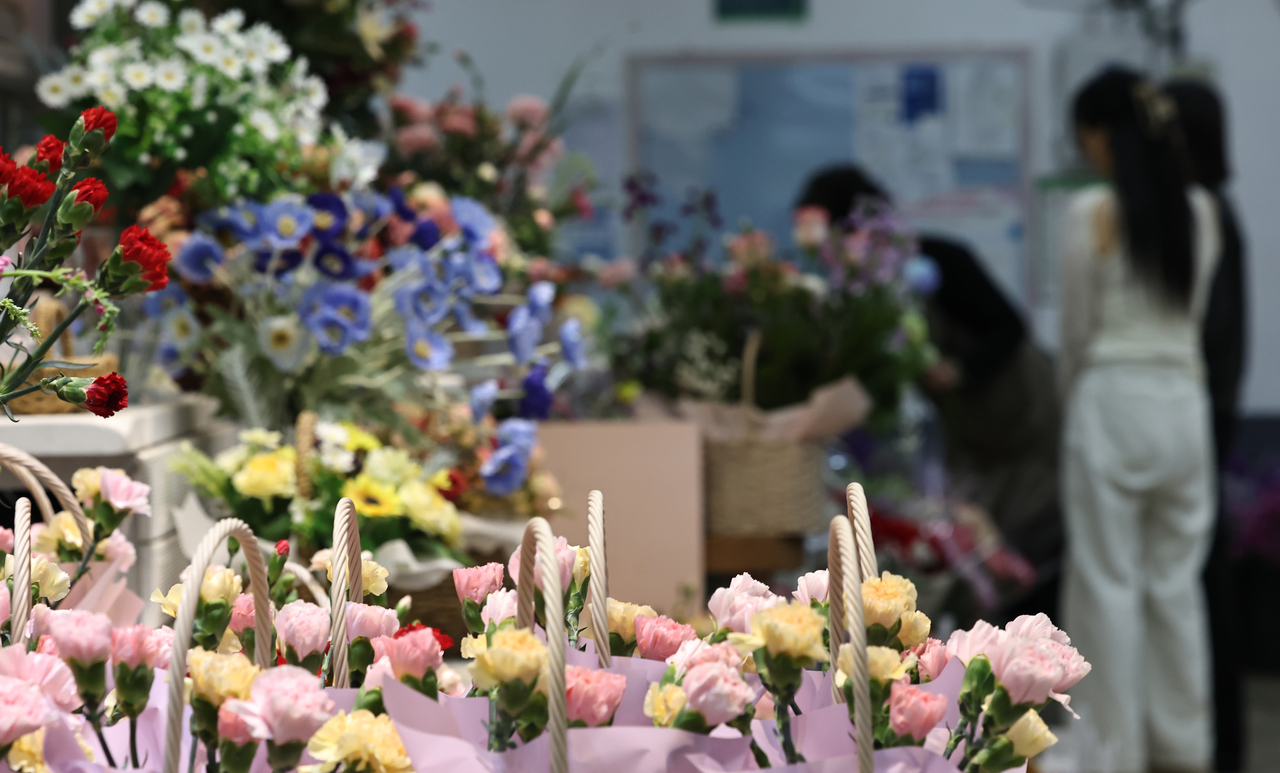
May 8 paints South Korea red with carnations — in shop windows, on lapels and in carefully prepared bouquets — as families turn to the question of how to thank their parents.
Parents’ Day reflects the country’s long-standing emphasis on filial piety, shaped by Confucian values that place respect for elders at the center of family life. Pinning a carnation on a parent’s chest or sharing a meal has long been the most common way of expressing that respect.
Today, approaches are shifting. Some look for more practical ways to show gratitude, such as cash gifts, while others treat the day as a special occasion or a yearly obligation. Others emphasized everyday gestures over special events.
The Korea Herald spoke with five young Koreans about how they mark the day.
It's about making time
Jung Jun-seo, a 28-year-old Ph.D. student, plans to take his parents out for a meal, though he says he is not particularly attached to marking Parents’ Day.
“To be honest, it’s not something I’ve really celebrated much,” he said. “For me, it’s the small, everyday gestures that matter more.”
He added that approaches to Parents’ Day vary depending on individual preference and family culture. “Some people prefer to show appreciation through everyday gestures or spontaneous gifts, while others place more importance on marking the occasion,” Jung said.
He also pointed to upbringing as a factor. “One of my colleagues never misses special occasions. He’s very good at keeping track of them. I think part of it comes from how you’re raised. If your family doesn’t make a big deal out of these days, you don’t feel much need to,” he said.
For Kim Yun-hu, 26, a master's student, distance has changed how he spends Parents' Day.
“Since my parents live in China, I haven’t usually been able to spend the day with them. But last year, my mother visited Korea, so I bought her flowers and took her out for sushi. It’s her favorite,” he reminisced.
"When we lived together, I would always get flowers for them. But now that we are apart, I usually just give them a call instead."
Despite these changes, Kim went on to say that the day still serves a special purpose, even in its simplest form.
“I think Parents’ Day is a good excuse to express gratitude. I’m still a bit shy about writing letters, so I stick to giving flowers,” he said.
“Even just saying ‘Happy Parents’ Day’ feels a little awkward, so I ask about their day or what they had for dinner. It’s ordinary conversation, but the message gets through,” Kim added.
Lee Si-hoon, a 30-year-old corporate worker, also plans to take his parents to a fine dining restaurant in Seoul’s Gangnam.
“When I was young, I remember making paper carnations and writing letters for my parents at school. But now, I don’t get to spend much time together with my parents during the week, so I wanted to do something a bit more special,” Lee told The Korea Herald. “My family isn’t big on taking pictures, but we plan to take one after lunch at a nearby self-service photobooth to cherish the memory,” he added.
As an only child, Lee said he wants to spend as much time as possible with his parents, who he currently lives with, before getting married.
“Parents’ Day used to feel more formal when I was younger. But now, I’m getting to realize it’s more about doing what you can, even if that just means checking in and making sure they are doing okay,” Lee said.
“At times, I feel like the time I have with my parents is limited. I don’t want to leave any regrets.”
Planning something special
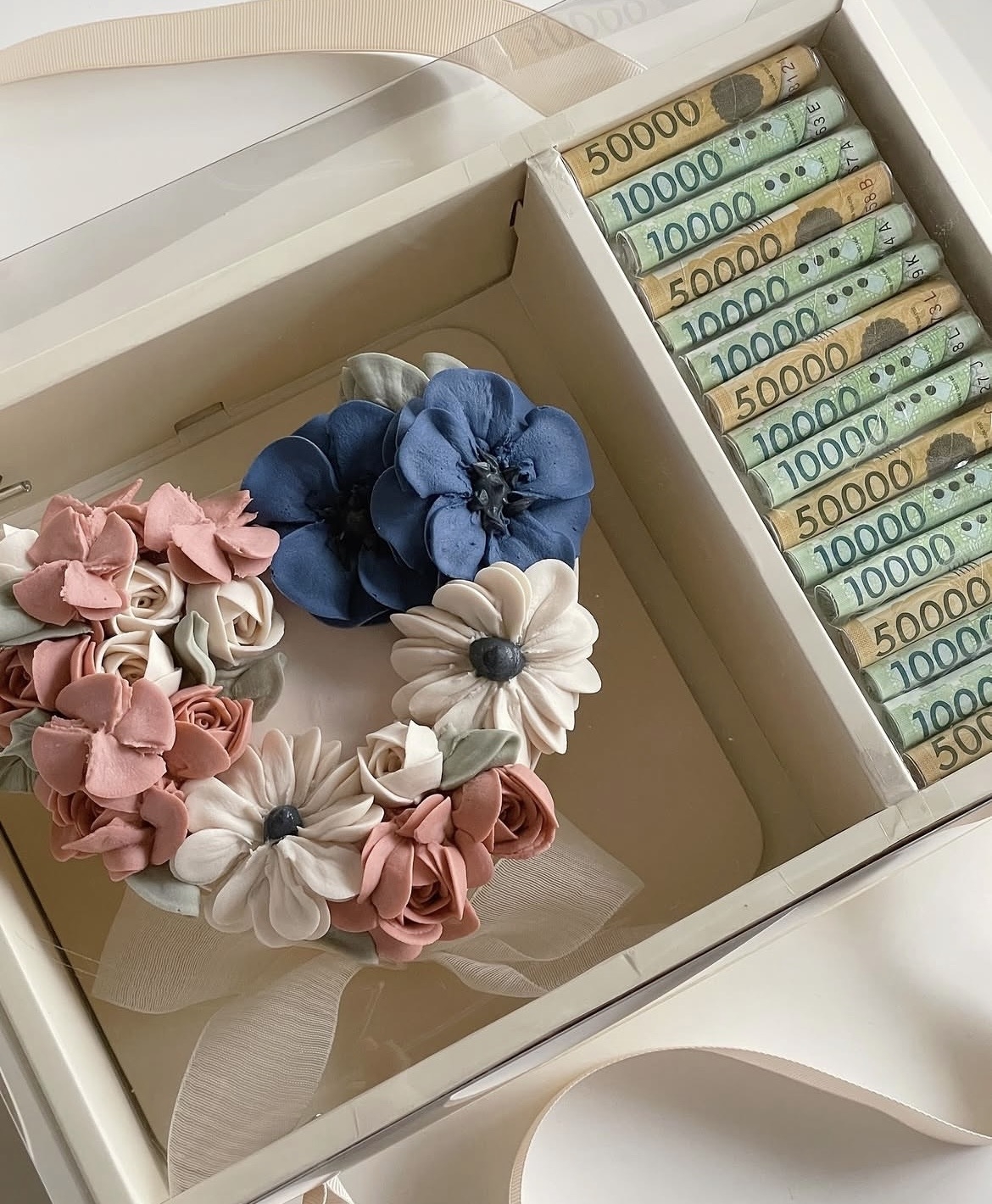
For Byun Su-yeon, a 25-year-old office worker, Parents’ Day involves a bit of planning.
“In past years, we (Byun and her sister) have done small, playful events, or the kind you often see on Instagram, like presenting them with money bouquets or cakes with hidden cash that comes out when you pull a ribbon,” she said. This year, they plan to order a cake and give their parents a cash gift.
“Coming up with those ideas together is already a big joy for us,” Byun said. “Our parents aren’t familiar with these trends, so it’s nice to see their reactions.”
Byun likes to take advantage of the opportunity the day creates.
“It’s more like an excuse to give our parents gifts and gather for a meal, especially since it’s hard to find time to eat together,” she said.
At times, Parents’ Day can feel formal, but Byun believes the occasion itself might matter less if one regularly shows appreciation.
“But with everyone busy, and with me being a bit reserved at home, having a fixed date gives us a reason to make time for each other and do things we wouldn’t normally do as a family,” she said.
In You Han-jin’s household, the special day has long been a fixture, from paper carnations in childhood to carefully planned gifts with her brother.
“My mother is a teacher and she is quite mindful of occasions like Teachers’ Day, Parents’ Day, and other anniversaries. So, we’ve always celebrated Parents’ Day, and I used to make paper carnations at school,” the 24-year-old college student said.
After going to university, You and her brother shifted to a simpler tradition: buying a cake.
On a personal note, You said Parents’ Day sometimes feels more like an obligation than a personal choice. She added that there is often an unspoken comparison over what parents receive, making her hesitant to fall short.
You recalled marking the day while studying abroad.
“When I was in Germany in 2023, I put together clips and photos of my parents and me into a video, adding subtitles with things I couldn’t say directly,’ she said. “I heard that my mom cried.”
junheee@heraldcorp.com
seoy@heraldcorp.com