Kazakhstan’s green transition is drawing China and Europe, leaving Korea to seek a stronger foothold

Korea Herald correspondent
ASTANA, Kazakhstan — A floor map at the entrance to the Regional Ecological Summit Expo 2026 offered a quick look at major players in Kazakhstan’s fast-growing environmental technology market.
Chinese firms were listed. European countries had joint pavilions. Kazakh government entities filled the hall. South Korean companies were nowhere to be found.
The absence stood out because, despite appearances, Korea has been trying to expand cooperation with Kazakhstan in green industries: from water management and hydrogen to nuclear power. But Korea’s presence remained thin at the three-day expo in Astana, exposing a gap between Seoul’s ambitions and its on-ground visibility in a market already shaped by Europe and China.
The exhibition, held April 22-24 at the Expo International Exhibition Center in Astana, was part of the Regional Ecological Summit, Central Asia’s flagship environmental platform. It showcased environmental technologies, low-carbon energy projects, and industrial solutions across Kazakhstan and neighboring countries.
Korea missing from the floor
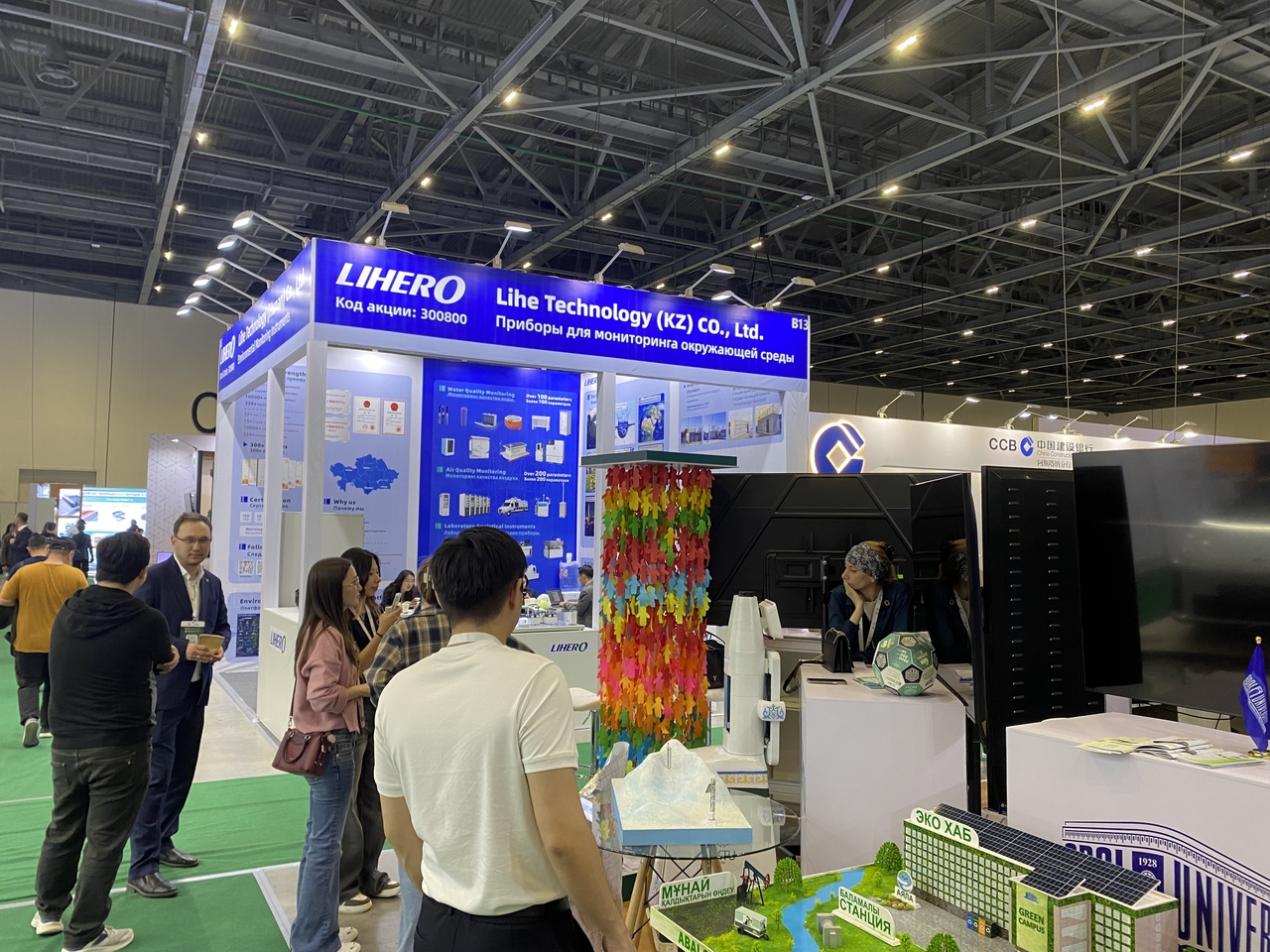
China’s presence was especially visible. Even local government booths, including that of Astana, featured projects linked to Chinese partners, such as a waste-to-energy project described as Kazakhstan’s first commercial facility of its kind.
Korean companies have sought partnerships with Kazakh counterparts and state agencies in recent years. Korea Water Resources Corp. and YPP Corp. were among those that signed agreements last year.
However, Korea Water Resources Corp. said it did not send representatives to this year’s expo. YPP said there had been little visible progress since its $3.1 billion agreement with Kazakh Invest on a green hydrogen project.
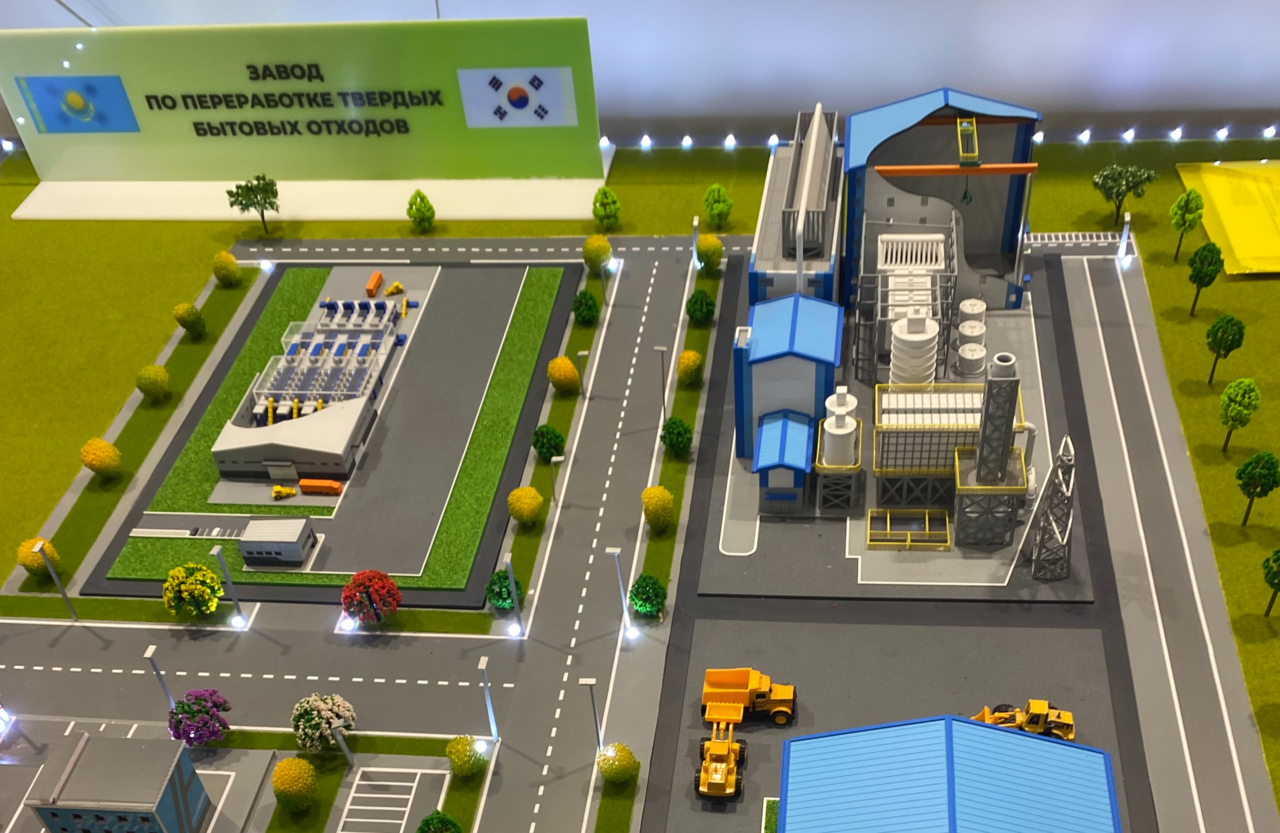
One of the few signs of Korean involvement at the expo appeared in a waste separation project in the Kyzylorda region, where Korean technology has been applied.
The limited presence reflected the structural barriers Korean firms face in a market where European energy companies have built a foothold over decades, and Chinese firms are expanding rapidly with cost competitiveness.
“European companies sought entry into the market even when Kazakhstan was still part of the Soviet Union,” said Kim Bong-chul, a professor of international trade at Hankuk University of Foreign Studies.
“Chinese firms have also expanded aggressively under the Belt and Road Initiative.”
Rivals already embedded
Companies with an established presence in Kazakhstan are moving deeper into the country’s environmental and low-carbon energy sectors, drawn by growth potential and government support.
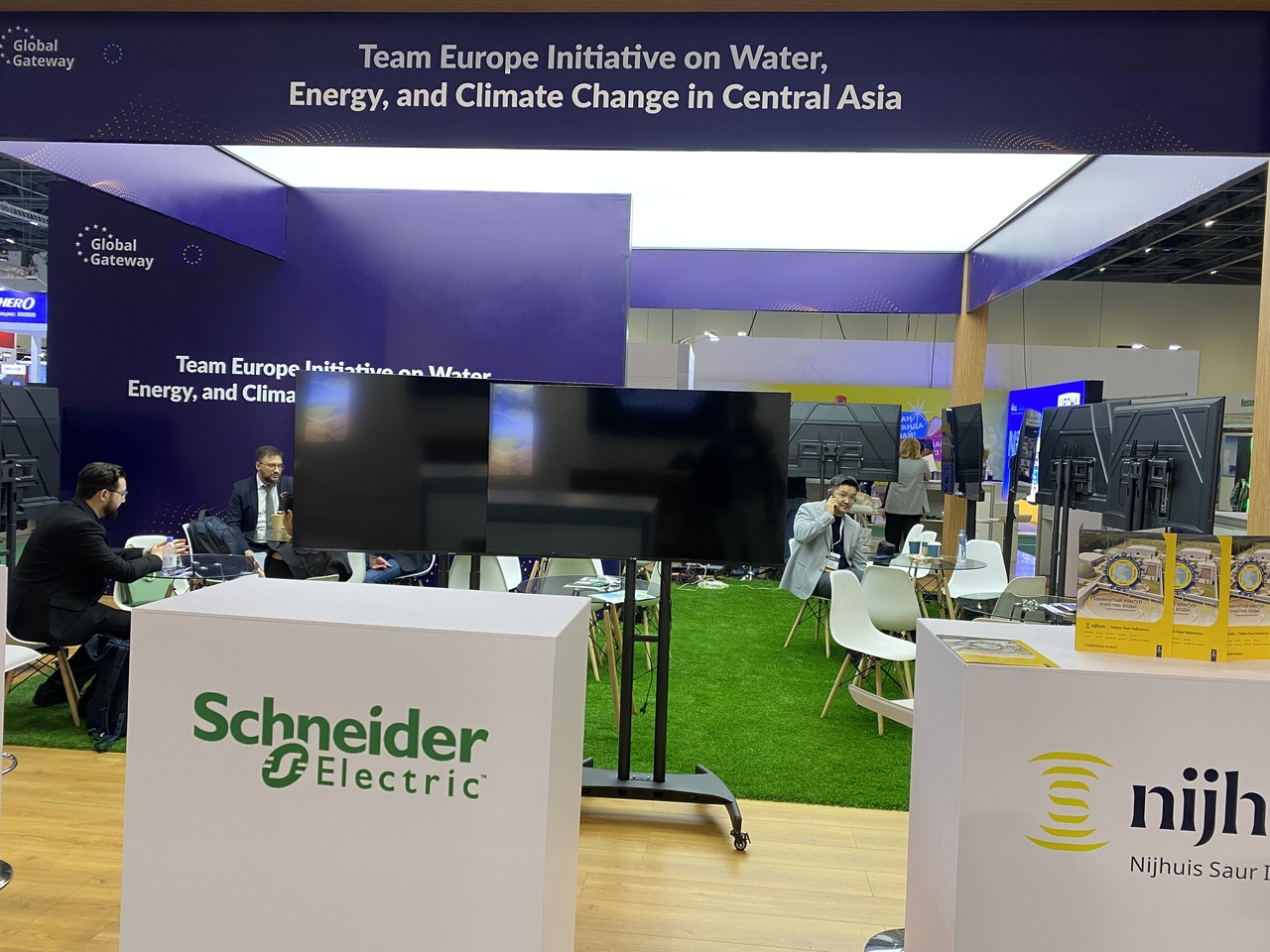
France’s TotalEnergies is expanding from fossil fuels into renewables, advancing a large-scale wind farm project with the Kazakh government to help address the country’s chronic energy shortage, a company official said at the European pavilion.
A final investment decision for the project, valued at about $1.2 billion and combining wind power with battery storage, was made earlier this week, marking one of the country’s largest renewable energy initiatives.
China is also deepening its role: It operates large-scale renewable energy projects in southern and central Kazakhstan and launched a joint hydrogen research institute with the Kazakh government earlier this month.
Kazakhstan is reinforcing policy support for environmental technologies as it confronts water shortages, energy constraints and climate risks such as desertification and glacier retreat.
“If you win a renewable energy project through auction, you get a contract under which the government guarantees purchases of renewable electricity for the next 20 to 25 years, and then we integrate that into our grid system,” Zulfiya Suleimenova, ambassador-at-large at Kazakhstan’s Foreign Ministry, said Friday.
“We aim to raise the share of renewables to at least 15 percent by 2030, from the current 7 percent,” she said.
Suleimenova also pointed to Kazakhstan’s push for nuclear energy, where South Korea is competing with global players. The effort reflects the country’s commitment to decarbonization despite its painful Soviet-era nuclear legacy as a major nuclear test site.
Quiet openings remain
The limited visibility of Korean companies at the expo has raised concerns that Korea may be missing opportunities in a fast-growing market, especially as it faces stiff competition from Russia and China in Kazakhstan’s nuclear sector.
Korea Hydro & Nuclear Power has been shortlisted for ongoing projects, but contracts so far have gone to competitors from neighboring countries, including Russia and China.
Still, experts say opportunities remain, particularly in strategic areas where Kazakhstan looks to diversify partners and strengthen its own technological capabilities.
“Some Central Asian countries are adopting a dual-track strategy,” Kim said. “They rely on low-cost, large-scale construction in some areas, while reserving sensitive sectors for advanced technologies.”
“In those high-tech areas, Korean companies are being considered as partners, although such projects tend to remain low-profile because of their strategic nature,” he said.
Kim said broader cooperation remains possible as Kazakhstan seeks to build domestic capabilities through international partnerships. The country is working on an advanced technology institute in Almaty modeled after the Korea Advanced Institute of Science and Technology, while discussions are also underway on localizing the production of nuclear components with Korean participation.
“Kazakhstan has abundant resources and strong confidence in achieving technological self-reliance,” Kim said. “They will not accept foreign business unconditionally.”
For Korea, that means the challenge is not only to sign agreements or promote green cooperation, but to build a more visible and sustained presence in a market where competitors have already moved early.
At the Astana expo, that gap was hard to miss.
forestjs@heraldcorp.com