ASTANA, Kazakhstan — Top officials from Central Asian countries gathered in Astana, Kazakhstan, to address shared environmental challenges Thursday, with Korean officials working at international organizations presenting Korea’s experience in preserving mountainous environments.
The session, titled “Mountains and Climate Change: From Vulnerability to Sustainable Development,” was held at the Congress Center in Astana under Kyrgyzstan’s chairmanship as part of the Regional Ecological Summit 2026, which brings together countries from Central Asia and the Caucasus and runs through Friday.
Highlighting scientific and institutional approaches used to restore forests across Korea, where mountainous terrain accounts for about 70 percent of the land, the officials proposed expanding cooperation to tackle environmental threats facing mountain regions, including risks to water resources and biodiversity.
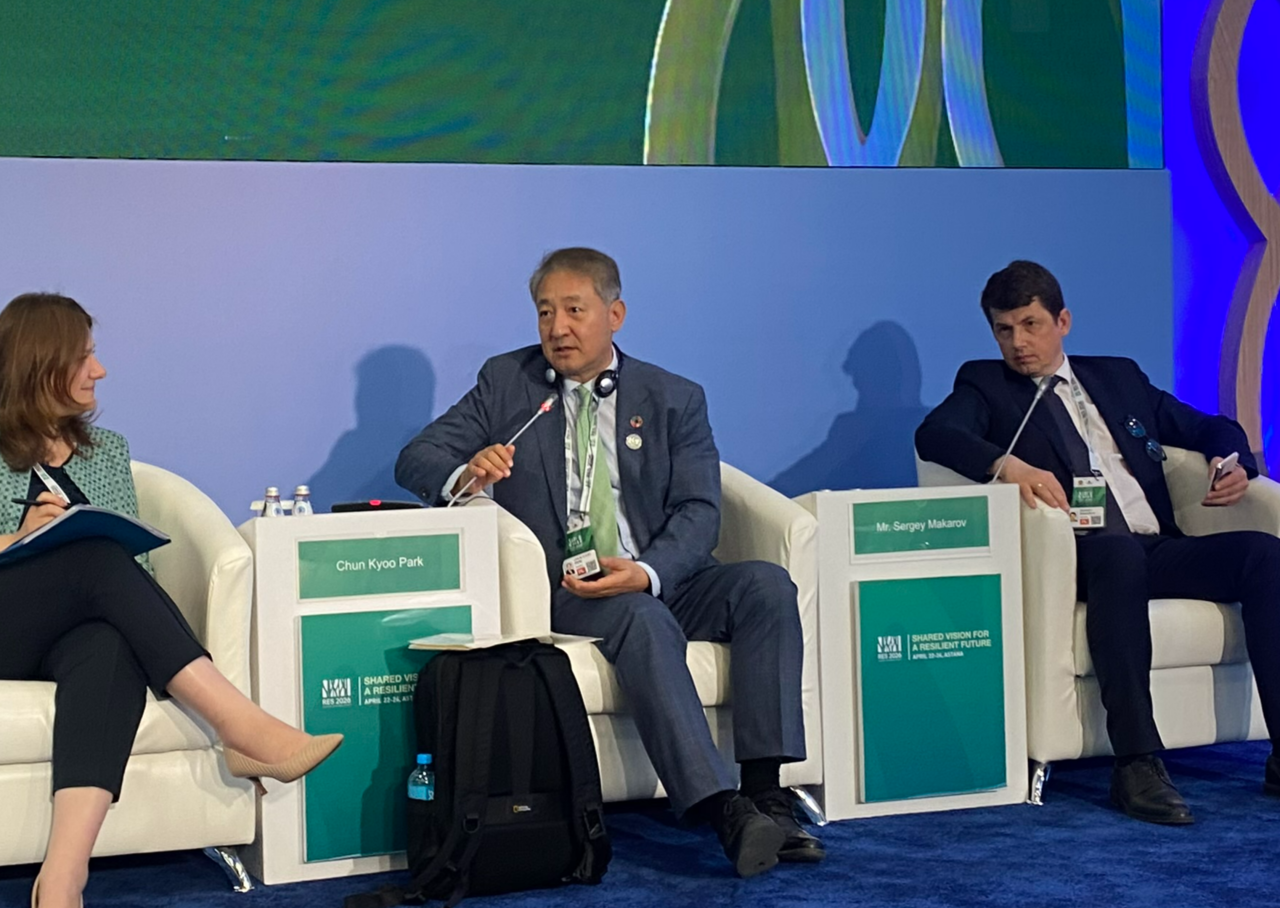
Park Chun-kyoo, head of the United Nations Office for Sustainable Development, emphasized the need for a data-driven approach, calling for greater sharing of climate related data to detect changes early and enable more precise responses to weather related risks.
“I would like to highlight the need for countries in this region to establish mechanisms to share data, especially meteorological data, and to develop systems to receive support from other countries,” Park said.
Park said cooperation could be strengthened through partnerships with countries that have advanced satellite based forecasting systems, citing collaboration between Kyrgyzstan’s meteorological agency and Korea’s weather agency as an example.
An official from the Asian Forest Cooperation Organization — of which South Korea, Kyrgyzstan, Kazakhstan and Tajikistan are members — also highlighted Korea’s role in addressing deforestation in the region.
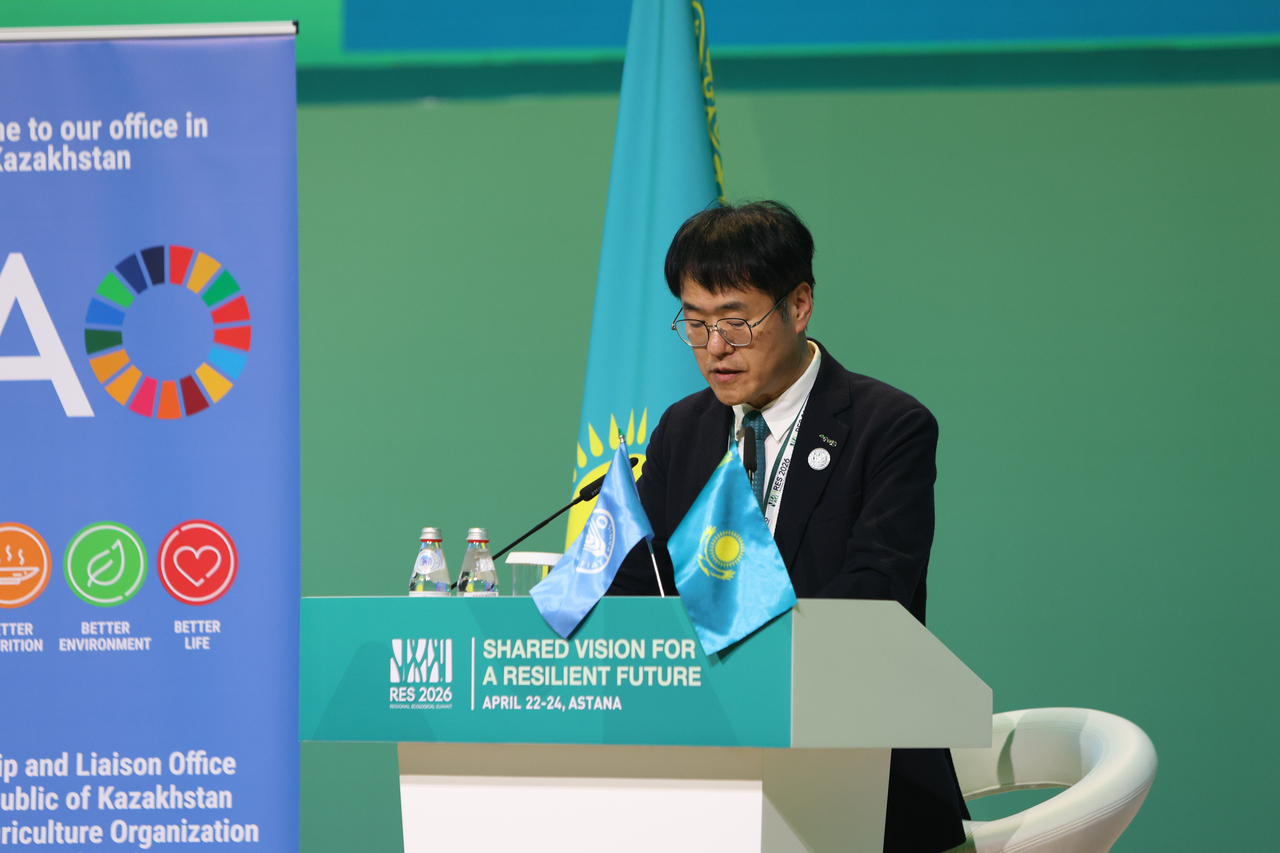
“Korea’s advanced science and governance models are applied to project management and implementation at AFoCO. Our focus is on action oriented activities that translate climate policies into tangible results on the ground to secure the future of global forests,” said Jin Sun-pil, vice executive director of AFoCO.
Jin added that the organization is also seeking partnerships on forest rehabilitation and prevention projects with Korea’s state agency dedicated to forestry disaster response.
The remarks by the international organization representatives came after speeches from environment ministers and senior officials from Kazakhstan, Tajikistan, Kyrgyzstan, Turkmenistan and Uzbekistan, who warned that environmental degradation in mountainous areas poses a significant regional threat, including the loss of livelihoods in mountain communities and increased risks such as avalanches.
With Central Asian countries heavily dependent on glaciers for both domestic and industrial water use, the officials also stressed the urgency of addressing environmental threats to mountain ice, noting that glacier coverage is shrinking at an accelerating pace.
Jin added that AFoCO plans to expand its membership beyond its current three Central Asian member states, arguing that efforts to address climate change through forest restoration require broader regional cooperation.
An AFoCO official told The Korea Herald that RES 2026 also carries particular significance for Korea, as its outcomes are expected to be discussed at a summit between South Korea and the five Central Asian countries scheduled for September.
“AFoCO will serve as a practical cooperation platform for Korea and Central Asian countries, with forestry cooperation going beyond diplomatic engagement to promote collaboration in areas such as the economy, energy and supply chains,” the official said.
forestjs@heraldcorp.com