Shareholders push back as strike threat looms

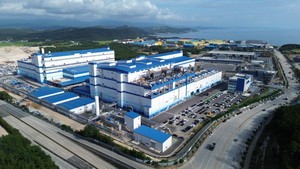
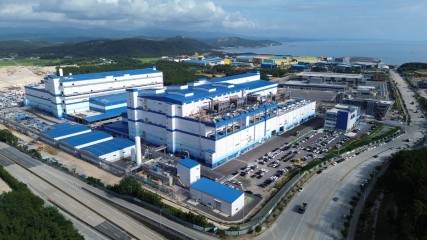
Samsung Electronics' labor union rallied 37,000 workers by its own count at the company's semiconductor campus in Pyeongtaek, Gyeonggi Province, Thursday, in its largest show of force ahead of a general strike threatened for next month.
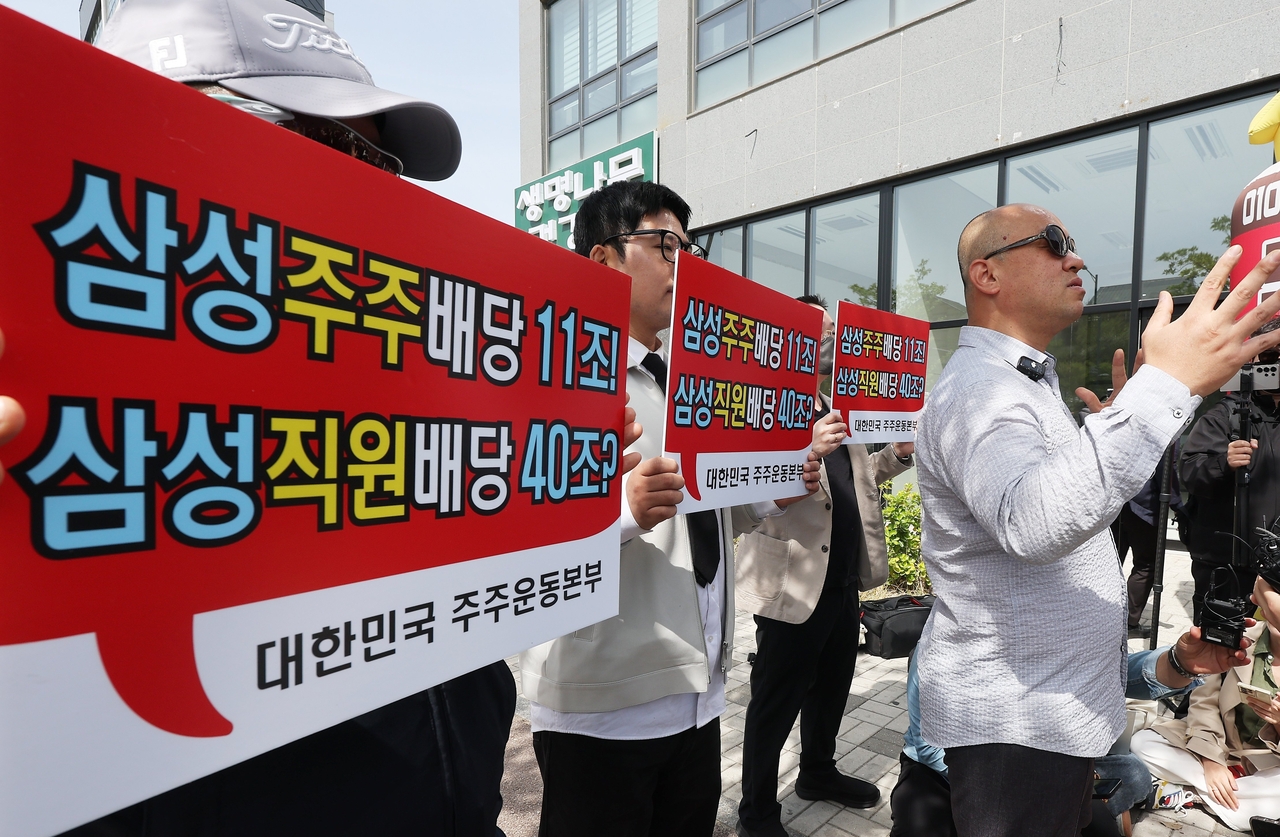
Hours earlier, a small group of retail shareholders staged a counterdemonstration at the campus gates. Min Gyeong-kwon, 47, who organized the protest, called the union's bonus demands "no different from a predatory creditor's" and said threatening to halt production "holds the assets of millions of shareholders hostage."
Police said about 20 shareholders had registered. The event ended before the union gathering began at 1 p.m. No clashes occurred.
The dueling protests brought to the fore dispute over how to split the largest profits in Korean corporate history. The union is demanding 15 percent of annual operating profit as performance bonuses with no cap. Analyst consensus compiled by FnGuide projects Samsung's full-year operating profit at roughly 306 trillion won ($207 billion), putting the implied payout at about 45 trillion won, nearly four times the 11.1 trillion won Samsung distributed in dividends last year and beyond even its record 37.7 trillion won in R&D spending.
Union Chair Choi Seung-ho has said he does not consider the demand unreasonable, telling reporters that "engineers are leaving for competitors or moving overseas for better pay." The union initially sought 10 percent, but raised the figure after Samsung posted 57.2 trillion won in first-quarter operating profit on April 7, an eightfold year-on-year surge and the largest quarterly result in Korean corporate history.
The 10 percent baseline mirrors the profit-sharing formula SK hynix agreed to with its own workers last year. SK hynix's results for the first quarter, released Thursday morning, reinforced the comparison: 37.6 trillion won in operating profit and a 71.5 percent operating margin, both company records.
But an industry official who spoke on condition of anonymity cautioned against a direct parallel. "SK hynix is a single memory business. Samsung runs memory, foundry, system LSI (large-scale integration), mobile and consumer electronics under one roof," the official said. "The same formula creates immediate equity problems across divisions."
Samsung management has rejected a fixed ratio, offering what it called "the industry's best compensation relative to competitors," without codifying a specific percentage. Negotiations collapsed in late March. The company filed for a court injunction on April 16 to block occupation of production lines, while the union has refused to recognize management's designation of essential workers who must stay on duty during a strike.
If no deal is reached, the union plans to walk out from May 21 through June 7. Industry estimates put potential losses at 5 trillion to 10 trillion won over the 18 days; the union's own projection runs as high as 30 trillion won. Manufacturing and technical staff are legally barred from joining the walkout, which would contain direct production disruption, though the full extent of the impact remains uncertain.
Lee Chan-hee, chair of Samsung's compliance committee, urged both sides on Tuesday to "reach agreement through dialogue," adding that the union should "consider the impact on shareholders, investors and the public."
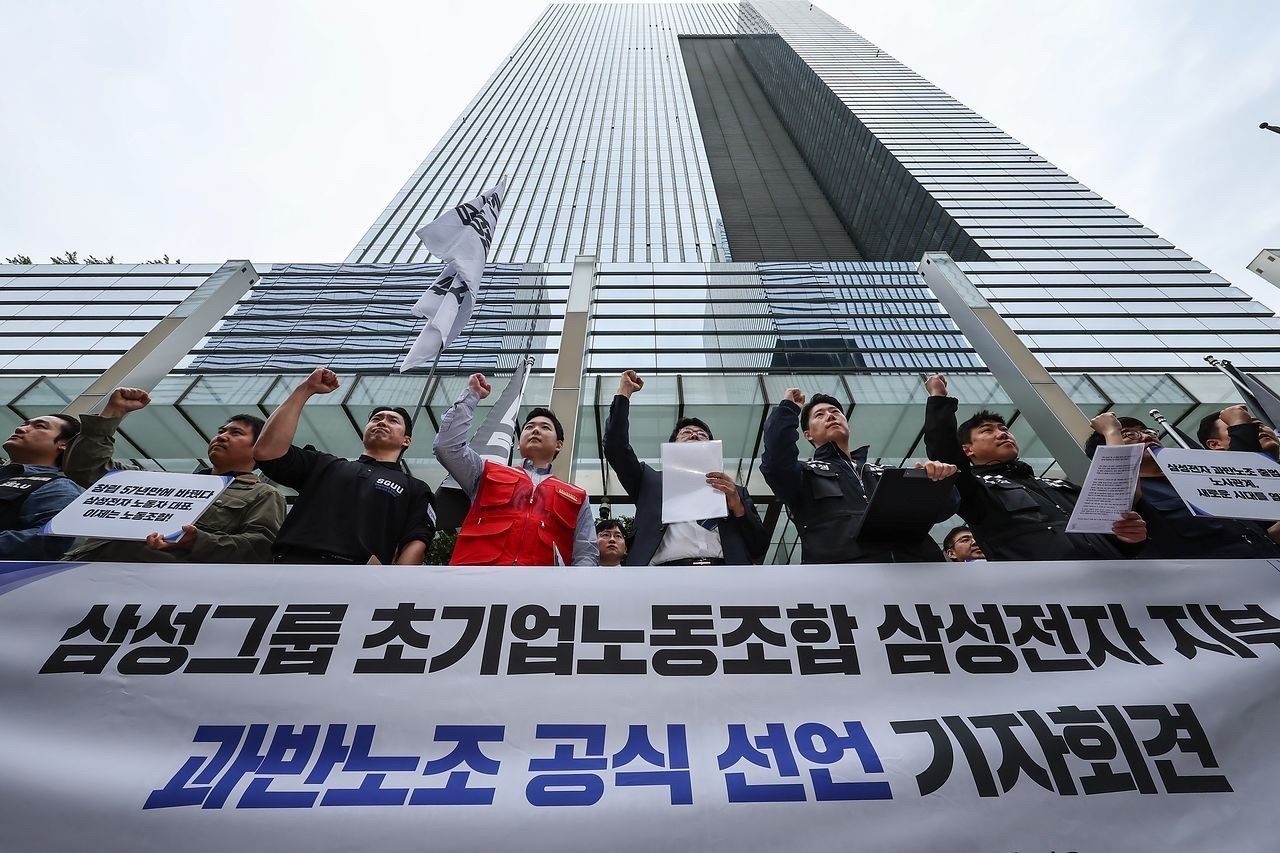
Thursday's turnout underlined the reach of Samsung's first-ever majority union, which secured legal recognition on April 15 with more than 74,000 members. One Samsung employee on an anonymous online community said the internal mood was "worse than it looks from the outside." Another worker asked: "Competitors get this and we don't. Why not?"
Among the shareholder demonstrators, a 60-year-old retiree who gave only his surname, Noh, said, "Shutting down factories and causing tens of trillions in damage just because business is booming makes ordinary people feel left behind."
Semiconductors accounted for 38.1 percent of South Korea's total exports in March, when chip shipments hit a record $32.8 billion, according to the Ministry of Trade, Industry and Energy.
mjh@heraldcorp.com