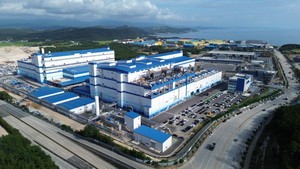
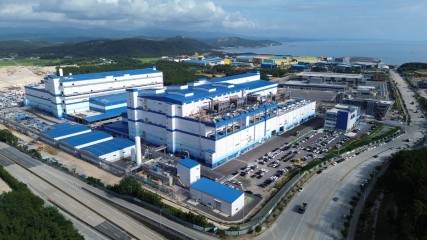
Samsung union pushes for 15% of profit as SK hynix payouts stir fairness debate
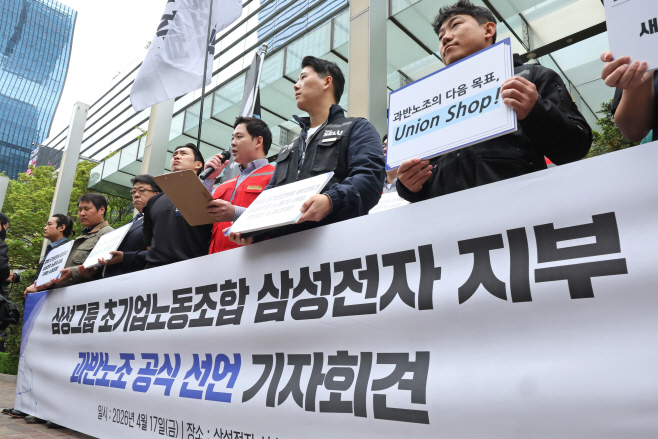
Fresh off earnings surprises and unusually large bonuses rarely seen in South Korea, friction is building both inside and beyond the chip sector. Employees at Samsung Electronics and SK hynix are disputing how the windfall is allocated, while the payouts are also fueling a broader debate over how companies should share profits and structure compensation.
Samsung Electronics is locked in a standoff with its labor union, which is threatening a strike that could inflict massive losses and is demanding 15 percent of operating profit be set aside for bonuses. Based on estimates of about 297 trillion won ($202 billion) in operating profit this year that would amount to roughly 45 trillion won.
The sum would exceed the company's annual R&D spending of about 37 trillion won and nearly quadruple its annual dividend payout of around 11 trillion won — underscoring a broader divide over whether the sector's compensation is catching up with global peers or overshooting.
The union plans a rally at the campus in Pyeongtaek, Gyeonggi Province, on Thursday if talks break down, followed by a general strike from May 21 to June 7. Industry estimates put potential losses from a full-scale strike at 5 trillion to 10 trillion won.
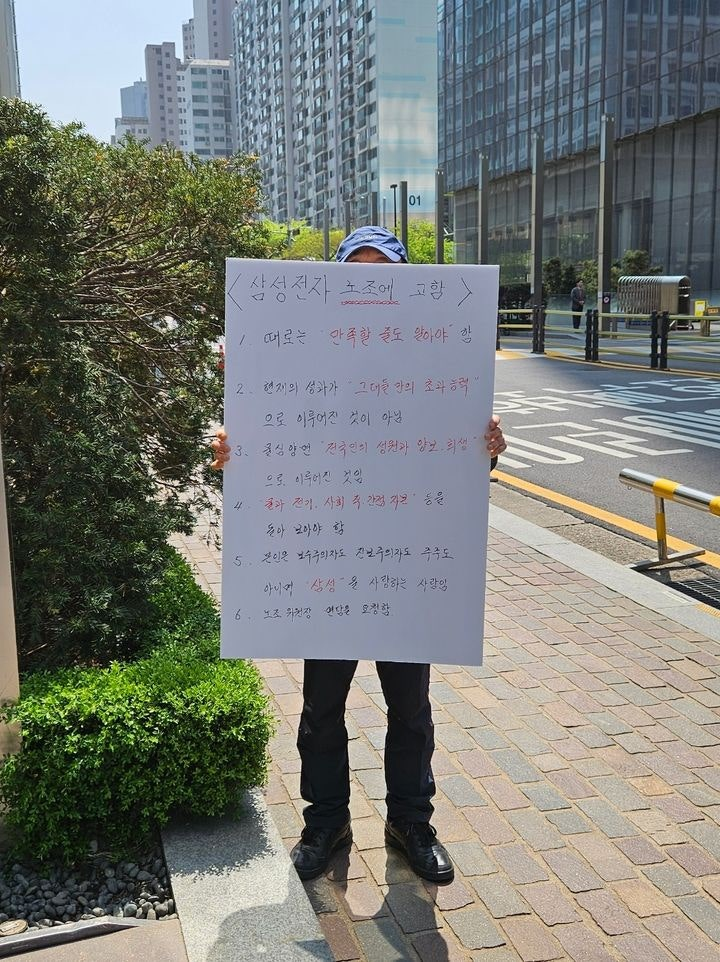
The dispute at the country's largest conglomerate by revenue is also spilling into the public sphere. Last week, a man in his 60s who identified himself only as "a person who loves Samsung," staged a protest, urging workers to "know when to be satisfied" and arguing that performance is not solely the result of employees' abilities, citing broader public support and infrastructure.
SK hynix, which settled its bonus framework earlier with its labor union, is also drawing scrutiny over its lump-sum payout model, with some employees questioning whether highly specialized engineers should receive the same bonus rates as production workers.
The company last year paid about 140 million won in bonuses to employees earning roughly 100 million won in annual salary, a rare scale in Korea that made headlines.
In September, SK hynix scrapped the cap on its profit-sharing bonus and set payouts at 10 percent of operating profit for the next decade. With operating profit expected to approach 200 trillion won this year, the bonus pool could reach about 20 trillion won — or roughly 580 million won per employee based on a workforce of about 34,500.
A clear bonus formula has not resolved tensions. Employees are split over whether uniform payouts fit roles ranging from Ph.D.-level researchers to production workers, with some calling for differentiation and warning against undervaluing front-line contributions.
At Samsung Electronics, tensions are rising as the union pushes for large payouts across the chip-focused device solutions division, including loss-making logic chip and foundry units, drawing pushback from device experience employees who say the structure favors semiconductors.
"The memory chip business has generated hundreds of trillions of won in profits over the past several years, so higher bonuses are justified," a Samsung employee wrote on the anonymous workplace forum Blind. "But applying the same payouts to loss-making units is not fair."
If the union's proposal is implemented, employees in the system large-scale integration and foundry divisions — which have not posted a profit in recent years — could receive bonuses of nearly 400 million won per person this year.
Debate is spilling beyond companies into a broader discussion over how pay should be structured. On Blind, one user argued compensation should better reflect expertise and contribution.
"Pay shouldn't be dictated by industry cycles alone," the user wrote, referring to the semiconductor boom. "When highly specialized talent in other sectors earns less than broadly defined roles in a boom industry, it distorts the value of expertise."
The user added that tying pay to sectorwide performance may steer workers toward booming industries rather than long-term specialization.
Hwang Yong-sik, a professor of business administration at Sejong University, said the debate highlights a structural challenge in Korea's compensation system.
"Korea's latest bonus debate is unusual both at home and globally, as such large cash bonuses tied to operating profit are rare, with stock-based incentives more typical outside Korea," Hwang said.
From a company's perspective, the union's demands are hard to justify, especially if they come at the expense of investment, Hwang said.
"But this is also a moment for companies to rethink and establish clearer, more transparent frameworks for bonus payouts," he added.
herim@heraldcorp.com