Q1 growth hits 1.7% on chips, but Middle East risks loom
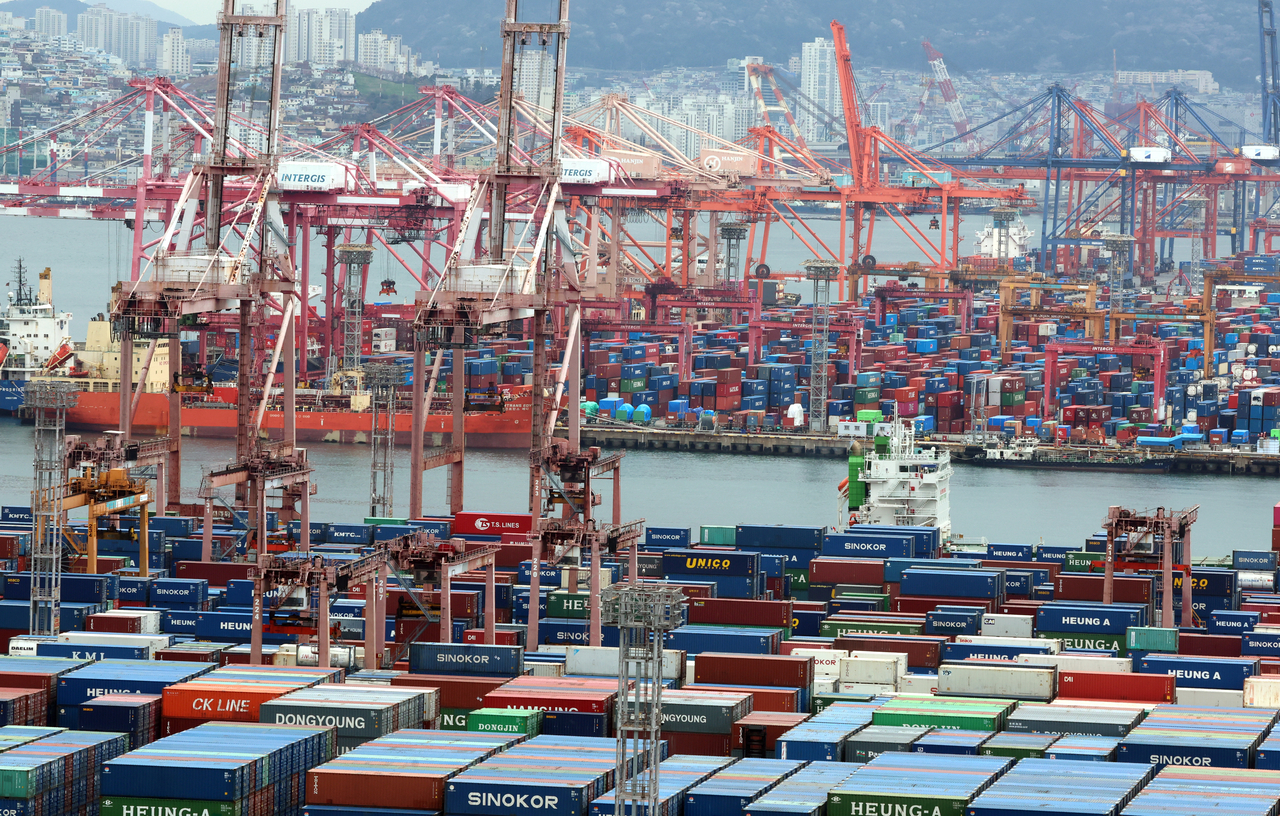
South Korea’s economy grew 1.7 percent in the first quarter, its fastest pace in over five years, powered by an AI-driven semiconductor boom, Bank of Korea data showed Thursday.
The country's real gross domestic product — a key measure of economic performance — grew at its fastest pace in 5 1/2 years, since the third quarter of 2020, when exports surged after eased Covid-19 restrictions. On a year-on-year basis, growth came in at 3.6 percent.
The latest figure far exceeded the BOK's February projection of 0.9 percent, nearly doubling the central bank's forecast.
Exports were the main driver, rising 5.1 percent, led by IT products such as semiconductors. Investment in facilities, including chip equipment, surged 4.8 percent.
"The stronger-than-expected semiconductor cycle was the main reason for the upside surprise in the outlook," Lee Dong-won, a senior official of economic statistics at the BOK, said at a press briefing held on the day.
The country's two chip heavyweights, Samsung Electronics and SK hynix, logged record-high earnings in the first quarter.
Samsung Electronics posted first-quarter revenue of 133 trillion won and operating profit of 57.2 trillion won ($38.6 billion); SK hynix reported a surge in operating profit to 37.61 trillion won, both hitting record highs.
"Semiconductor manufacturing's contribution to growth stands at around 55 percent," Lee said, adding that the growth rate could be more than halved when excluding it.
Asia’s fourth-largest economy has seen volatile quarterly performance in recent periods. After contracting 0.2 percent in the first quarter of last year, growth rebounded to 0.7 percent in the second quarter and 1.3 percent in the third, before slipping back into contraction at 0.2 percent in the fourth quarter.
Against this backdrop, the latest first-quarter reading signals a clear rebound in economic momentum.
Iran war impact to emerge from Q2
Korea's growth outlook will hinge on whether risks from the Middle East conflict will continue, with the impact expected to be more fully reflected from the second quarter.
"The Middle East conflict had a limited impact on first-quarter GDP," Lee said. "Vessels continued to arrive via the Strait of Hormuz through late March, and only about 10 days out of the 90-day quarter were affected."
He added that the impact is likely to become visible from April.
In its February outlook, the BOK projected second-quarter growth at 0.3 percent.
Lee, however, cautioned against excessive pessimism, noting that exports — particularly semiconductors — have remained strong even after the outbreak of the conflict, and private consumption has yet to show signs of impact.
"It is difficult to predict how the Middle East conflict will ultimately unfold on the economy," he said.
silverstar@heraldcorp.com