Former President Yoon, former first lady Kim received more than W1.3b, while Cho Kuk, Chung Kyung-shim took in at least W240m
Donations to high-profile figures currently in custody are drawing renewed scrutiny over loopholes in Korea’s prison money system and the use of private bank accounts to solicit support.
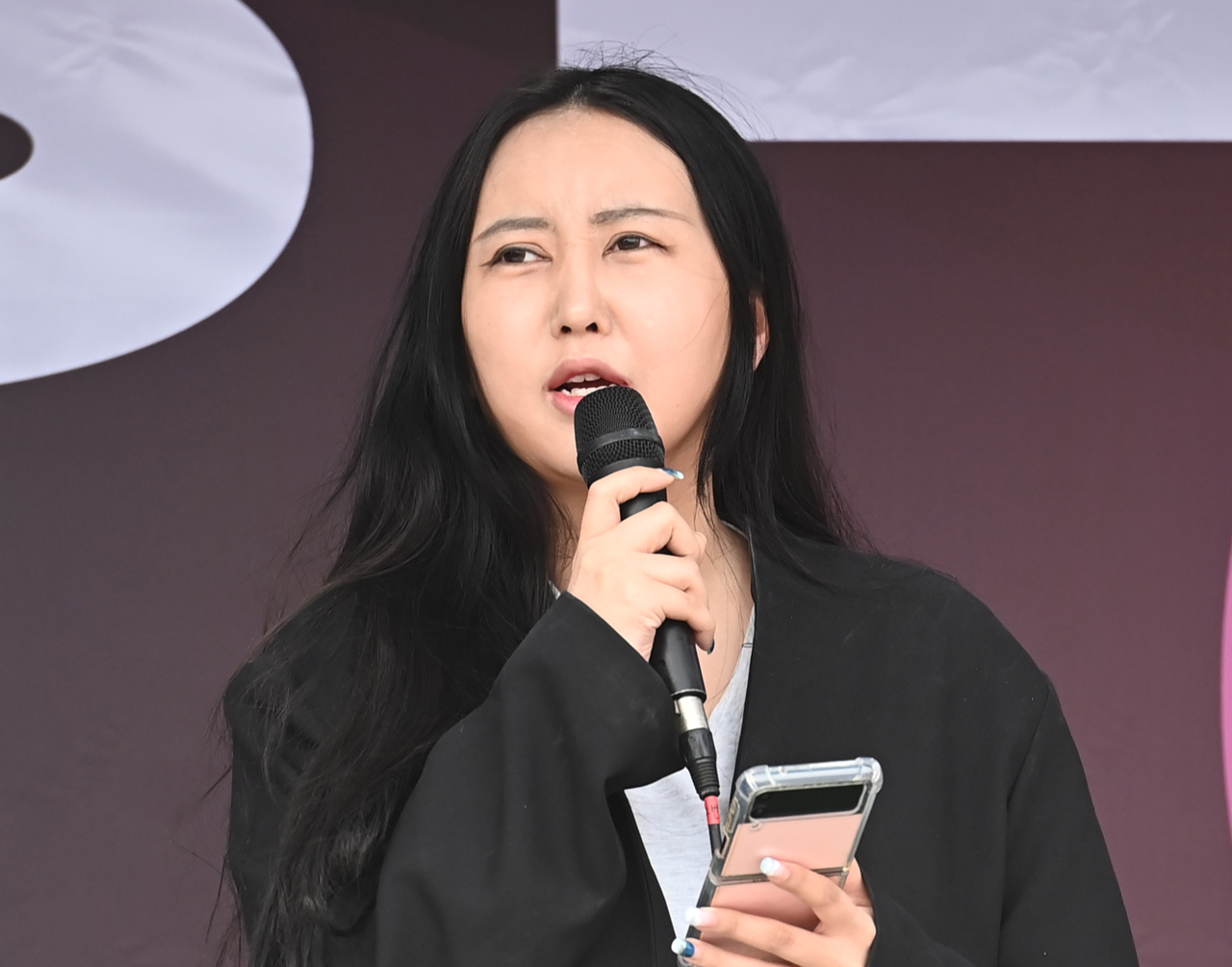
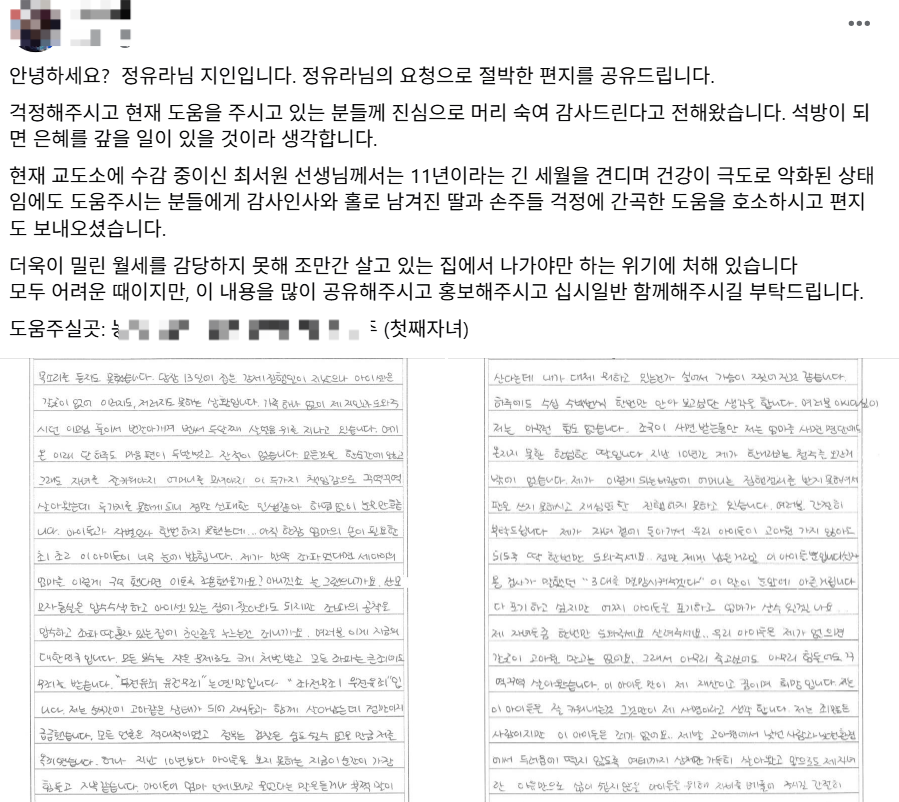
The issue drew fresh attention Tuesday after Chung Yoo-yeon, formerly known as Chung Yoo-ra and the daughter of Choi Seo-won, formerly known as Choi Soon-sil, appealed on social media for financial support, saying her children could end up in an orphanage.
Chung was indicted without detention in 2025 on fraud charges after allegedly borrowing 698 million won ($472,000) from an acquaintance to pay her mother’s medical and legal expenses and failing to repay the money. She was later detained at Uijeongbu Correctional Institution in February after repeatedly failing to appear for trial.
Her mother, Choi, was the central figure in the 2016 political scandal involving her influence over then-President Park Geun-hye, which ultimately led to Park’s impeachment and removal from office.
“It has already been nine weeks since I have not seen or heard from my three sons,” Chung wrote in a post Tuesday. “The house my children are staying in will soon be foreclosed on, and they have nowhere to go. Please help us just once so that my children do not go to an orphanage.”
The post included a bank account number under her son’s name, highlighting how donations can be solicited outside the formal prison account system.
Donations to inmates draw renewed scrutiny

Chung is not the first prominent inmate to seek financial support while in custody.
According to Justice Ministry data released earlier this month, jailed former President Yoon Suk Yeol received more than 1.2 billion won in inmate funds during eight months of detention, equivalent to 4.6 times the annual presidential salary for 2025.
Former first lady Kim Keon Hee received more than 93 million won over the same period.
The money was sent through more than 27,000 separate deposits, after allies of Yoon organized online fundraising campaigns.
Other prominent inmates, including Rebuilding Korea Party leader Cho Kuk and his wife, Chung Kyung-shim, also received more than 240 million won in inmate funds from supporters over two years.
“It should be ensured that the system is operated to fulfill its original purpose instead of being misused as a channel for support or donations for inmates,” Rebuilding Korea Party Rep. Park Eun-jeong told local media, referring to donations sent to Yoon.
Loophole in the system
Under South Korean law, inmates may receive money from outside sources to pay for daily necessities such as food and toiletries. But they may hold no more than 4 million won in their prison account at any given time. Any amount above that must either remain inaccessible until release or be transferred to a personal bank account.
Because there is no limit on the number of deposits or withdrawals, money can be repeatedly moved in and out of inmate accounts as long as the balance stays below the ceiling.
If a court issues a forfeiture order, up to 1.5 million won in inmate funds may be seized. Inmate funds exceeding 500,000 won are also subject to taxation, though experts say it is difficult in practice for authorities to track individual inmate assets.
In cases such as Chung’s, where donations are made through personal bank accounts rather than prison accounts, monitoring and enforcement become even more difficult for legal and tax authorities.
“I think this reveals an institutional loophole, allowing excess inmate funds to be moved into a private account,” ruling Democratic Party of Korea spokesperson Kim Nam-guk said.
“There needs to be an institutional overhaul so that inmates cannot receive funds beyond a certain cap.”
seungku99@heraldcorp.com