April 12 marked the International Day of Human Space Flight — a date of profound historical and symbolic significance.
Established by a resolution of the United Nations General Assembly, this international observance commemorates a defining event in human history.
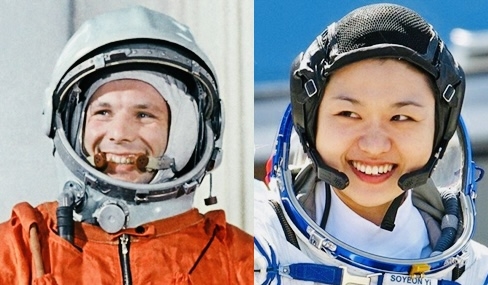
On that day, Soviet cosmonaut Yuri Gagarin became the first human to journey into outer space, orbiting the Earth aboard the spacecraft Vostok 1.
His flight, lasting just 108 minutes, was not merely a technological breakthrough. It was a triumph of human ingenuity, courage and perseverance — a moment when a centuries-old dream of mankind became reality.
This historic feat stood as a testament to the remarkable accomplishments of Soviet science. At the height of technological competition, the Soviet space program succeeded in solving unprecedented engineering challenges: sustaining human life in orbit, ensuring safe reentry and maintaining communication across vast distances.
This achievement was made possible by a team of outstanding scientists and engineers led by Sergei Korolev, as well as the courage of Yuri Gagarin himself, who became a symbol of hope and inspiration for people all around the world.
His legendary exclamation “Poekhali!” (“Let’s go!”), uttered right before the launch, continues to resonate as a powerful expression of humanity’s enduring drive to explore the unknown — and of its spirit of optimism and courage.
As the world marks the 65th anniversary of this landmark event, it is evident that the traditions established during those pioneering years have endured and evolved.
The legacy of the first human spaceflight is not confined to history but lives on as a priceless heritage — one that, in the spirit of Yuri Gagarin’s words, we are entrusted to preserve and carry forward.
It has paved the way for subsequent accomplishments such as various long-duration missions, space stations and international partnerships.
At the same time, the legacy of the first human spaceflight has always extended beyond national boundaries. From the outset, space exploration has carried an inherently international dimension.
Through dedicated programs for training foreign astronauts and joint missions, the Soviet Union — and later Russia — have given numerous nations the opportunity to partake in the exploration of outer space.
A notable example of such cooperation was the 2008 mission of Yi So-yeon, the first astronaut of the Republic of Korea, who traveled to space aboard the Russian spacecraft Soyuz TMA-12.
During her time aboard the International Space Station she carried out a series of scientific experiments, conducting valuable research in microgravity conditions. Another example of successful collaboration between our countries in the field of spaceflight was Russia’s contribution of scientific and technical expertise to the development of South Korea’s first launch vehicle KSLV-I (Naro-1).
Bringing together Russian engineering experience and South Korea’s rapidly developing technological base, this collaboration contributed to the strengthening of the latter’s space capabilities and advancing its progress toward sovereign launch capacity.
As we commemorate the anniversary of Yuri Gagarin’s historic flight, we are once again reminded that the pursuit of discovery transcends borders and that cooperation remains key to unlocking the vast potential of space.
The following article was contributed by Russian Embassy in Seoul. -- Ed.
khnews@heraldcorp.com