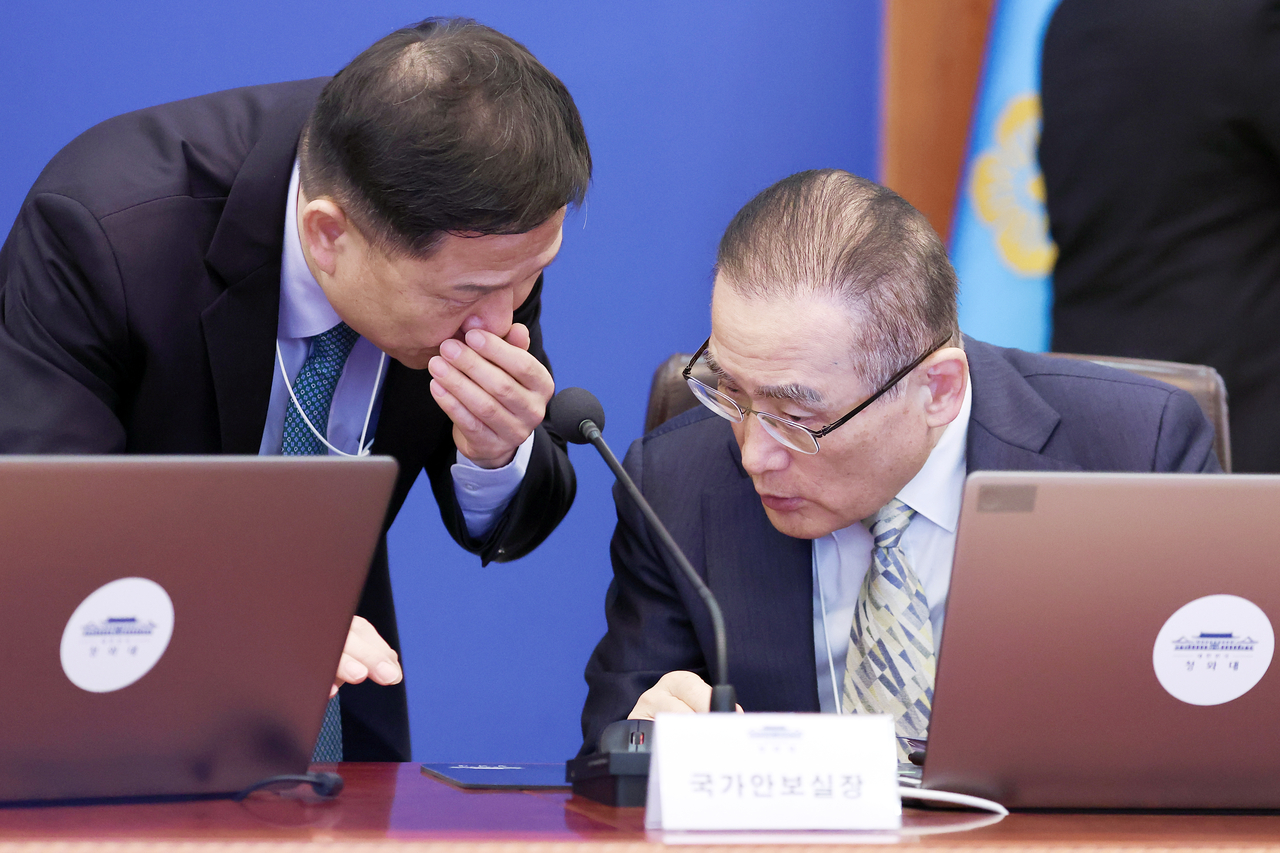
Presidential security adviser Wi Sung-lac said Friday that South Korea will closely monitor the situation in the Strait of Hormuz despite a temporary ceasefire between the United States and Iran, citing continued maritime risks.
Speaking at a press briefing, Wi described the two-week truce as a “critical turning point” that has temporarily halted high-intensity clashes, but said the situation should be closely watched.
While the international community has broadly welcomed the agreement, Wi pointed to Israel’s ongoing operations in Lebanon — which it has said are separate from the ceasefire — as a key source of continued instability.
Iran, in turn, has criticized those actions as a violation of the ceasefire and continued targeting some Gulf states, further raising tensions in the region, he said.
Wi said it remains unclear whether talks between Washington and Tehran will lead to a broader settlement, citing significant differences between the two sides.
On maritime security, Wi said Seoul is maintaining close communication with relevant countries to ensure the safety of vessels and crews, including 26 South Korean ships currently in the Persian Gulf.
Shipping traffic has yet to show a meaningful increase following the opening of the Strait of Hormuz, he noted, citing a backlog of vessels and lingering concerns over safe navigation routes.
Iran has indicated that the strait remains open, but vessels are required to coordinate with Iranian forces and may need to use alternative routes closer to its territorial waters, according to Wi.
He also warned that supply chain uncertainty is likely to continue for the time being, as transit through the strait has yet to fully normalize, adding that Seoul is seeking to diversify imports of crude oil and naphtha through its overseas missions.
Meanwhile, South Korea is monitoring international efforts led by countries such as the United Kingdom and France to ensure safe navigation in the region, while reviewing its possible role.
“We will continue to review practical measures comprehensively, taking into account maritime security, the Korea-US alliance, the security situation on the Korean Peninsula, and our relations with Iran and other Middle Eastern countries,” Wi said.
flylikekite@heraldcorp.com