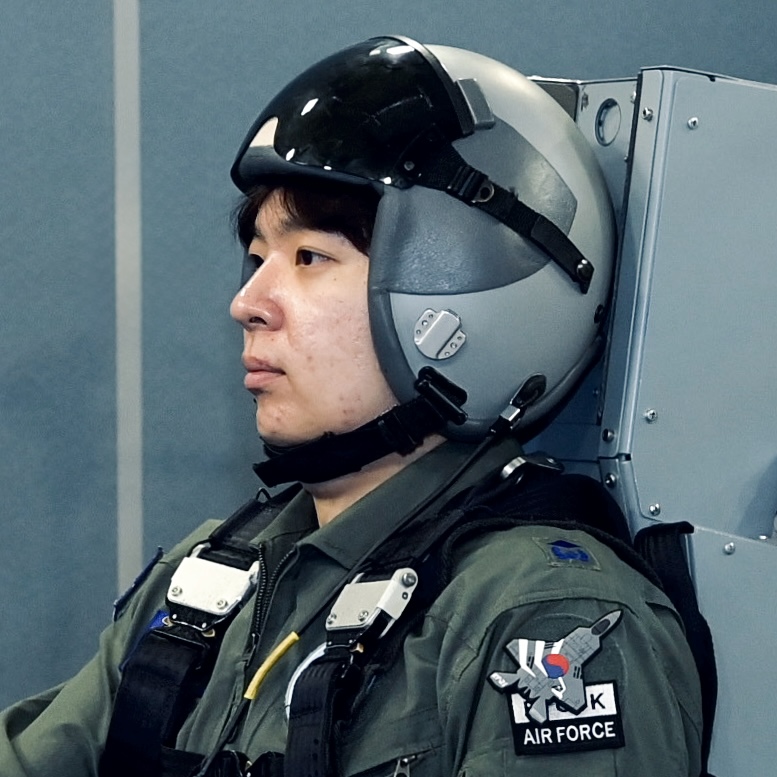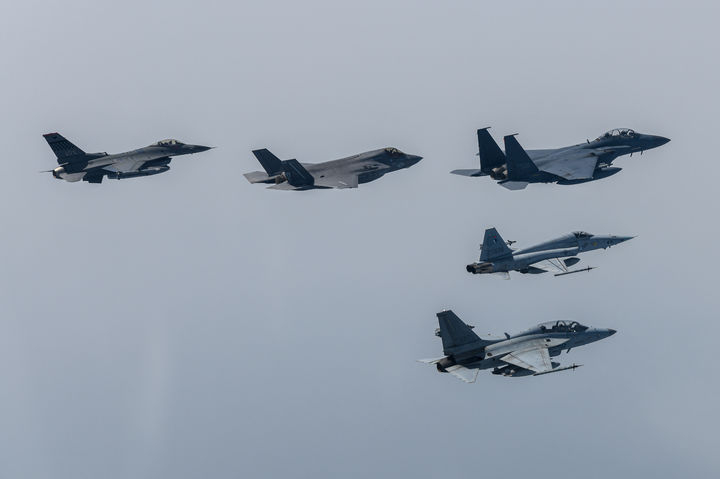
South Korea and the United States will conduct the joint “Freedom Flag” air drill starting Friday, the South Korean Air Force said Thursday.
Freedom Flag is a large-scale bilateral air exercise held twice a year in the first and second halves. This edition will run through April 24, according to the Air Force.
A range of air assets will be mobilized, including fighter jets, transport aircraft, aerial refueling tankers, airborne early warning and control aircraft, and unmanned aerial systems.
Participating aircraft include South Korea’s F-5E/F Tiger II, F-15K Slam Eagle, KF-16 Fighting Falcon, FA-50 light combat aircraft, F-35A Lightning II, KA-1 light attack aircraft, KC-330 aerial refueling tanker, C-130 Hercules, CN-235 transport aircraft and E-737 airborne early warning and control aircraft.
US assets include F-16 Fighting Falcon, E-3G Sentry airborne warning and control aircraft and RQ-4 Global Hawk reconnaissance drone, while the US Marine Corps will deploy F/A-18 Hornet and MQ-9 Reaper unmanned aerial vehicle.
During the exercise, the allied air forces will carry out missions including defensive counter air, interdiction, airborne interdiction and close air support to enhance interoperability and assess their combined operational capabilities in wartime scenarios.
The Air Force said South Korea will lead the exercise as part of efforts to prepare for the transfer of wartime operational control, with a focus on validating combined mission execution capabilities.
The Air Force added that the drill will also include a detailed assessment of South Korea’s detection and strike capabilities, a key task in the operational control transition evaluation.
The allies will also test and refine integrated operations between fourth- and fifth-generation fighter jets, reflecting evolving operational environments. As part of this effort, simulated enemy aircraft will be deployed to evaluate the latest tactics and procedures.
"The allies will further strengthen their combined defense posture by sharing strategies and operational know-how tailored to the modern battlefield through intensive, realistic training," said Col. Kang Soo-gu, head of operations training at the Air Force Operations Command.
flylikekite@heraldcorp.com