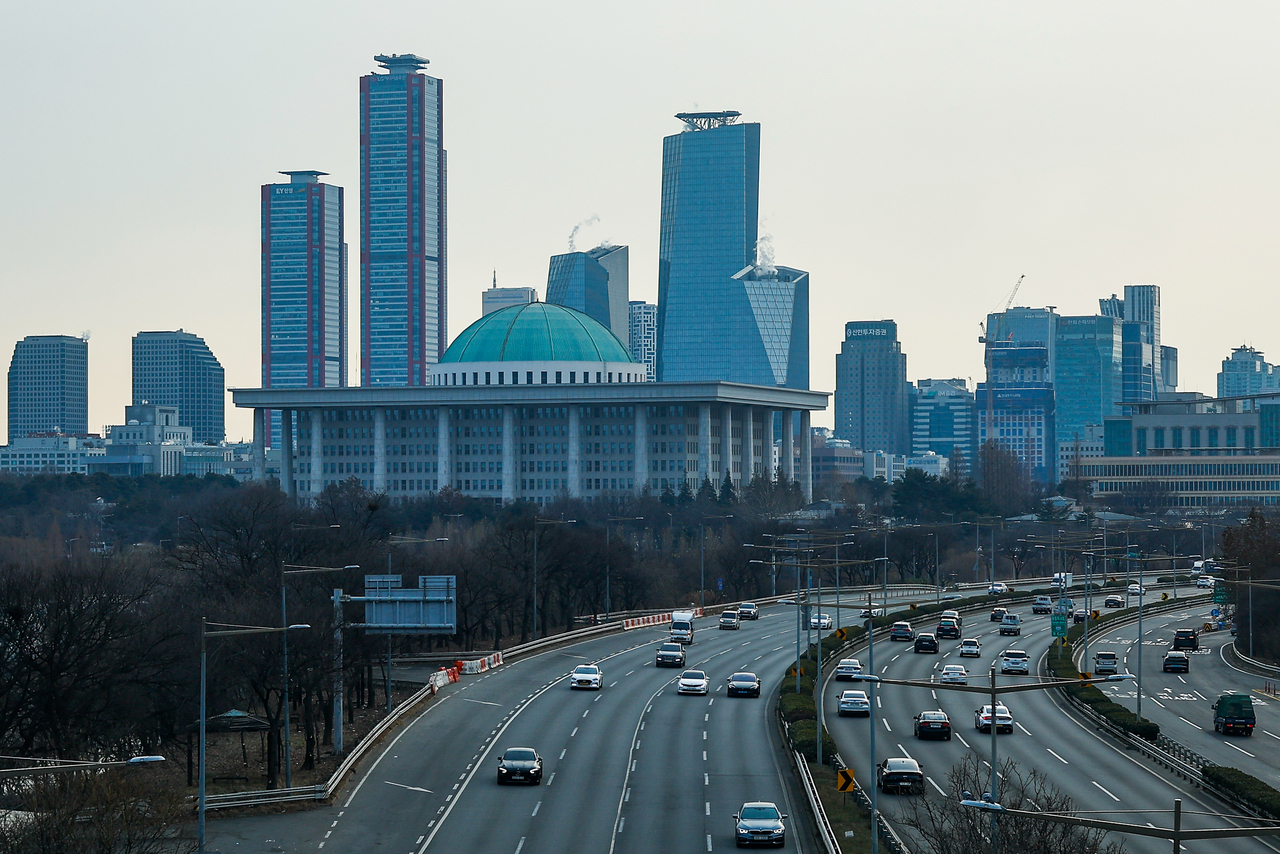
Another move to amend the Constitution has been put in motion with the backing of National Assembly Speaker Rep. Woo Won-shik and 186 other lawmakers, and now the balance hangs with the conservative main opposition party.
The motion to amend the Constitution was proposed Friday, with a majority of lawmakers not affiliated with the People Power Party supporting it.
At least 197 votes in favor are required in the 295-member National Assembly to meet the two-thirds threshold and put the amendment to a referendum. Both a parliamentary vote and a referendum are considered critical steps to what could be the first constitutional amendment in nearly four decades.
While the motion requires support from at least 10 People Power Party lawmakers to move forward, the latest remarks by the conservative party's leadership indicate that such a development is unlikely.
On Sunday, People Power Party floor leader Rep. Song Eon-seog claimed the election authorities had abandoned the principle of impartiality in managing the nationwide election, as authorities had requested the People Power Party's cooperation in election management under the Referendum Act.
Song claimed that the election authorities prematurely assumed the constitutional amendment bill would gain parliamentary approval, disregarding the fact that the People Power Party was against it. Therefore, the authorities were siding with the agenda presented by liberal parties in the National Assembly, according to Song.
The conservative party has long been against a constitutional reform push. Its senior spokesperson Rep. Choi Bo-yun, earlier in March, claimed the constitutional amendment "lacked sufficient consensus," suggesting that the incumbent liberal administration was trying to include agenda items in the proposed amendment in a way that favors them.
This came after 187 lawmakers ― 181 from six parties, including the ruling Democratic Party of Korea, as well as six independent lawmakers ― floated an amendment bill on Friday.
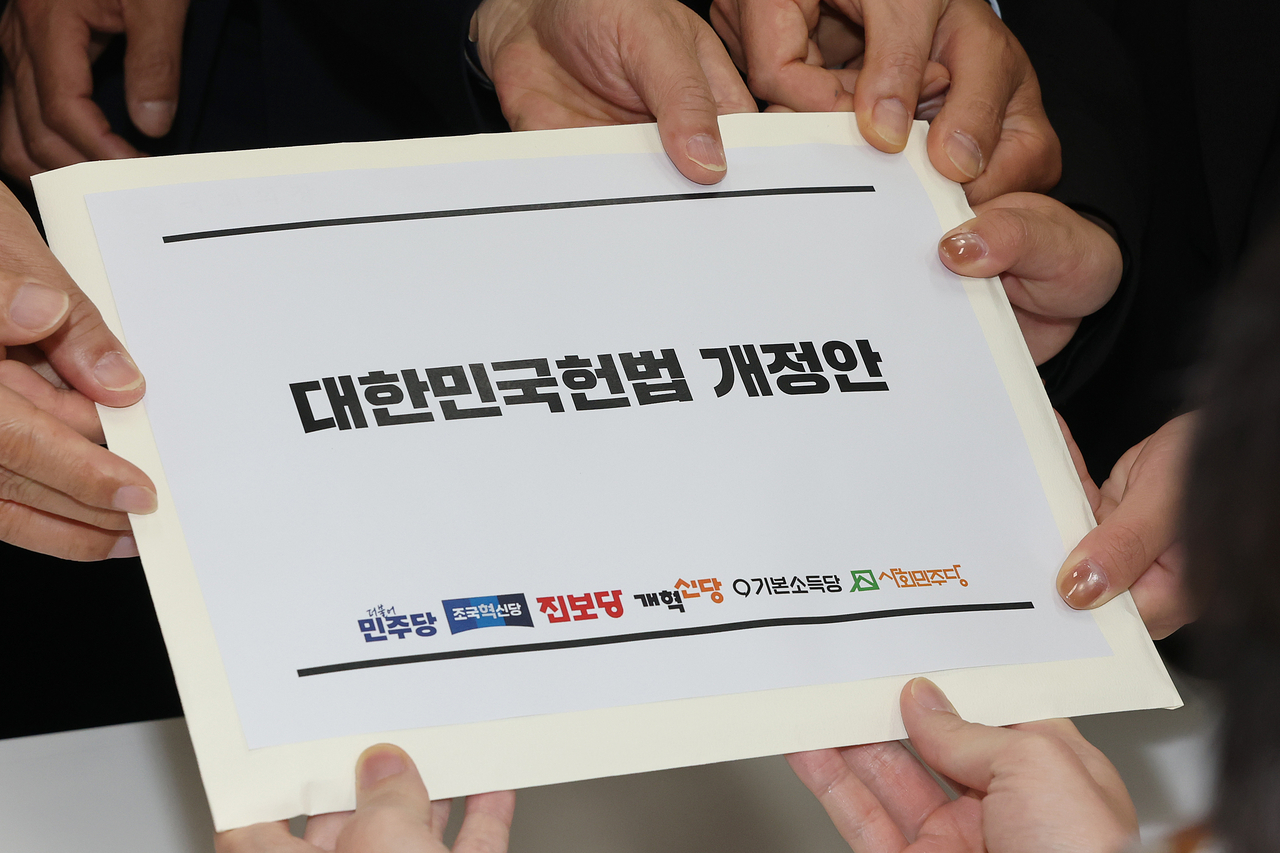
The proposal has long been regarded by the liberal bloc as groundwork for yet another constitutional reform touching on broader topics in the future, as the incumbent President Lee Jae Myung's administration suggested that lifting the single five-year term limit for the president and adopting a two-term system was part of the policy blueprint.
According to the proposal, the National Assembly would be granted the power to approve or lift martial law. During the 2024 martial law declaration by former President Yoon Suk Yeol, the National Assembly passed a resolution urging the president to lift the decree, but it was Yoon who had the power to rescind martial law.
The proposed amendment also says democracy will thrive in South Korea by upholding the pro-democracy spirit shown not only in the April 19 Movement in 1960 but also in the 1979 democratic protests in Busan and Masan, South Gyeongsang Province, and the 1980 Gwangju Democratic Uprising.
It also upholds the spirit of rebalancing the national economy, and would use Hangeul, the Korean writing system, instead of Chinese characters, in the title of the Constitution.
Following the proposal, the president is required to issue a public notice, and parliamentary approval, which requires two-thirds of the votes of all lawmakers present, must be obtained within two months after the public notice. Should the proposal receive the National Assembly's approval, a referendum is also required, with a majority vote in it with at least half of eligible voters participating.
A previously proposed constitutional amendment in March 2020 was deemed invalid after a quorum at the National Assembly could not be met. That amendment would have given proposed constitutional amendments that receive 1 million signatures from ordinary citizens the same weight as those backed by a two-thirds vote in the National Assembly.
The People Power Party's failure to join the constitutional reform means the party is neglecting the spirit behind the 1980 Gwangju Democratic Uprising, the Democratic Party chair claimed.
"I believe that opposing the inclusion of the May 18 spirit in the Constitution is tantamount to opposing democracy," Democratic Party chair Rep. Jung Chung-rae told reporters Sunday.
"Those who defend (Yoon's) insurrection are forces that neglect the spirit of the May 18 Democratization Movement and oppose democracy."
consnow@heraldcorp.com