Iran conflict fuels stock market sell-off, but K-beauty stands out on export strength
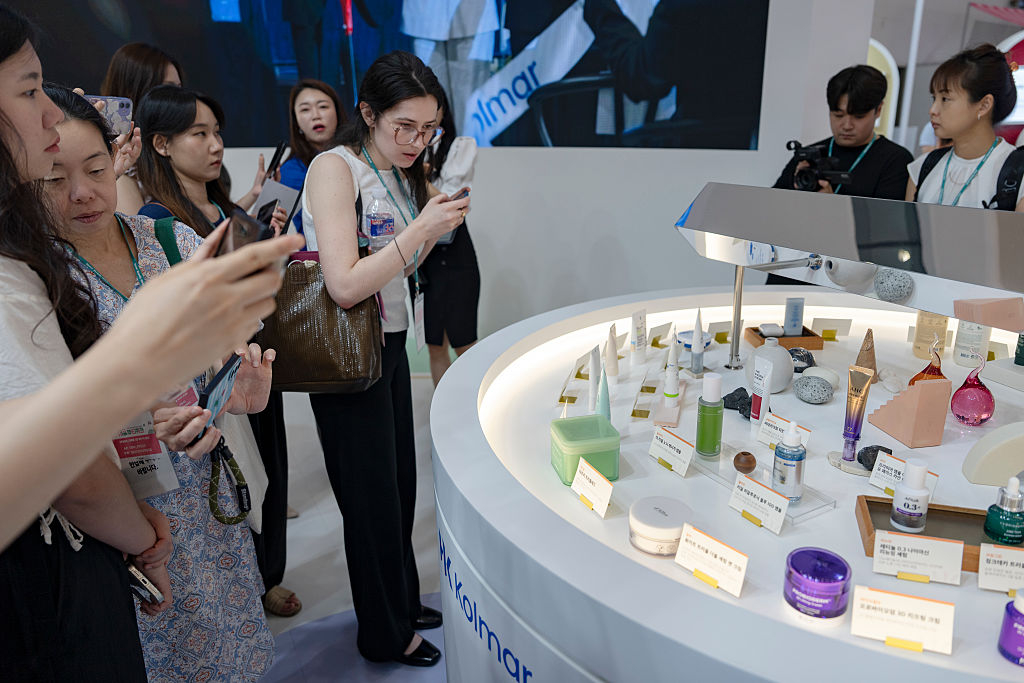
Foreign investors are dumping Korean stocks at a record pace since the Iran conflict, while quietly buying K-beauty on resilient global demand.
Foreign outflows have accelerated sharply in recent weeks. As of Tuesday, foreign investors had already surpassed February’s record net selling of 21.1 trillion won ($14 billion) on the Korea Exchange, offloading a net 22.3 trillion won of shares. The Korean won also breached a rate of 1,510 per US dollar for the first time in 17 years, as Korea’s heavy reliance on oil imports and a surging dollar intensified selling pressure.
Yet amid the broader market rout, Korean cosmetics companies with strong export-driven growth have emerged as relative safe havens.
APR, the largest Korean beauty firm by market capitalization, led foreign net purchases among K-beauty companies this month through Thursday, attracting 192.5 billion won. Cosmax followed with 35.5 billion won, trailed by Kolmar Korea with 15.5 billion won and d’Alba Global with 14.1 billion won. APR shares hit an all-time high of 377,000 won on March 20, underscoring investor confidence despite broader market volatility.
Foreign buying was even stronger in February, before Middle East tensions escalated. Investors net purchased 380.9 billion won worth of APR shares, alongside 113.7 billion won in d’Alba Global. APR’s foreign ownership has nearly doubled this year to 35 percent, while d’Alba Global’s foreign stake has surged from around 2 percent in May 2025 to over 26 percent.
Industry insiders say the rising foreign ownership reflects growing confidence in K-beauty’s fundamentals, supported by record revenues posted by several companies in 2025 and their relatively limited exposure to geopolitical risks.
“The impact on the cosmetics sector from the Middle East conflict is not as significant as it may appear,” said Park Jong-dae, an analyst at Meritz Securities. “The Middle East accounts for only about 3.5 percent of Korea’s cosmetics exports, and most exporters currently hold around five months of inventory.”
Another analyst at Kyobo Securities described the trend as a “gold rush” for K-beauty across global retail channels, pointing to expanding partnerships with major distributors such as Ulta Beauty and Sephora, as well as rising exports to key markets including the US and the UK. According to the Ministry of Trade, Industry and Resources, Korea’s cumulative cosmetics exports for January and February rose 18.5 percent on-year to $1.94 billion.
The sector’s appeal also lies in its structural growth story, as Korean brands continue to gain traction globally through differentiated products, digital marketing and strong brand identity.
However, the outlook is not without risks. A prolonged conflict could push up raw material and packaging costs while dampening consumer appetite for discretionary spending.
“If the conflict drags on, we could see cost inflation and a pullback in consumer spending on non-essential items like cosmetics,” an industry official said. Others warned that heightened volatility in exchange rates could add another layer of uncertainty for export-driven companies.
minmin@heraldcorp.com