Number of seasonal migrant workers rose from 20,000 in 2020 to 100,000 in 2025, Statistics Ministry data shows
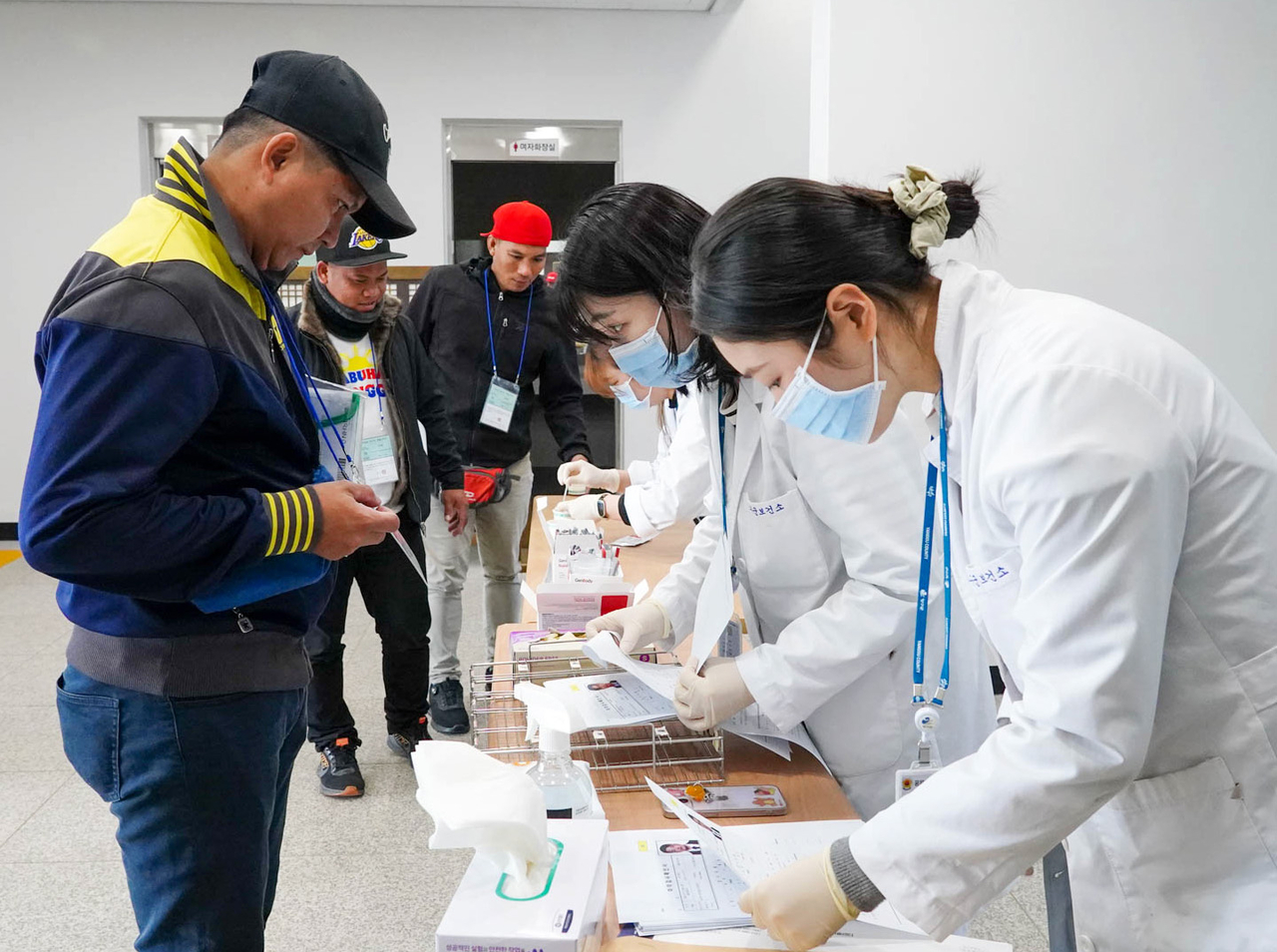
Seasonal migrant workers and their employers have been required since Feb. 15 to enroll in three major insurance programs, under a revised law aimed at strengthening protections for migrant labor in the agricultural sector.
The Ministry of Agriculture, Food and Rural Affairs said Wednesday it amended the Special Act on Support for Agriculture and Fisheries Workforce to mandate the insurance coverage as the farm sector becomes increasingly reliant on migrant labor, amid rapid rural aging and mounting labor shortages.
Under the system, foreign seasonal workers must enroll in accident insurance, while employers must sign up for pay guarantee insurance and farmers’ safety insurance. However, workplaces already covered by industrial accident compensation insurance are exempt from the requirement to enroll in the latter two programs, the ministry said.
Wage payment guarantee insurance is designed to protect workers against unpaid wages and reduce wage-related disputes between employers and workers. If an employer fails to pay wages, the insurance covers up to 4 million won ($2,700) per foreign seasonal worker.
Employers must enroll within 30 days of the start of employment. The premium is about 5,000 won for a five-month period.
Meanwhile, farmers’ safety insurance compensates seasonal workers for death, injury or illness resulting from work-related accidents.
The insurance provides coverage that includes a death benefit of 120 million won, funeral expenses of 10 million won and up to 50 million won in medical expenses. Employers must enroll workers within 15 days of the start of employment, or within 15 days of alien registration for newly arrived workers.
The premium is about 133,100 won for a five-month period. Employers registered as agricultural business operators may receive up to 50 percent government support for the premium.
Foreign seasonal workers themselves must also enroll in accident insurance to cover injury, illness or death in daily life. The policy offers 30 million won for accidental death or disability, 15 million won for death or disability caused by illness and at least 10 million won in medical expenses.
Workers must enroll within 15 days of arriving in Korea. For workers in their 30s, the premium is about 100,000 won for a five-month period, according to the ministry.
The ministry said insurer websites offer services in at least 15 languages, allowing foreign seasonal workers to enroll and file claims online. The ministry will also run a one-year guidance period to provide employers and foreign workers with insurance-related education.
Although failing to enroll in the programs may result in a fine of up to 5 million won, the government said it would focus on establishing the programs during the guidance period, rather than on punishment.
The measure comes as Korea’s agricultural sector becomes more dependent on foreign labor. With the Korean population aging, the number of foreign nationals working in the agricultural sector rose from about 20,000 in 2020 to more than 100,000 as of 2025, according to the Ministry of Data and Statistics.
Risks facing workers have also remained high. From 2020 to 2024, agriculture posted an average industrial accident rate of 0.78 percent, nearly matching manufacturing’s 0.79 percent. Over the same period, the average fatality rate per 10,000 workers in agriculture stood at 1.35, higher than manufacturing’s 1.22.
The average amount of unpaid wages per foreign worker also rose from 4.02 million won in 2020 to about 4.76 million won in 2024, up 18.4 percent.
seungku99@heraldcorp.com