Ann Arbor Symphony music director Earl Lee says losing his ability to play taught him never to take music for granted
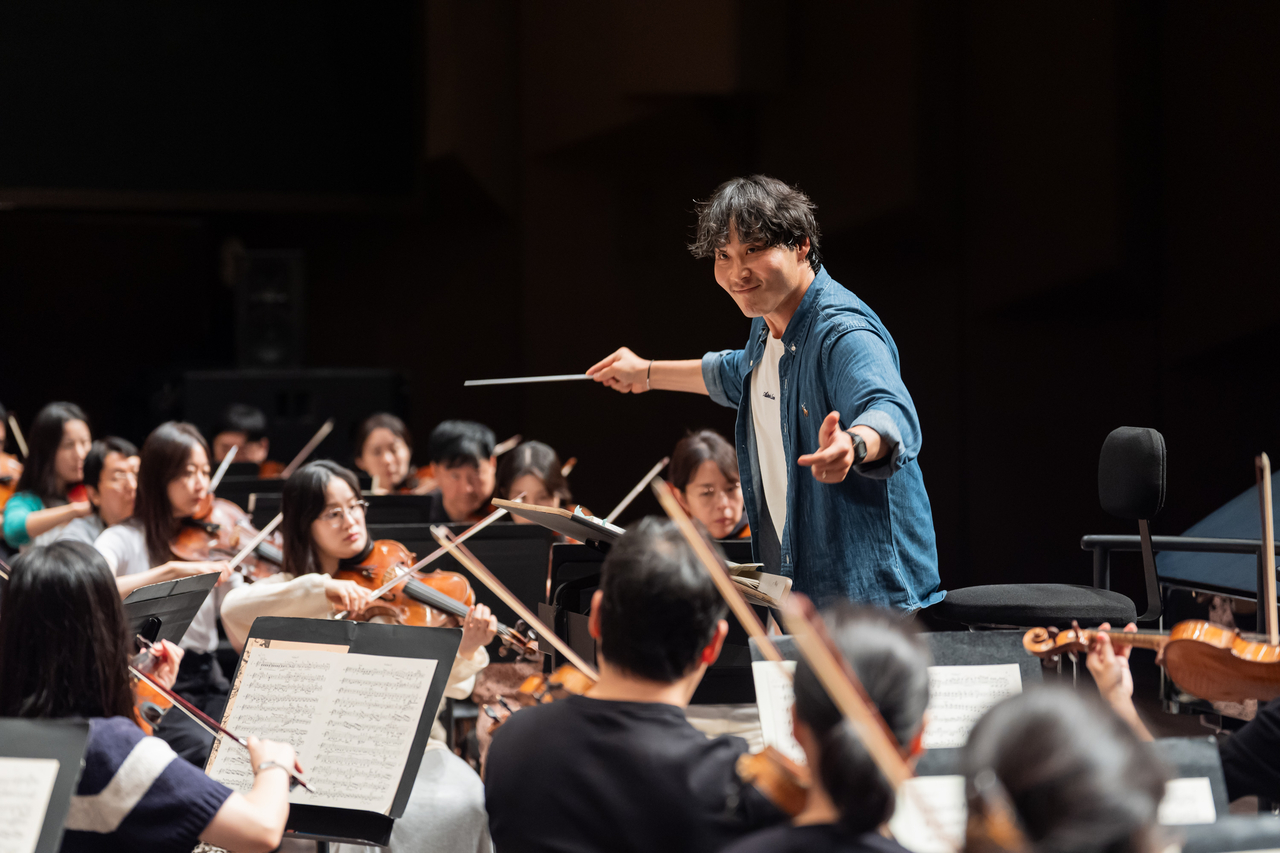
In 2008, a year after earning his master's degree at Juilliard, cellist Earl Lee found he could no longer play a C major scale. Focal dystonia, a neurological disorder that causes involuntary muscle contractions, took control of his left hand and brought his career as a cellist to an abrupt end.
Eighteen years later, in July 2022, the 42-year-old Korean Canadian became the music director of the Ann Arbor Symphony Orchestra in Michigan. Last month, the orchestra announced it would extend his contract through 2030. The same month, Lee made his debut with the Gyeonggi Philharmonic Orchestra, conducting Beethoven's Symphony No. 7 and, for the first time in his career, Brahms' Piano Concerto No. 2 with pianist Paik Kun-woo.
It was not his first time in Korea. As a cellist, Lee had often arrived to perform with the Sejong Soloists, which later invited him to conduct premieres of new works. He led the Seoul Philharmonic Orchestra as the pandemic wound down, and in September 2025 he conducted Ensemble TIMF at Seoul Arts Center in Chin Unsuk's "Gougalon," Shin Donghoon's "Hunter's Funeral" and works by Yun Isang, marking the 30th anniversary of Yun's death.
“I think it's important to stay relevant to our present,” he said in an interview with The Korea Herald on Sept. 17, explaining his commitment to new music.
Lee's history with music started at his home in Yeosu, South Jeolla Province, where his father, an engineer, collected records and rented laser discs of Herbert von Karajan, Leonard Bernstein and Claudio Abbado. Lee took up the cello in third grade and played in his elementary school orchestra. When he told his parents he wanted to study the cello seriously, the family, which had been considering a move to Seoul, emigrated to Canada in 1995 after falling for Vancouver on a family trip. At 16, he left for the Curtis Institute of Music in Philadelphia to study cello, then went on to Juilliard.
The dystonia changed his path. For about two years, Lee tried to retrain his hand from scratch, six to seven hours a day, sometimes taking 20 minutes just to press down a single string. His progress was unpredictable: some weeks felt better, only for him to find himself back where he started the next. At night, he considered other paths — business school, law school or getting certified as a chef.
“But in the end, the answer was, I wanted to perform,” he said.
He had always preferred chamber music and orchestral playing to solo work, mostly because he loves making music with other people. Conducting offered him the same sense of making music with others. In September 2010, he committed to it.
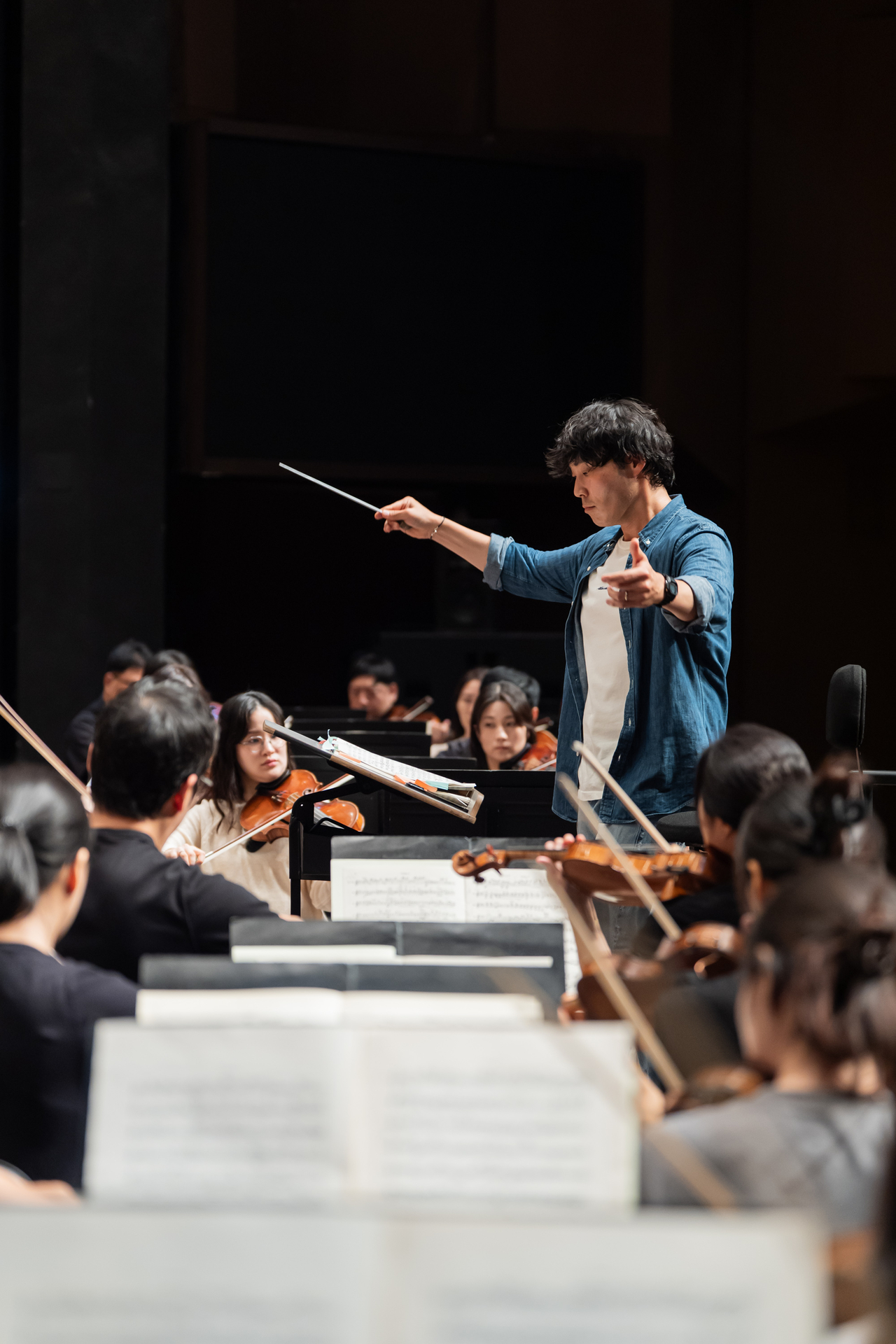
The instinct still shapes how he leads. He describes his style as embracing rather than dictating, guided by three words: clarity, conviction and sincerity. He steps onto the podium without trying to impress.
"When I try to prove myself, it always goes south," he said.
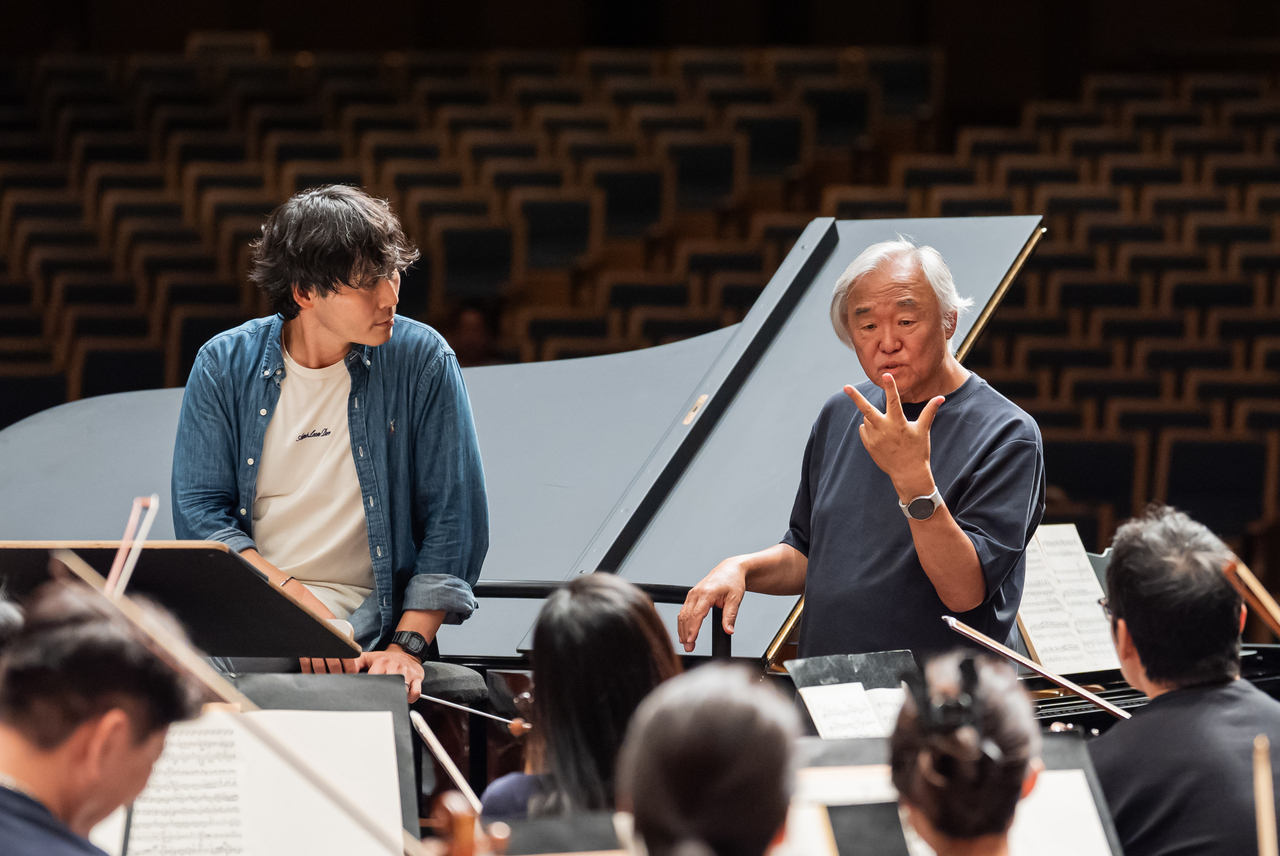
The biggest turning point, he says, came during his three years as assistant conductor of the Boston Symphony Orchestra from 2021 to 2024. In his first year there, he won the 2022 Sir Georg Solti Conducting Award from the Solti Foundation US, a year after receiving its Career Assistance Award. His office was next to that of music director Andris Nelsons. Lee recalls once asking Nelsons what he should tell the orchestra to get the sound he wanted. Nelsons replied: “You don't have to tell them anything. You just have to show it.”
Boston also brought him full circle. As a boy, Lee says, he fell for the cello watching a documentary in which Yo-Yo Ma coached young players at Tanglewood. In August 2024, in his final concert as the orchestra's assistant conductor, he led Ma at Tanglewood in Schumann's Cello Concerto. Leading a cellist he had admired since childhood, he said, felt almost as if he were playing the concerto himself.
A year later, the orchestra called him back on a few days' notice to replace Zubin Mehta in Beethoven's Ninth, Tanglewood's traditional season finale. Experiences like that have reinforced his long-term plan: keep learning scores. By the time he is 60, he hopes, "everywhere I go, it will most likely be a lot of music that I have done."
His most exacting critic is still the man who once rented those laser discs. Before Lee conducts a piece such as Shostakovich's Symphony No. 5, his father studies it and listens to about 20 recordings. After the concert, he asks why the tempo changed where it did. "He's usually right," Lee said. "It makes me very self-conscious, but he loves it. That's his joy."
At home in New York, by contrast, music rarely comes up. He and his wife, New York Philharmonic flutist Son Yoobin, rarely talk about music unless something isn't going well, he said, because once he is home with their 6-year-old, "it's time to raise our daughter."
When he does try to bring music into the conversation, his daughter, unlike Lee, does not welcome critiques. When he offers pointers during her piano practice, she tells him, “Daddy, stop.”
Having once lost his career as a cellist, Lee says he no longer takes performing for granted. Asked what kind of conductor he hoped to become, he did not name an orchestra or a title. He simply hopes to be "a person that could bring the joy."
"Music is to connect people and to bring people together," he said.
gypark@heraldcorp.com