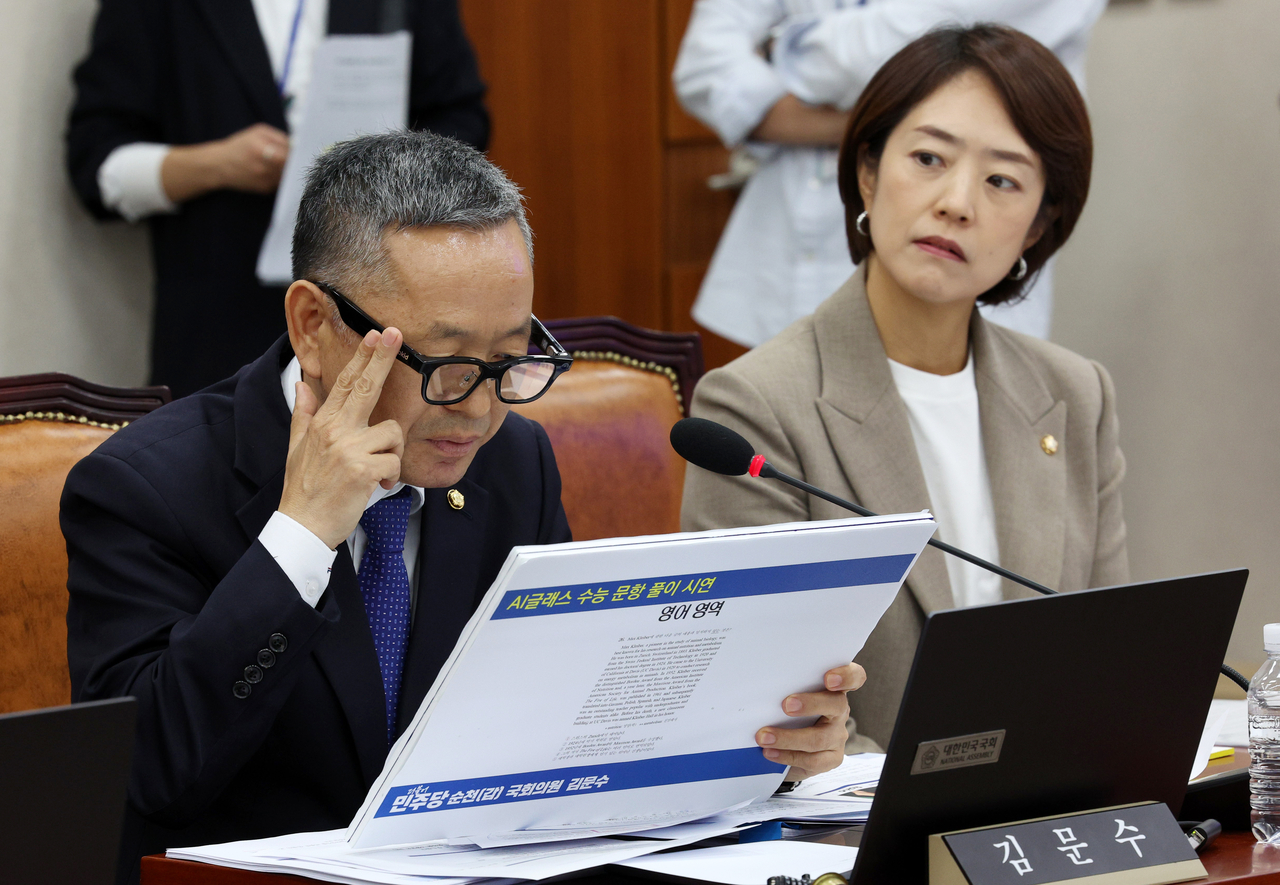
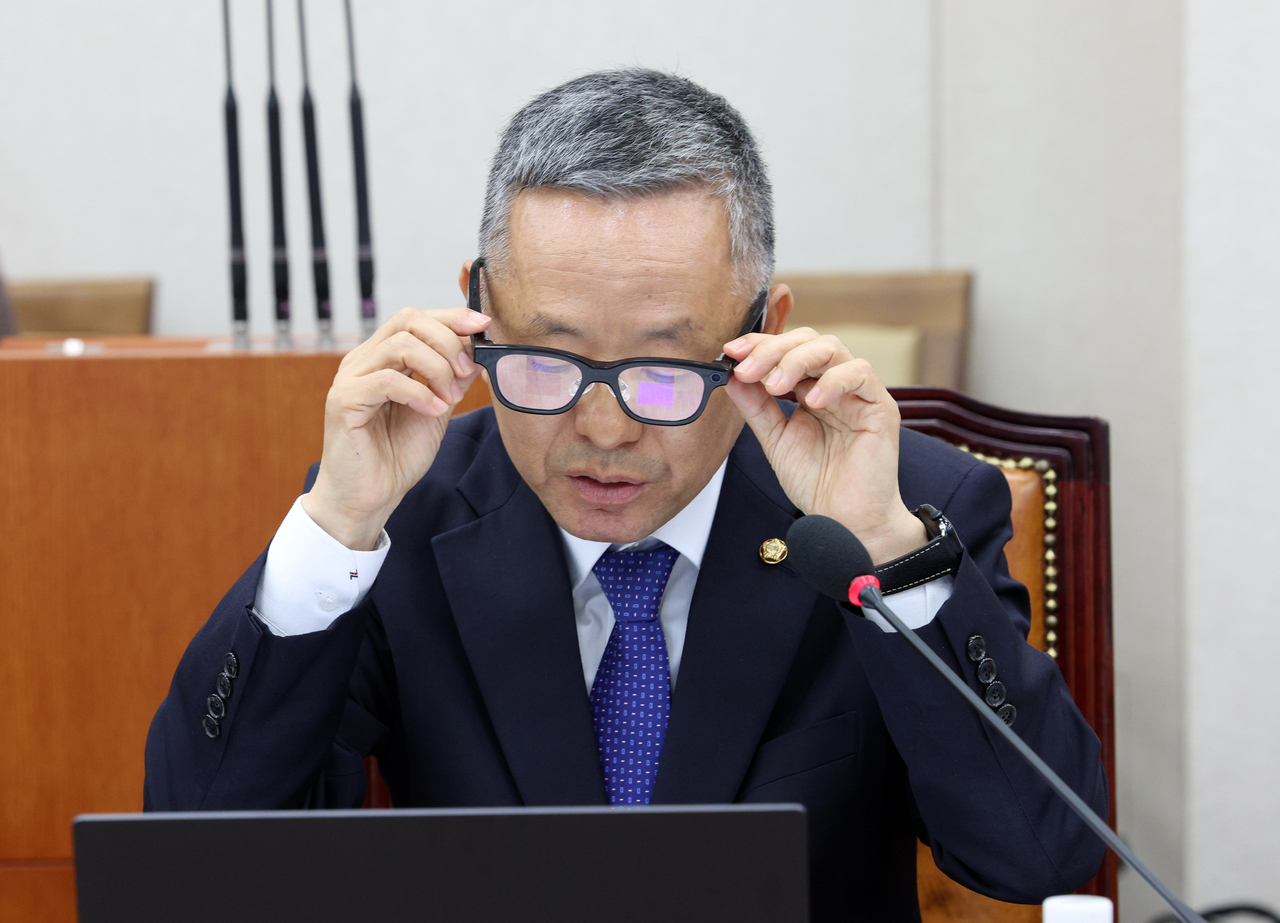
Democratic Party of Korea Rep. Kim Moon-soo tapped his AI-powered glasses and asked them to solve an English question from Korea’s college entrance exam during a parliamentary audit Wednesday.
After a brief pause, he told fellow lawmakers and Education Ministry officials that the device had returned choice No. 3.
Education Minister Choi Kyo-jin said officials were preparing guidance to identify smart glasses ahead of the College Scholastic Ability Test, or Suneung, but deploying radio-frequency detectors at testing centers would be difficult this year.
“Glasses fitted with artificial intelligence, or ‘AI glasses,’ are now threatening the Suneung,” Kim said. “There have already been cases in the Test of Proficiency in Korean where test-takers were caught cheating using these glasses.”
Kim also pointed to cases involving such glasses in the country’s national technical qualification exams.
When asked by Kim how the National Institute for International Education plans to respond to such cheating, NIIED President Han Sang-shin said TOPIK testing centers in Korea have been equipped with radio-frequency detectors.
“We have distributed a manual, and test-takers are being screened starting in the hallways,” Han said.
He added that most overseas testing centers have metal detectors and that the institute is working to introduce radio-frequency detectors as well.
“Smart glasses are a new type of threat,” Choi said. “If cheating is detected, we plan not only to disqualify the test-taker from this year’s Suneung but also to bar them from taking the exam the following year.”
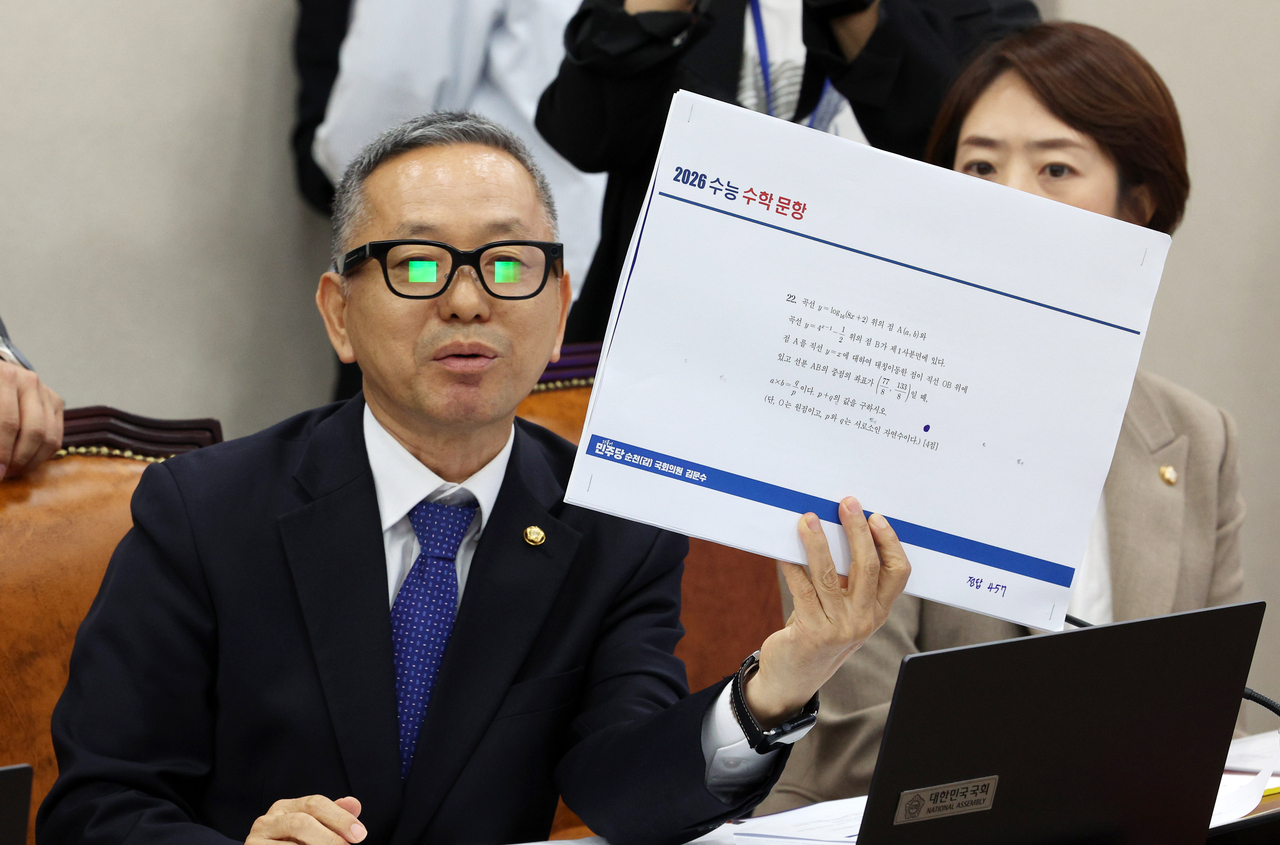
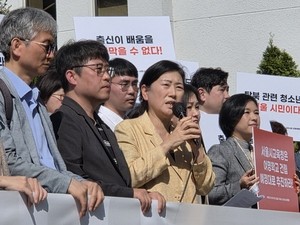
Democratic Party of Korea Rep. Kim Moon-soo holds up a question from the English section of the College Scholastic Ability Test while wearing AI-powered glasses during a parliamentary audit at the National Assembly on Wednesday. (Newsis)
“We are currently developing a standardized manual and audiovisual training materials on how to detect smart glasses,” Choi said, adding that the ministry would work with metropolitan and provincial education offices to ensure schools are adequately prepared.
However, introducing detection equipment this year remained difficult, he said.
“Radio-frequency detectors have been tested in actual testing environments, but I was told that differences in the environment and surrounding conditions at each testing center would make it difficult to deploy them this year,” he said.
Concerns over the information-gathering capabilities of smart glasses were also raised during a separate parliamentary audit by the National Assembly’s National Defense Committee.
seungku99@heraldcorp.com