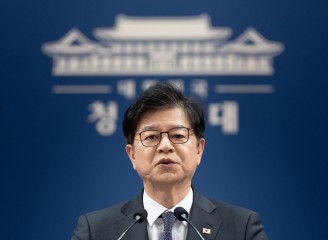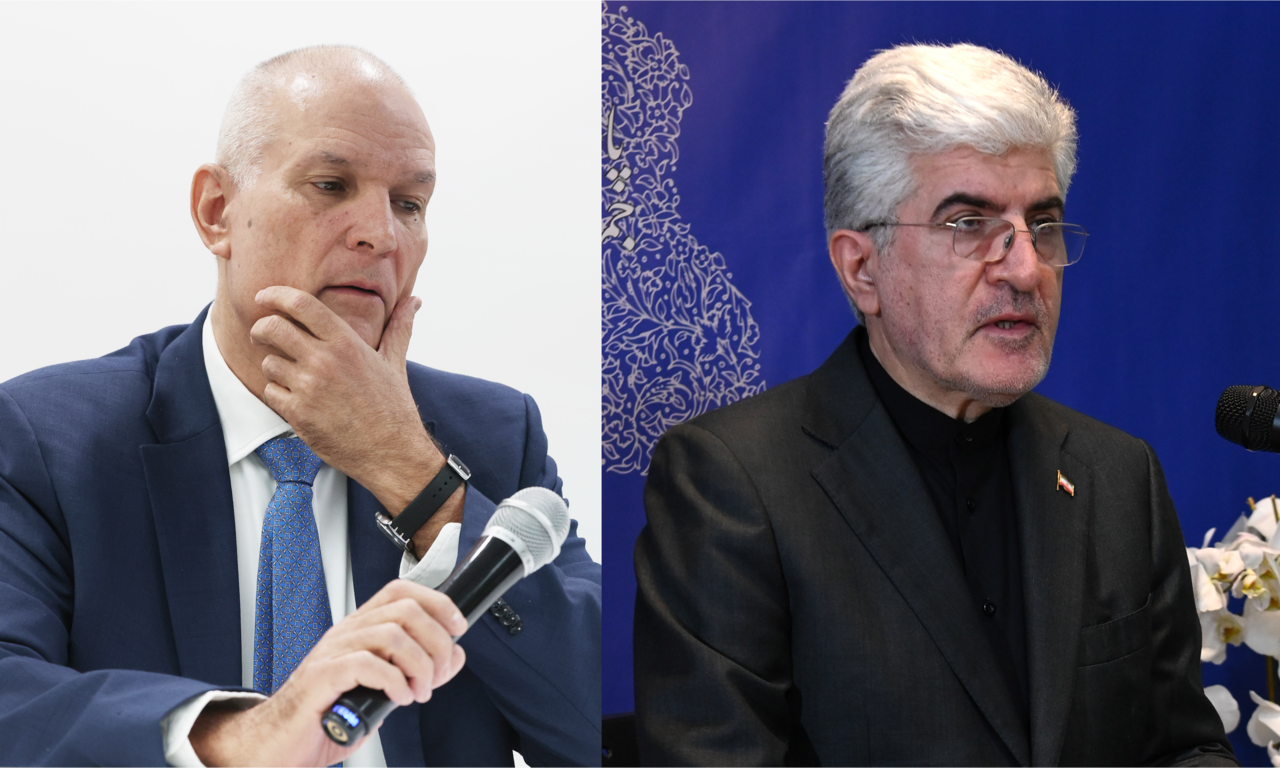
The embassies of Israel and Iran held separate press briefings in Seoul on Thursday, with each side reiterating its position in the ongoing conflict in briefings held about an hour apart.
In his briefing, Israel's Ambassador to South Korea Rafael Harpaz underscored his country's resolve to continue until its objectives are achieved, while Iranian Ambassador Saeid Koozechi condemned the Israeli and US actions.
According to Harpaz, Israel concluded that immediate action was necessary after observing that Iran had continued expanding its nuclear and missile programs following earlier strikes in June 2025 targeting its nuclear infrastructure.
"If we wait, they will become nuclear like North Korea," Harpaz said.
Harpaz pointed to Iran's uranium enrichment level of about 60 percent as evidence that Tehran's nuclear activities could not be considered purely civilian.
Asked how long the military campaign could continue, Harpaz declined to provide a specific timeline, but said the operation would not be open-ended. Harpaz, however, said that Israel will continue its military offensive until Tehran's nuclear and missile capabilities are irreversibly neutralized.
"It's not an endless operation," he said, adding that Iran is "very isolated."
The Israeli ambassador also addressed reports that an Iranian girls' school had been struck during the conflict, an incident Tehran has described as a war crime.
"Israel is not attacking civilians intentionally," he said. "This is our policy — in difference from Iran, that is, attacking only civilians."
Responding to questions about remarks from US officials suggesting Israel had effectively drawn Washington into the conflict, Harpaz said the operation was the result of close consultation between the two allies.
The Israeli Embassy briefing took place about an hour after a separate press conference held by the Iranian Embassy in Seoul earlier Thursday.
At that briefing, Iran's Koozechi condemned the Israeli and US actions, pointing to the recent strikes that led to heavy civilian casualties, including the killing of children. According to the ambassador, the school attack killed more than 160 students and injured dozens of others.
Koozechi said Iran had been engaged in nuclear negotiations with the United States and was preparing for further technical discussions in Vienna when the attack took place, arguing that the military strike had "blocked the path of diplomacy."
He also rejected accusations that Iran is seeking nuclear weapons, saying the International Atomic Energy Agency had repeatedly found no evidence that Tehran's nuclear activities were aimed at developing a bomb.
The ambassador said Iran would continue to exercise what he described as its right to self-defense while remaining committed to resolving disputes through dialogue, but added that negotiations would not be possible while military attacks continued.
"We believe problems should be solved through diplomacy and dialogue," Koozechi said. "But if our enemies choose war, we will not be afraid."
flylikekite@heraldcorp.com

![[Legal updates in Korea] New insurance mandate protects firefighters on the job](https://wimg.heraldcorp.com/news/cms/2026/10/01/news-p.v1.20261001.76835f19eb424f18814ac3bb65d896a9_T1.jpg?type=h&h=800)