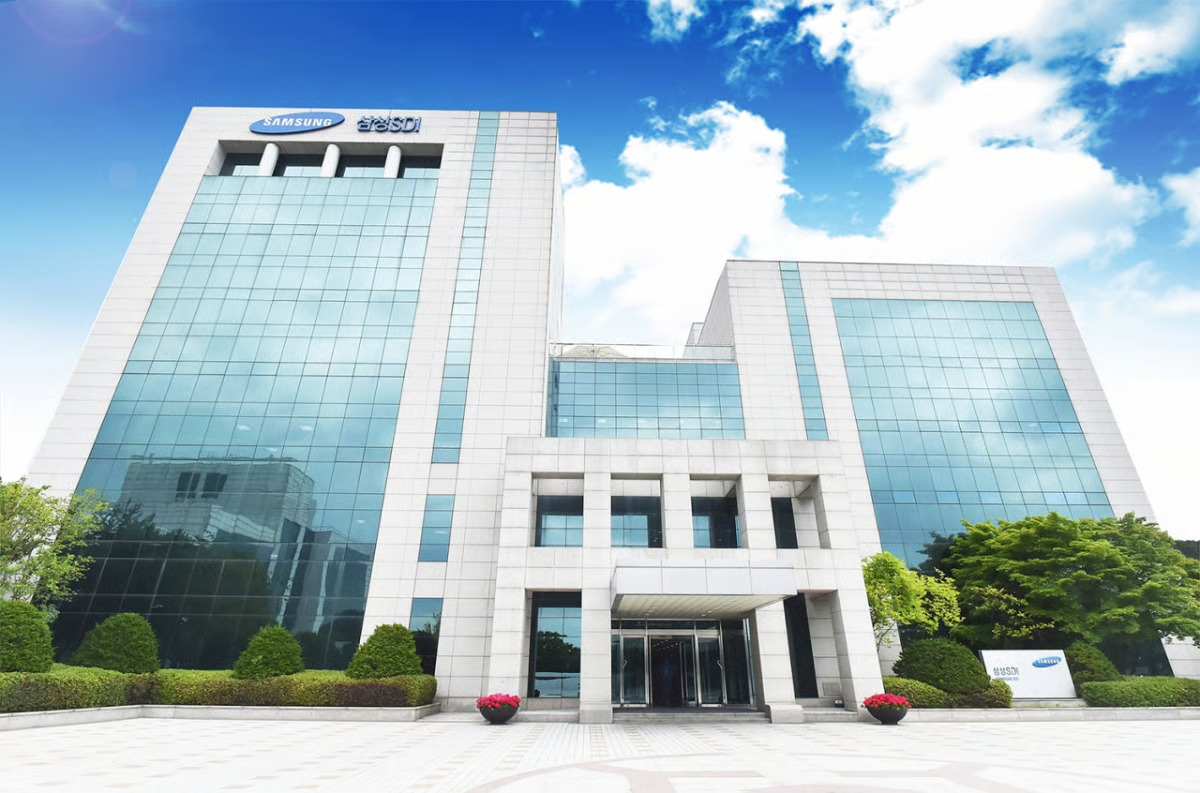
Samsung SDI is set to sell its 15.22 percent stake in Samsung Display — valued at about 10 trillion won ($6.9 billion) — to fund investments in energy storage systems and strengthen its financial structure as a prolonged slowdown in the electric vehicle market weighs on earnings.
According to the company, it informed its board on Thursday of plans to sell its stake in Samsung Display, while details -- including the counterparty, deal size, terms and timeline -- remain undisclosed. The proposal will be reviewed by the Sustainability Management Committee, composed of outside directors, ahead of the board’s approval.
Since spinning off from Samsung Electronics in 2012, Samsung Display’s largest shareholder has been Samsung Electronics, which holds an 84.78 percent stake, with Samsung SDI holding the remaining 15.22 percent.
The stake sale comes as Samsung SDI seeks a turnaround by reshaping its strategy from premium nickel-based EV batteries toward more cost-competitive lithium iron phosphate cells for fast-growing ESS -- largely driven by the AI data center boom -- while continuing to invest in advanced technologies such as all-solid-state batteries.
Last year, Samsung SDI posted 13.27 trillion won in sales revenue and 1.72 trillion won in operating losses due to slowing demand in the North American EV market.
Industry observers say Samsung SDI likely opted for a stake sale instead of a rights offering, after its 1.65 trillion won rights issue faced strong shareholder backlash last March.
As the only non-Chinese prismatic battery maker, Samsung SDI is diversifying its ESS portfolio with products ranging from the nickel-based SBB 1.7 to the LFP-based SBB 2.0, while expanding US production capacity for ESS batteries. It recently converted part of the EV battery line at StarPlus Energy -- its US joint venture with Stellantis -- into ESS battery production.
With Stellantis reportedly considering an exit from StarPlus Energy amid a scale-back of its electrification strategy, sources say the US automaker may sell its stake to Samsung SDI or a third party. If the deal goes through, Samsung SDI could potentially use funds from its Samsung Display divestment to acquire Stellantis’ remaining 49 percent stake.
Samsung SDI plans to convert part of its Hungary plant to LFP battery production, including 46-millimeter cylindrical battery lines, to boost operational efficiency. It is also accelerating all-solid-state battery development, partnering with BMW for battery validation, with production line expansions scheduled this year.
hyejin2@heraldcorp.com

![[Surive&Thrive] Tips for getting around Seoul by subway (2)](https://wimg.heraldcorp.com/news/cms/2026/10/08/news-p.v1.20261006.1e7dee51d7f64cdba1a20b897d88cee6_T1.jpg?type=h&h=800)