Lack of clear information and subway service disruptions add to commute chaos
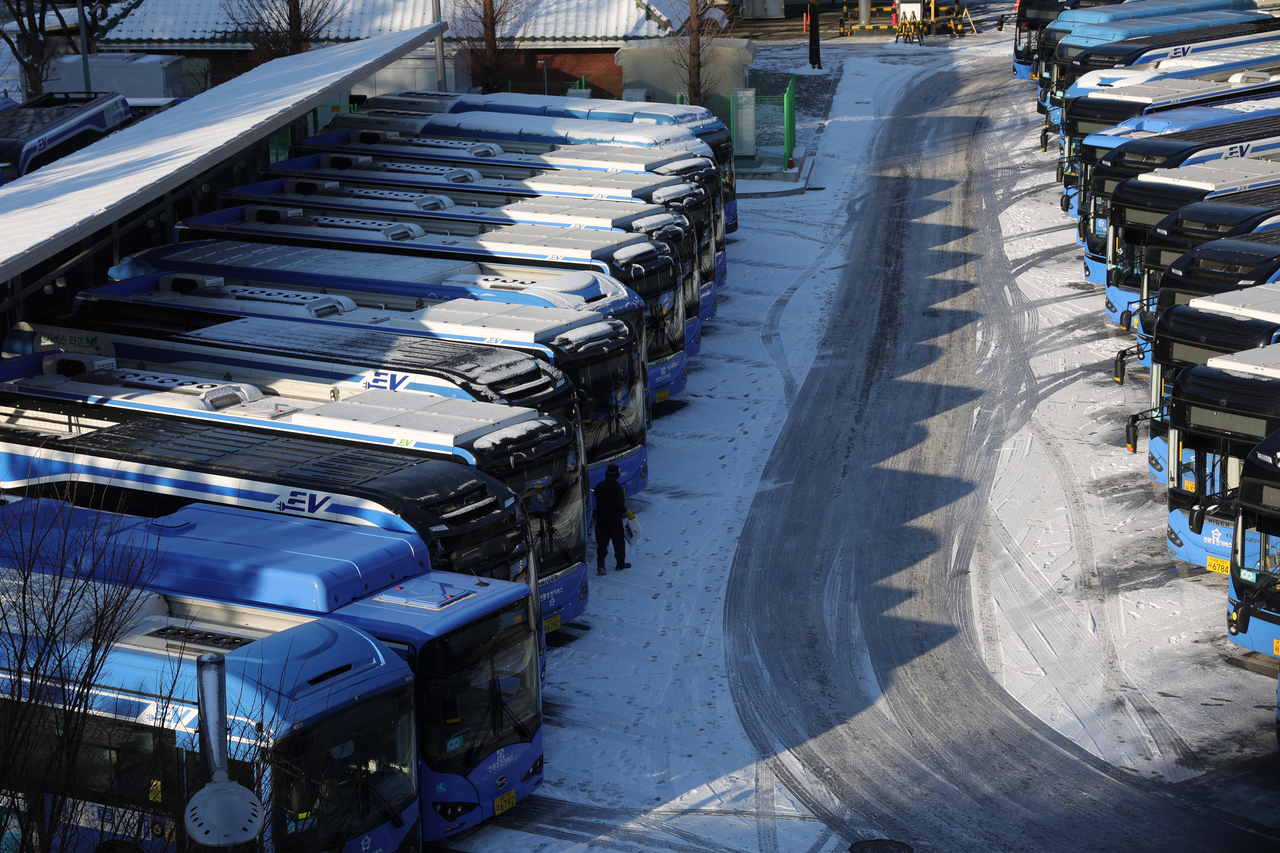
An indefinite walkout by Seoul city bus drivers beginning Tuesday morning caused widespread confusion among commuters, both for Seoul residents and those traveling into the capital.
With city buses suspended, commuters crowded into packed subway trains while struggling to hail taxis that failed to arrive. Others wandered around icy sidewalks near bus stops, unsure how to continue their journeys.
The Seoul City Bus Workers Union launched an all-day strike starting at 4:00 a.m. after wage negotiations with the Seoul Metropolitan Government collapsed. A total of 6,540 buses, accounting for 93.2 percent of all city buses operating in Seoul, were taken out of service, leaving intercity buses and most village buses running.
Blue city buses form the backbone of Seoul’s public transportation system. By contrast, intercity buses and village buses, marked in red and green, provide more limited coverage.
At a bus stop near Soonchunhyang University Hospital in Yongsan-gu, central Seoul, fewer people than usual were gathered at 8:20 a.m., most staring at their mobile phones in an attempt to book taxis. The stop is a key transfer point where commuters from southern Gyeonggi Province typically switch from intercity buses to Seoul city buses.
During the morning rush, multiple city buses normally arrive in quick succession, with crowds rushing to board. On Tuesday, however, not a single bus arrived for more than 10 minutes. Electronic displays showed all routes as “waiting for departure.”
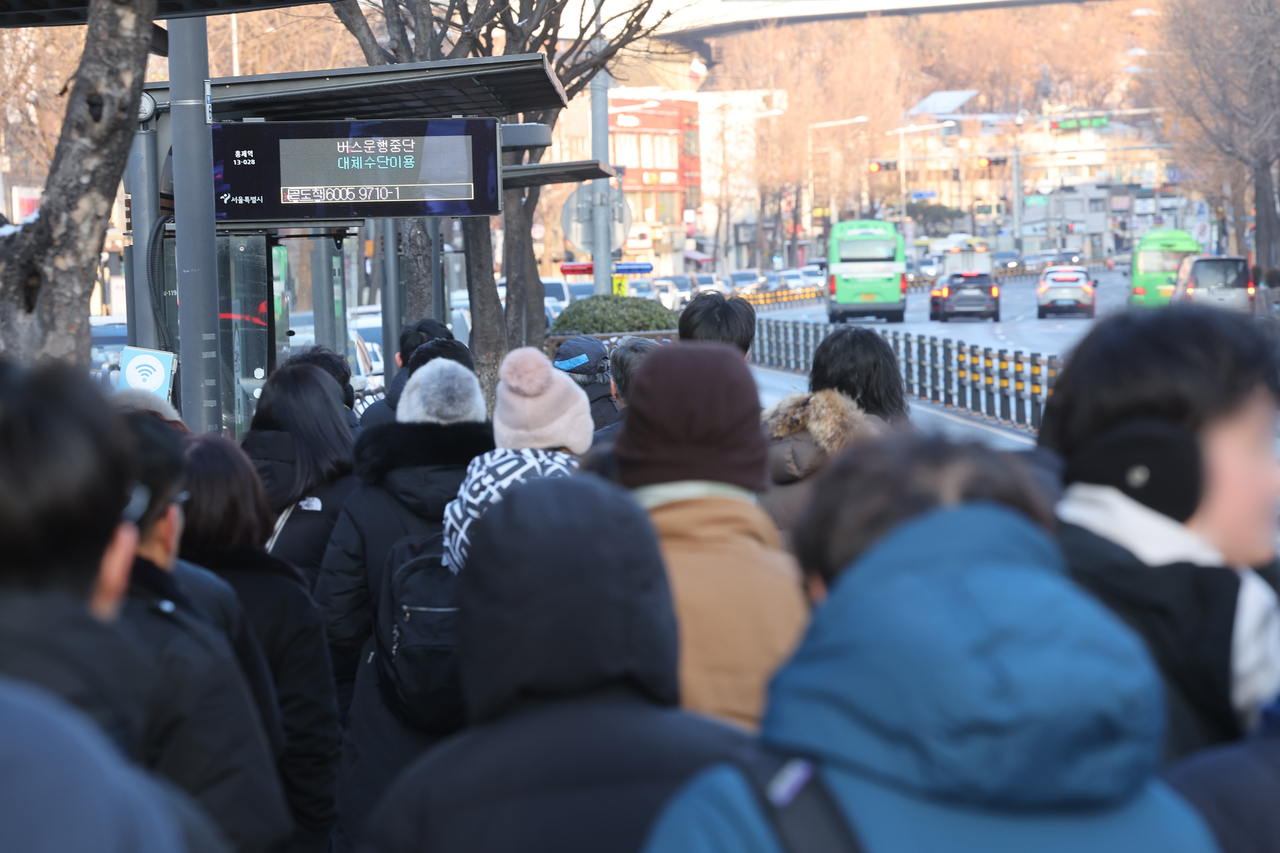
“They notified Seoul residents about the strike, but I didn’t know about it,” said Kim Won-jong, a commuter in his 50s from Suwon, Gyeonggi Province. “I need to go to Samgakji, but I haven't been able to get a taxi for several minutes.”
Kim eventually left the area to search for another location where taxis might be available.
The city increased rush-hour train operations, but commuters faced heavier-than-usual congestion in streets, and many were also forced to walk in icy conditions.
“I usually take a bus after transferring once on the subway, but today I had to make two subway transfers,” said Lee Ju-yeon, a woman in her 30s traveling from eastern Seoul to Eonju Station in southern Seoul. “My office is on a hill, so I normally get off at a closer stop. I’m already exhausted.”
Crowding on subway platforms and trains was reported to be 20 to 30 percent higher than average for rush hour. Some commuters also said Seoul Metro Line No. 2 experienced service disruptions due to system issues.
The circular line, which passes through major business districts such as Gangnam and Euljiro, was reportedly stopped for more than 15 minutes at multiple stations, according to posts shared on the social platform X.
District governments introduced provisional measures, including shuttle buses linking major subway stations within their jurisdictions, but these efforts were widely seen as insufficient to address the transportation disruption.
At a shuttle stop in Yongsan-gu, there were no signs or staff guiding passengers, and nearby police officers were unable to provide clear information. When a bus bearing a banner reading “temporary shuttle” approached, several older women ran across icy streets to board, creating a precarious scene.
Foreign national visitors, unfamiliar with Seoul’s transportation system, also appeared confused. A group of travelers waited for a district shuttle in Yongsan-gu, mistakenly believing it would take them to Sinsa Station in Gangnam-gu. While the area is normally served by multiple bus routes heading toward Sinsa, no direct city buses were operating due to the strike.
A Yongsan-gu official advised them to take an intercity bus instead, but the suggested route involved multiple transfers and detours, leaving the travelers visibly uncertain about how to proceed.
forestjs@heraldcorp.com