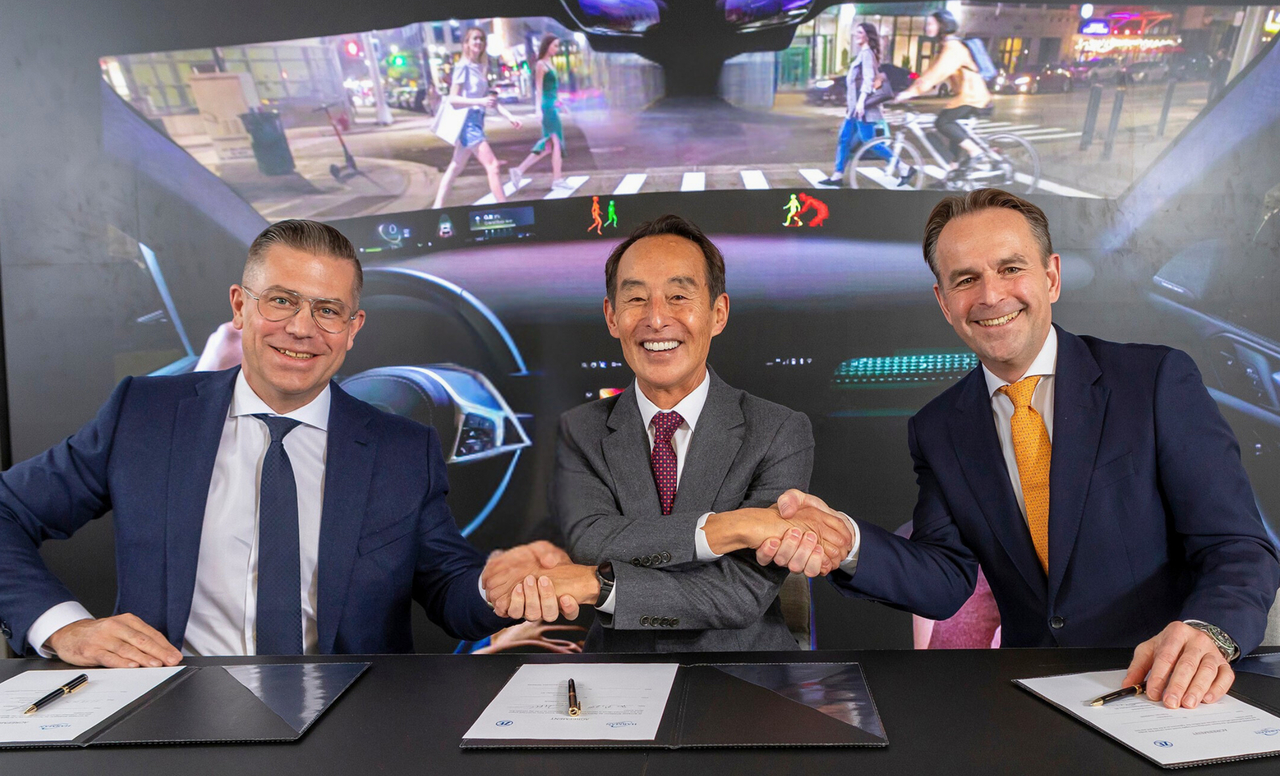
Samsung Electronics said Tuesday it will acquire the advanced driver assistance systems business of Germany's ZF Friedrichshafen for 1.5 billion euros ($1.6 billion), strengthening its push into automotive electronics.
The acquisition will be carried out through Samsung's automotive subsidiary Harman International, the company said. It marks Samsung's first major deal in the automotive sector since it acquired Harman in 2017. The transaction is expected to be completed in 2026, subject to regulatory approvals.
"The deal provides a strategic foothold to supply centralized integrated controllers at a time when digital cockpits and ADAS are converging," Harman International CEO Christian Sobottka said. "Harman will combine its automotive expertise with Samsung's IT leadership to support automakers' transition to software-defined vehicles and next-generation centralized vehicle architectures."
ZF's ADAS business specializes in front-facing smart cameras and related driver assistance technologies and is regarded as a global market leader in camera-based ADAS solutions. The unit has more than 25 years of operating history and supplies major global automakers, working with a wide range of system-on-chip providers, Samsung said.
ZF CEO Mathias Miedreich said Harman is an ideal partner to further scale the ADAS business.
"Harman is the right partner to unlock the full potential of ADAS business. We expect ZF's ADAS operations to continue to grow and innovate together with Harman," Miedreich said.
Through the acquisition, Harman will add ADAS controllers and camera technologies to its existing portfolio, which has focused on digital cockpits, infotainment systems and in-vehicle audio.
Samsung said it plans to continue pursuing large-scale acquisitions through its Harman collaboration team, while creating synergies between Samsung's IT, software and AI capabilities and Harman's automotive and audio technologies, targeting annual revenue of more than $20 billion by 2030.
The latest deal comes as the auto industry moves toward centralized computing architectures, in which digital cockpits and driver assistance functions are integrated into a single controller. Such architectures enable over-the-air software updates, shorter development cycles and greater flexibility in adding new vehicle functions.
According to Samsung, the global market for ADAS and centralized vehicle controllers is expected to grow rapidly, rising from 62.6 trillion won ($46 billion) in 2025 to 97.4 trillion won in 2030 and 189.3 trillion won by 2035, driven by demand for improved safety and convenience.
herim@heraldcorp.com