The gulf between South Korea’s main two parties is growing, as the main opposition People Power Party continues its filibuster in the National Assembly while pressing for a special counsel probe into bribery allegations against ruling Democratic Party lawmakers.
On Friday, the Assembly passed a revision to the Criminal Procedure Act, after the ruling party, which holds 166 of the Assembly’s 298 seats, voted to terminate a filibuster launched by the People Power Party the previous day, with the approval of all 181 lawmakers present.
Under the National Assembly Act, a motion to end a filibuster may be put to a vote 24 hours after it begins and requires the support of three-fifths of lawmakers present.
Following the bill’s passage, the People Power Party immediately launched another filibuster against a revision to the Banking Act that was subsequently placed on the Assembly agenda.
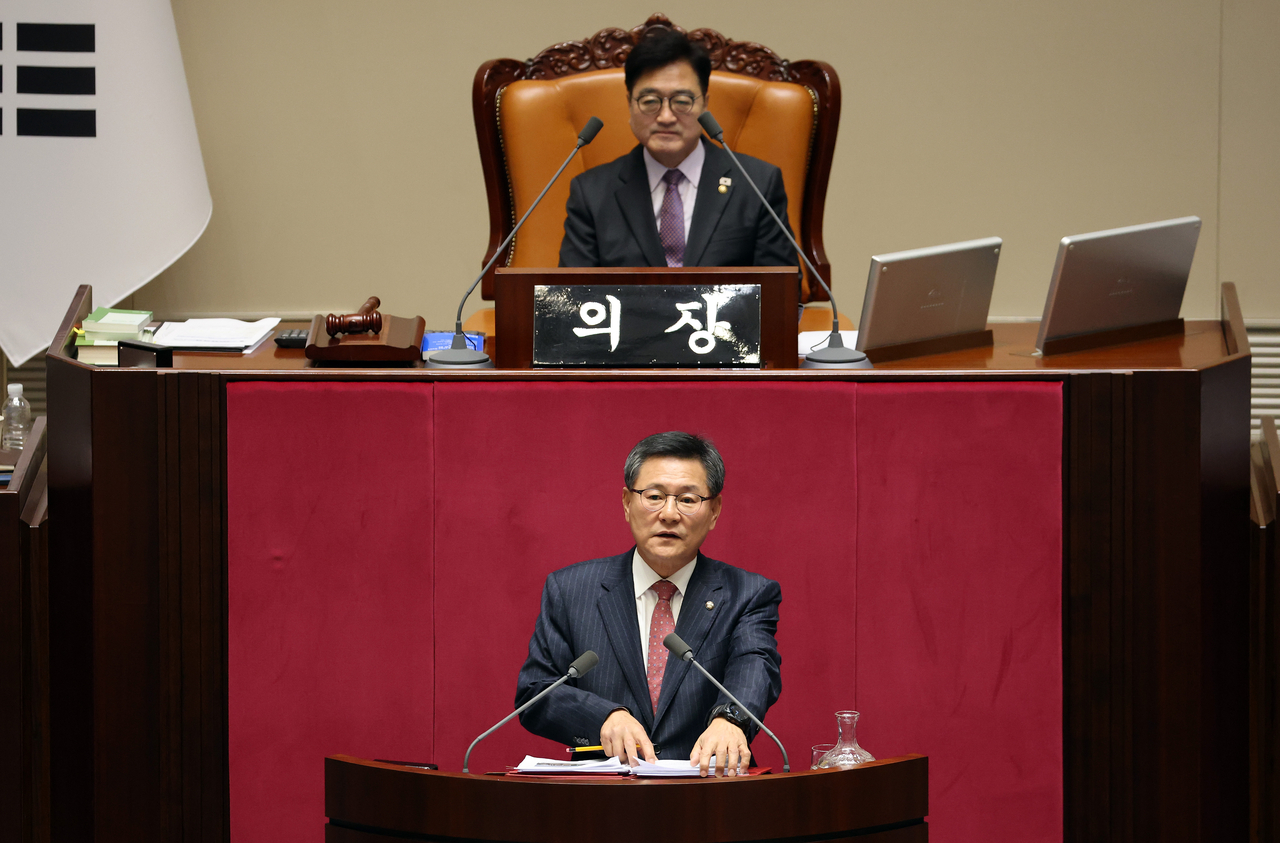
The confrontation had already intensified Tuesday, when Speaker Woo Won-shik cut off the microphone of Rep. Na Kyung-won, a five-term People Power Party lawmaker, during her filibuster speech.
Woo, who relinquished his Democratic Party membership after being elected speaker in June 2024, said the move was based on procedural grounds, citing repeated off-topic remarks that violated Assembly rules governing the scope of debate. The opposition, however, accused him of selectively enforcing parliamentary rules.
In response, the People Power Party submitted a resolution calling for Woo’s resignation, arguing that he had violated the political neutrality required of the Assembly’s presiding officer.
The Democratic Party countered by filing disciplinary motions against Na and fellow People Power Party lawmaker Kwak Kyu-taek, accusing them of obstructing parliamentary proceedings.
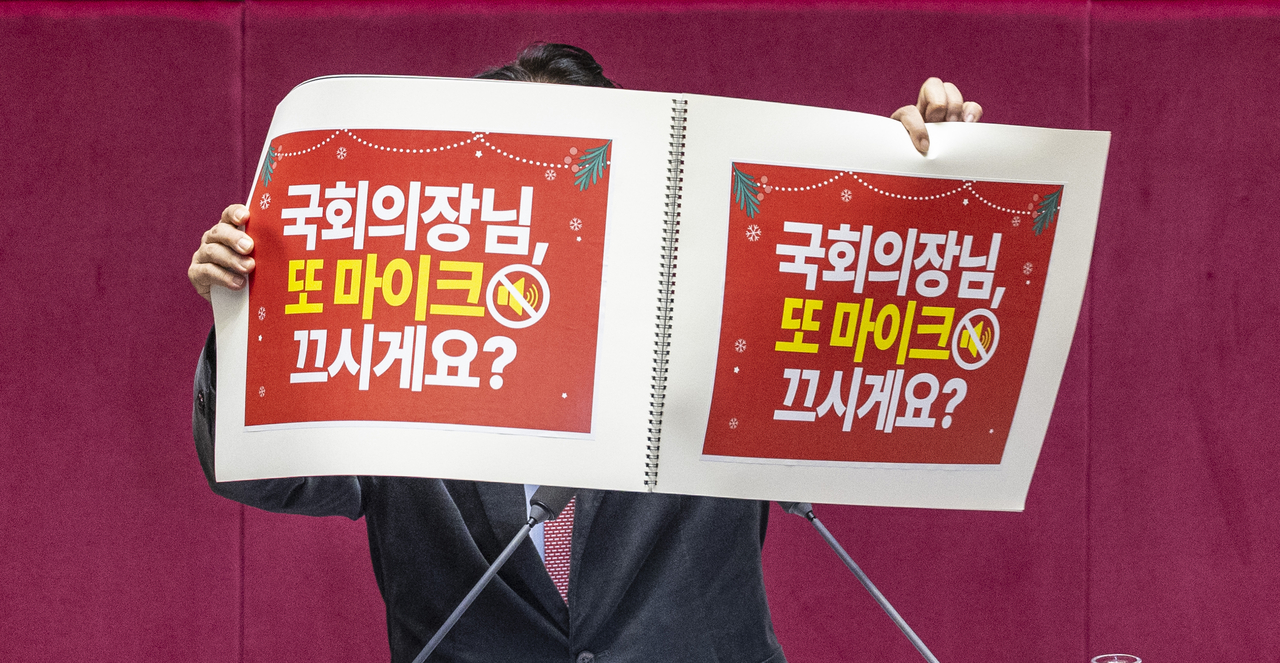
On Thursday, People Power Party lawmakers staged a protest inside the Assembly chamber, holding placards reading, “Mr. Speaker, will you turn off the mic again?”
The confrontation escalated further when People Power Party floor leader Song Eon-seok called on Friday for a special counsel investigation into allegations involving the Unification Church.
The call follows reports that investigative authorities reviewed financial records linked to individuals affiliated with the church, raising suspicions that current and former Democratic Party lawmakers may have received money or other benefits in violation of political funding laws.
The Democratic Party dismissed the allegations as politically motivated, saying any suspected wrongdoing should be addressed through standard legal procedures rather than a special counsel.
flylikekite@heraldcorp.com