Korea Herald correspondent
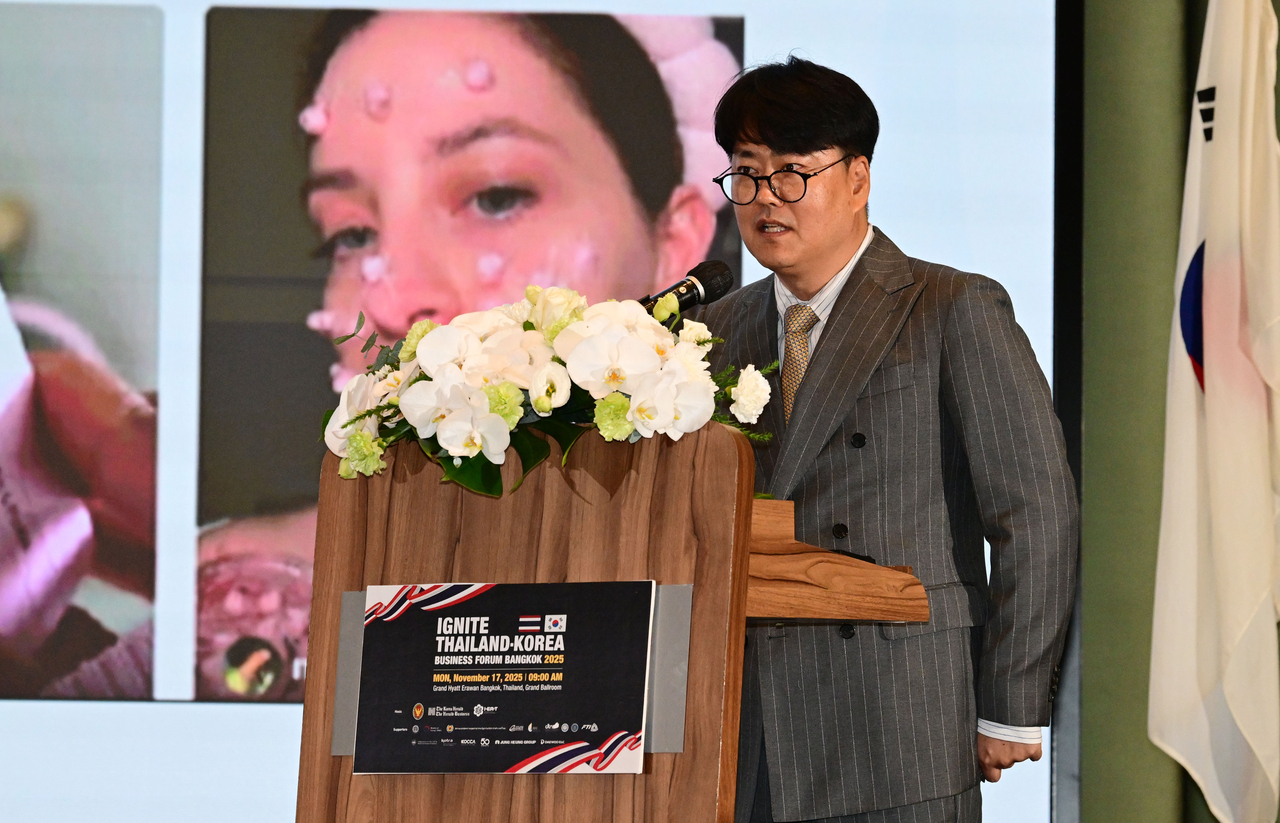
BANGKOK — Cho In-je, CEO of skin care company Purito Seoul, said Thailand can play a pivotal role in expanding K-beauty’s recent global rise into Southeast Asia, calling the country a strategic gateway for South Korean cosmetics.
“If we build a collaboration model that combines Thailand’s cultural strength with the appeal of K-beauty, Thailand can become a major distribution and production base for Korean brands entering the ASEAN market,” Cho said, referring to member states of the Association of Southeast Asian Nations.
He made the remarks Monday at the Ignite Thailand-Korea Business Forum, co-hosted by Herald Media Group — publisher of The Korea Herald and Herald Business — and the Thai Embassy in Seoul. The event was held at a hotel in Bangkok.
Cho highlighted South Korea’s structural manufacturing capacity as a key driver of K-beauty’s success. The industry is supported by more than 4,000 original equipment and original design manufacturers — including leaders such as Cosmax and Kolmar — enabling both small and large firms to respond quickly to market trends and scale production.
“Even small businesses without in-house research teams can launch competitive products by leveraging the cutting-edge R&D infrastructure of these companies,” he said.
He noted that Korean producers are increasingly expanding their presence in Thailand, citing Cosmax’s construction of its second Thai plant in April. Such developments, he said, could create new momentum for cooperation between K-beauty and Thailand’s emerging beauty sector.
Cho added that Thailand is well-positioned to serve as a supplier within the regional beauty market, saying many raw materials used in skin care formulations are abundant in the country.
“Local production of key cosmetic ingredients places Thailand in a strong position to support broader supply-chain collaboration across the ASEAN market,” he said.
He also emphasized the importance of Thailand’s cultural identity, saying Korean brands should pursue deeper, co-creative work with local cultural assets rather than relying solely on advertisements featuring Thai celebrities.
“Going beyond simply hiring Thai influencers, incorporating Thailand’s cultural heritage into marketing and branding efforts can be a far more powerful strategy,” he said.
Cho said Purito Seoul also hopes to work with Thai partners similarly, pointing to Sulwhasoo’s recent collaboration with The Metropolitan Museum of Art in New York.
He also called for stronger partnerships between Thai e-commerce platforms and Korean beauty brands.
flylikekite@heraldcorp.com