Decision includes ending unabated coal, unveiling a transition plan by 2026
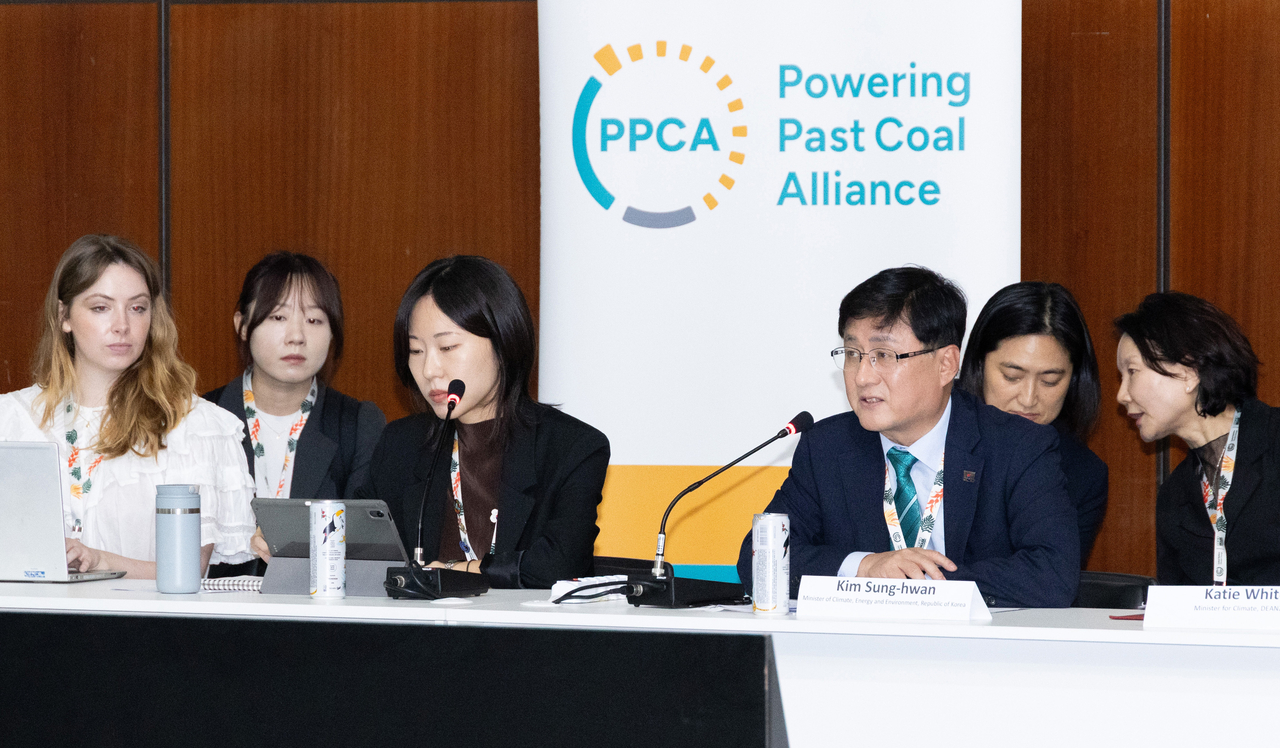
South Korea on Tuesday officially joined a global coalition to phase out coal power, stepping up efforts to overhaul an electricity system still dominated by fossil fuels.
The country announced its entry into the Powering Past Coal Alliance during the COP30 climate summit in Belem, Brazil, marking a significant step in its shift toward a cleaner energy future. According to the Ministry of Climate, Energy and Environment, South Korea is the second Asian nation to join the PPCA, following Singapore.
Several local governments had already signed on ahead of the national government, including Seoul, Gyeonggi Province and Jeju Island, bringing the total number of Korean participants in the alliance to eight.
The PPCA, launched in November 2017 at COP23, is a global coalition consisting of 180 participants including 60 countries that seeks to phase out unabated coal power, or coal-fired electricity generation without emissions-reduction technologies.
The alliance’s analysis holds that to meet the Paris Agreement goal of limiting global warming to preferably below 1.5 degrees Celsius, Organization for Economic Cooperation and Development and EU member states must phase out coal by 2030, with the rest of the world following by 2040.
South Korea, which operates the world’s seventh-largest coal power fleet by capacity, declared that as part of its PPCA membership, it will not build any new unabated coal-fired power plants, according to a press release issued by the Climate Ministry on Tuesday.
The government also announced plans to retire 40 coal power plant units in operation by 2040. For the other remaining 20 plants, the ministry said it will determine the path forward through public discussions that consider both environmental and economic feasibility, with a concrete plan to be presented by 2026.
Korea’s decision to join the PPCA was welcomed by environmental activists based in the country.
“By joining the PPCA, Korea has made it clear on the world’s largest climate stage that it can no longer cling to its coal-centered electricity system that it has continued to heavily rely on,” said Solutions for Our Climate through a press release. “The government must now present and carry out detailed action plans to achieve a genuine coal phase-out.”
Also at COP30, Korea announced its new 2035 greenhouse gas emissions target during a high-level meeting between country representatives.
The target, initially announced by the government on Nov. 10, aims to cut emissions by between 53 percent and 61 percent compared to 2018 levels by 2035.
According to the ministry, Climate Minister Kim Sung-whan emphasized during the meeting that Korea remains “committed to multilateral climate action,” calling on the international community to embrace “collective cooperation” in addressing the climate crisis.
lee.jungjoo@heraldcorp.com