29th edition connects crime fiction, climate, technology and identity, with Korean writers returning to the spotlight
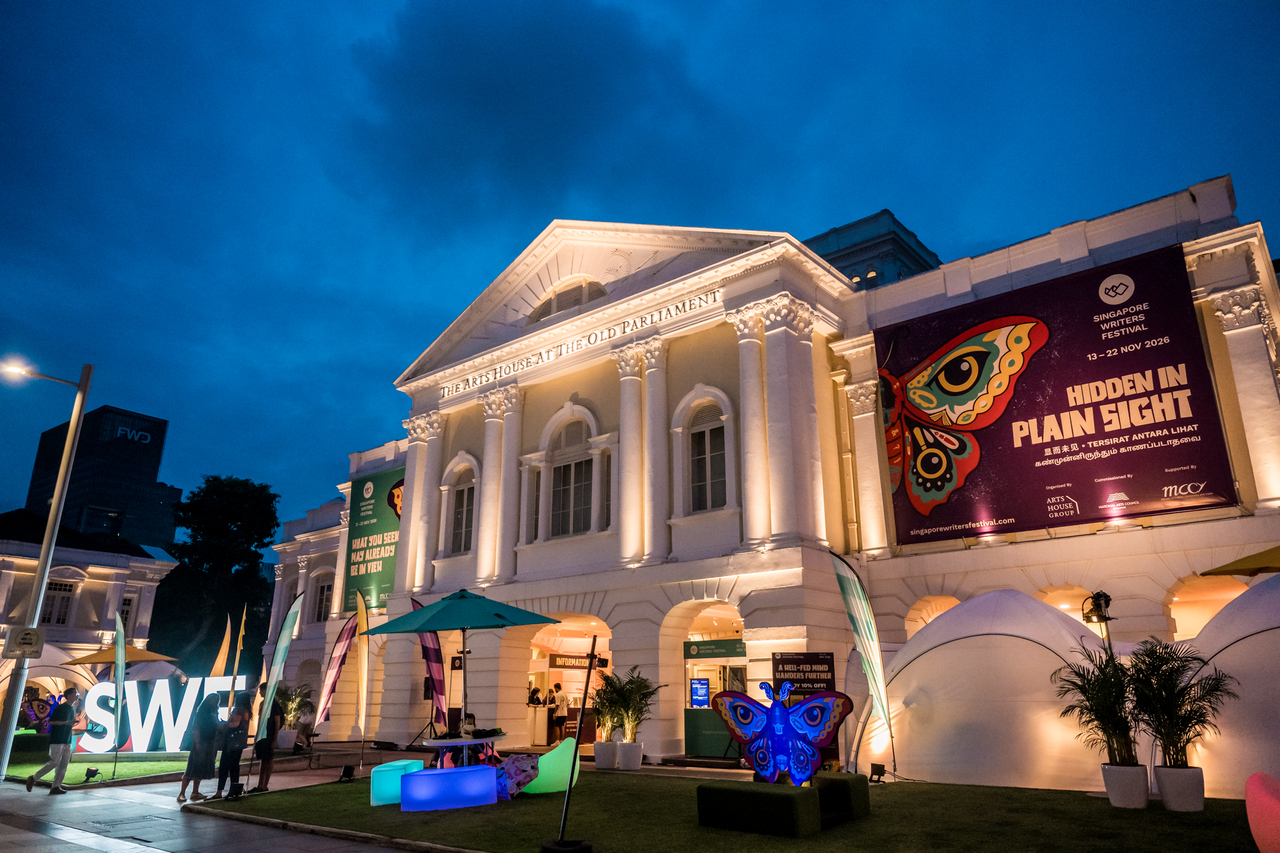
SINGAPORE — Serial killers, artificial intelligence, climate anxiety and the complications of cultural identity may not appear to have much in common.
But the topics were brought together at this year’s Singapore Writers Festival, organized by Arts House Group. Under the theme “Hidden in Plain Sight,” the festival encouraged participants to pay closer attention to familiar stories, assumptions and ideas.
The 29th edition of the festival, which ran from Nov. 13 to 22, brought more than 300 writers, speakers and moderators together for 200 programs spanning fiction, memoir, literary translation, crime writing, journalism, documentary film and other forms of storytelling.
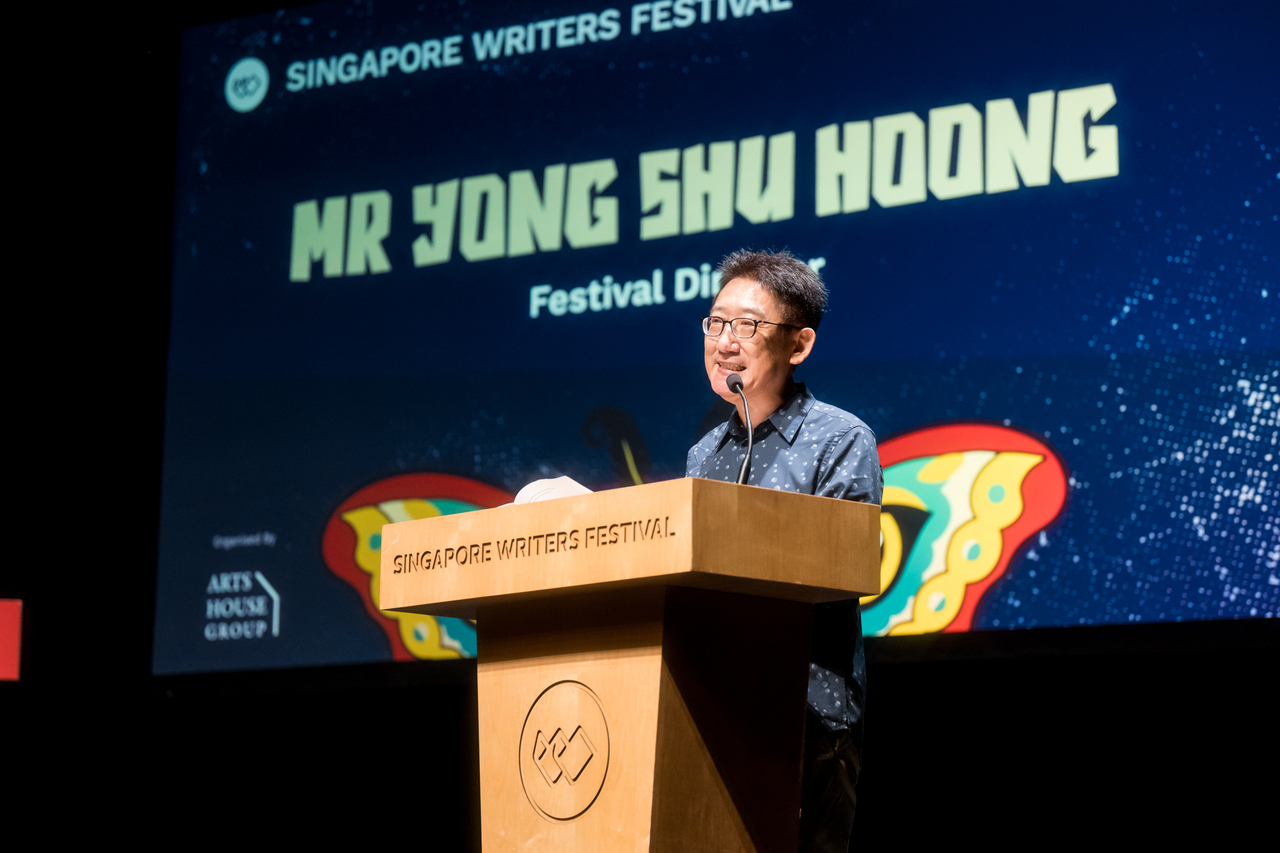
Opening the festival, director Yong Shu Hoong said that this year’s theme focuses on things around us that may be easily overlooked.
“This year, with ‘Hidden in Plain Sight,’ we turn our attention to the present. We ask what we might discover when we look more closely at what is already around us: the overlooked stories, little-known histories and invisible connections that reveal something deeper about ourselves and one another,” Yong said.
He added that the theme had also emerged from concerns about the growing difficulty of distinguishing fact from fiction, adding that in the age of AI, it gets “increasingly difficult to tell the real from the fabricated.”
That emphasis on paying attention to what might otherwise be missed also shaped the festival’s programming.
“As we developed this year’s program, we were intrigued by how literature can encourage us to look again, more carefully and perhaps more generously, at the people, places and ideas around us,” Yong said. “And also between the lines of anything we read — whether a poem or a story.”
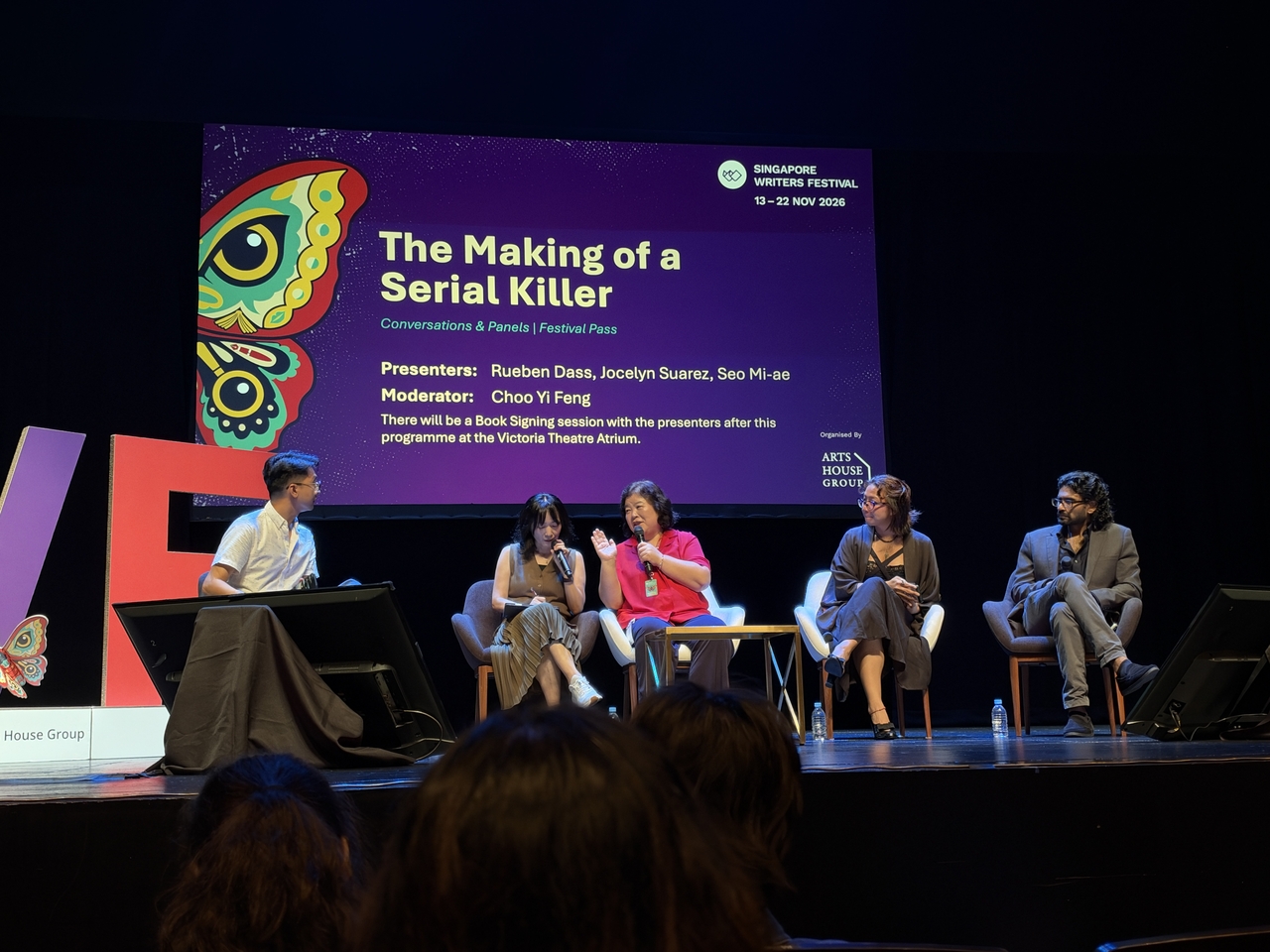
The theme provided a natural setting for one of this year’s major additions, the Crime and Mystery Spotlight.
Among the featured writers was Korean thriller novelist Seo Mi-ae, who joined Malaysian writer Rueben Dass and Singaporean writer Jocelyn Suarez for “The Making of a Serial Killer,” a discussion examining how writers construct believable perpetrators and what drives fictional characters toward violence.
Later the same day, Seo appeared alongside Korean Canadian novelist June Hur for “Two Ways of Writing a Korean Mystery (and Killing It).” Their approaches offered a clear contrast — while Seo’s work delves into the psychology behind violent crime, Hur draws on Korean history to build young adult mysteries around real social conditions, political intrigue and violence.
The sessions also continued SWF’s engagement with Korean literature, two years after Korea was featured as the festival’s 2024 Country Focus program. While there was no dedicated country in focus this year, Seo and Hur gave Korean crime and historical fiction a visible presence at the event.
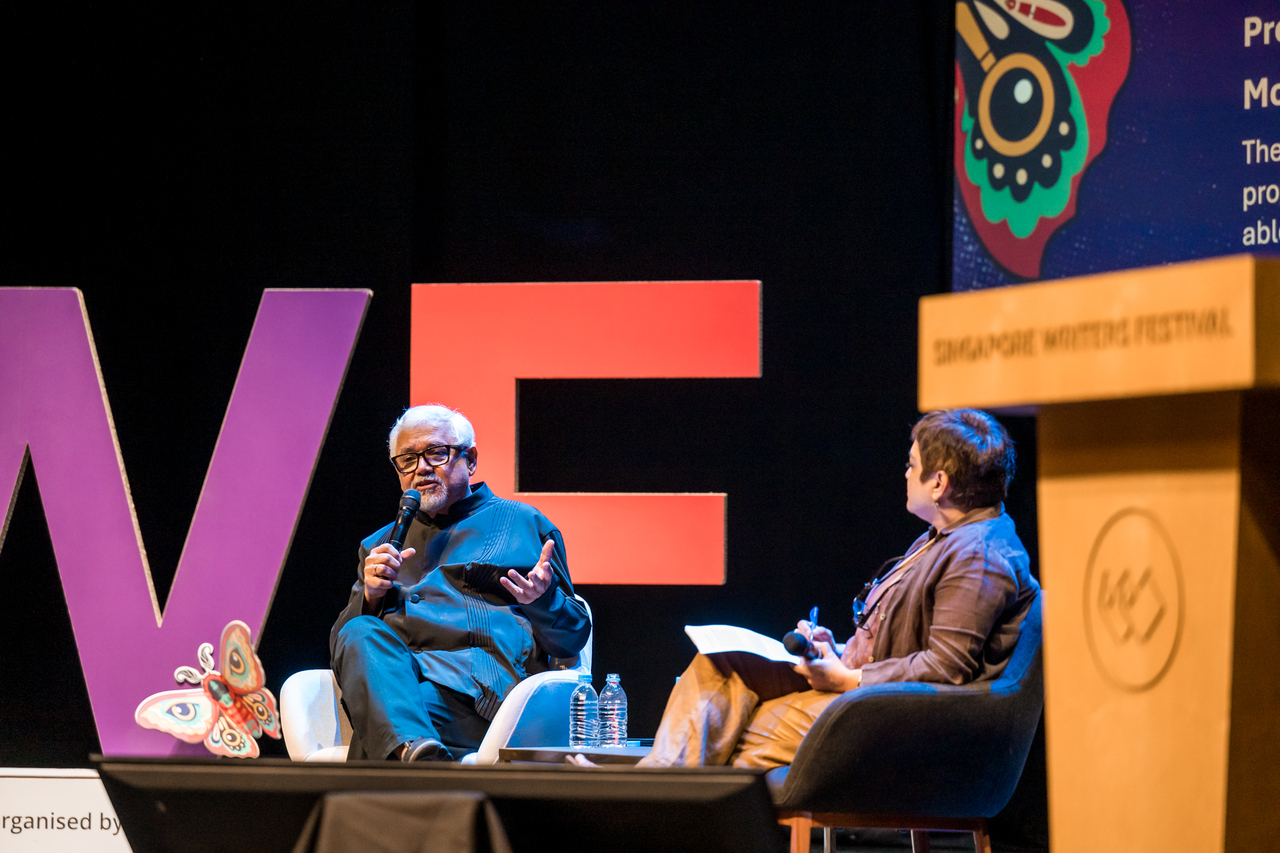
Crime, however, was only one way the festival interpreted the idea of what might be hiding beneath familiar narratives.
In one of the opening weekend’s keynote talks, acclaimed author Amitav Ghosh turned the idea outward to the planet itself. His keynote speech examined what it means when some of the world’s wealthiest and most powerful people respond to climate and social instability by preparing for collapse rather than trying to prevent it.
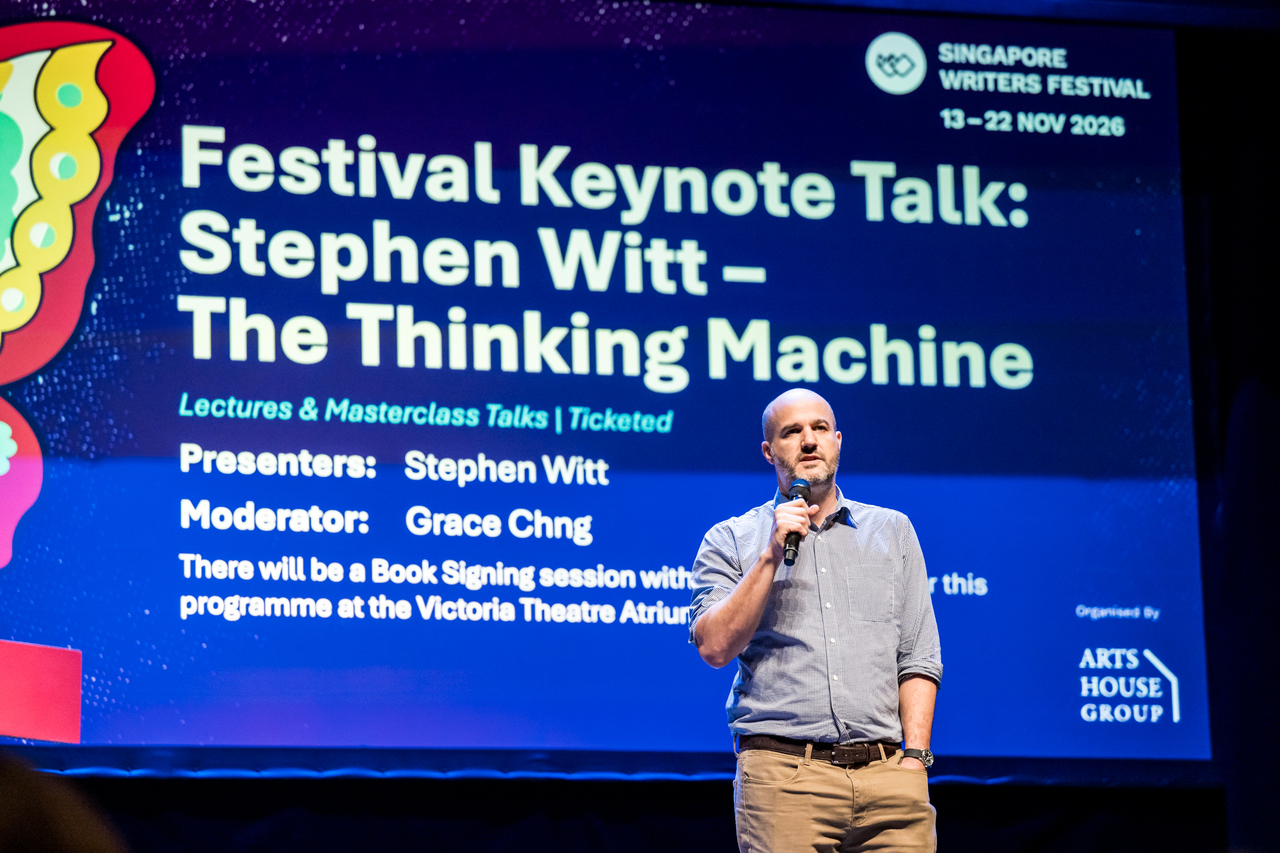
Meanwhile, opening-night presenter Stephen Witt, author of “The Thinking Machine: Jensen Huang, Nvidia and the World’s Most Coveted Microchip,” became one of the opening weekend’s most sought-after speakers amid the recent upheaval surrounding Huang and the company. Witt traced Nvidia’s rise from a graphics-chip company to a central player in the global AI boom.
Elsewhere, Singaporean novelist Balli Kaur Jaswal brought the festival’s theme closer to questions of identity. During her session, Jaswal discussed her latest novel, “The Unpronounceables,” which explores questions of family, friendship, belonging and finding one’s own voice while growing up between different cultural influences.
The range of speakers and formats reflected a festival that extended beyond conventional literary panels, bringing together novelists and poets with journalists, academics, translators and writers working on technology, environmental issues and documentary film. That breadth was also visible in the festival’s atmosphere, with numerous sessions drawing full houses and crowds moving between talks, book signings and the festival bookshop.
lee.jungjoo@heraldcorp.com