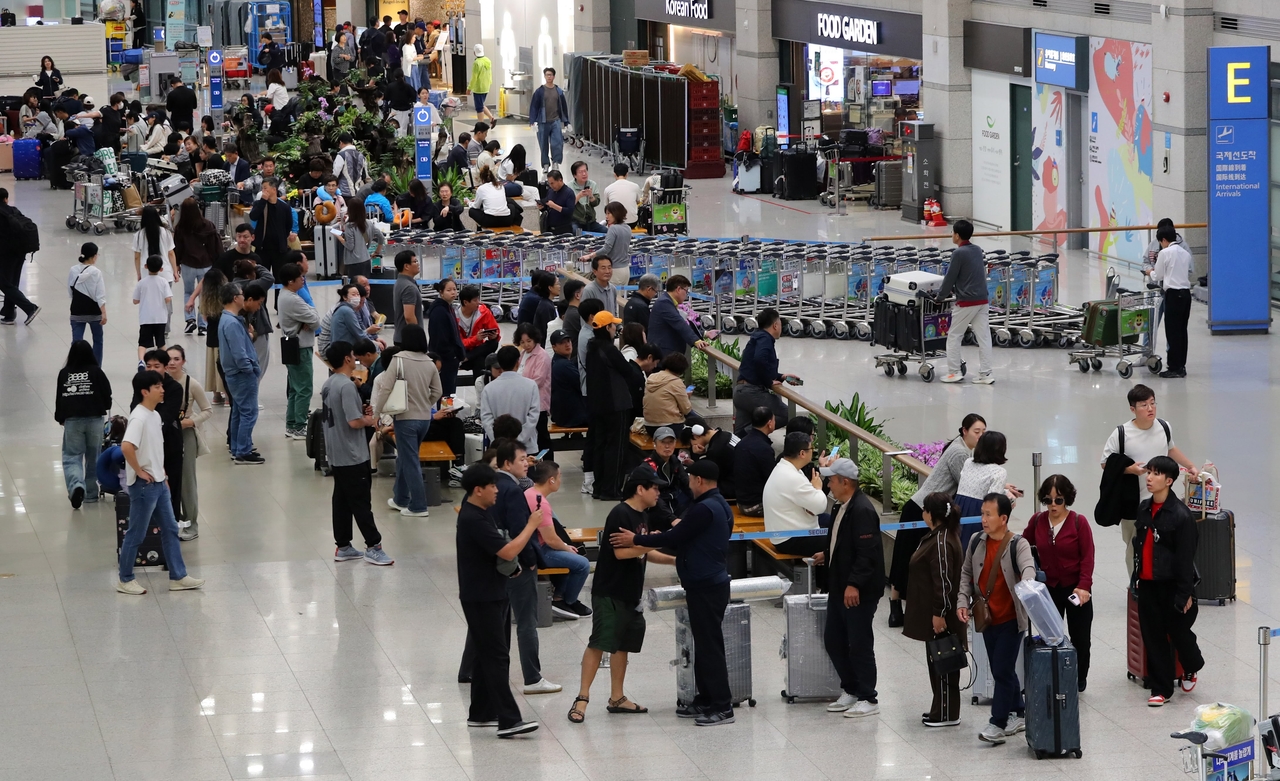
For many South Koreans, this year’s extra-long Chuseok break was less about family gatherings and more about getting out of the country — and their credit card data shows it.
According to data released Tuesday by the Shinhan Card Big Data Research Center, the average daily number of overseas credit card transactions by Korean consumers during the Chuseok holiday from Oct. 3-9 rose by 40.5 percent compared to the same holiday period in 2024.
The analysis compares this year's break with 2024's five-day Chuseok holiday from Sept. 14-18, with figures normalized to daily averages to account for the difference in duration.
Shinhan Card holds around 20 percent of the domestic credit card market and frequently ranks as Korea’s top issuer.
Average daily overseas spending rose by 37.7 percent, while the number of unique cardholders using their cards abroad increased by 27.6 percent, based on Shinhan Card’s private member data.
This year’s break was unusually long thanks to an alignment of public holidays with National Foundation Day (Oct. 3) leading into the three-day Chuseok celebration and Hangeul Day (Oct. 9) closing out the week.
Cinemas left empty as Koreans spend the holiday elsewhere
Back home, the impact was stark. Average daily domestic card transactions fell by 4.7 percent, and the number of local card users dropped 4.2 percent. Overall domestic spending rose just 0.2 percent per day, reflecting sluggish activity despite the extended holiday.
One of the hardest-hit sectors was cinema. Compared to 2024’s holiday, the average daily number of movie ticket purchases dropped 56 percent, while daily spending fell 48.9 percent. The number of people using their cards at theaters declined 55.8 percent.
A Shinhan Card official attributed the plunge to both supply and demand issues: “Last year saw major box office releases drive cinema attendance, but this year, with more theaters closing and OTT streaming on the rise, demand dropped significantly.”
Theater chains have been shuttering locations throughout 2025, and few new Korean films were in release during Chuseok. The box office decline reflects a deeper contraction in the domestic film industry.
Elsewhere, trends were mixed. Department stores saw strong gains, with average daily spending up 16.8 percent and visits rising 13.3 percent. Restaurants also grew modestly (6.8 percent), while amusement parks benefited from holidaymakers staying local, posting a 26.2 percent increase in daily spending.
But more routine sectors declined. Not accounting for holiday closures, supermarkets saw average daily spending fall 20.6 percent, convenience stores dropped 4.9 percent, and cafes and bakeries slipped 2.1 percent.
mjh@heraldcorp.com