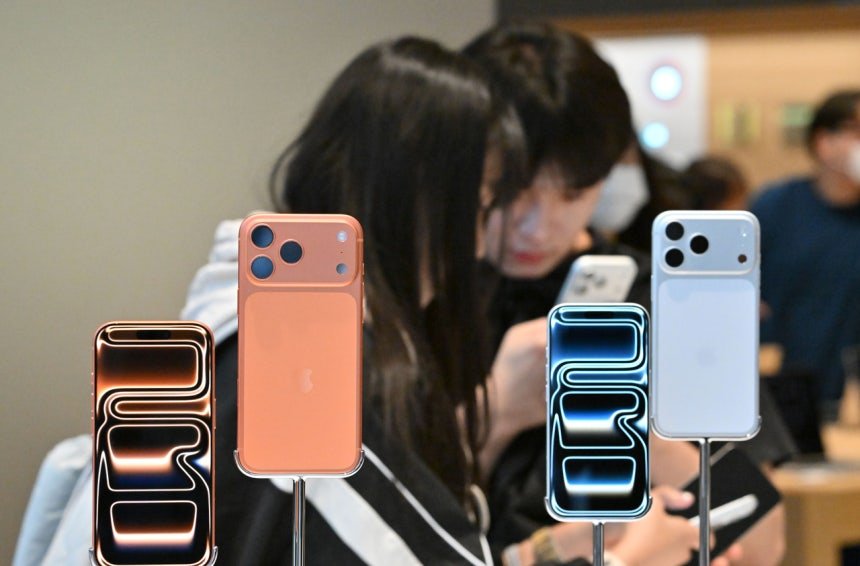
Apple’s iPhone is facing criticism in South Korea for providing only limited location data and taking longer to transmit it to emergency responders than Android smartphones, sparking safety concerns for the nation's roughly 10 million iPhone users.
According to meeting records obtained by The Herald Business, the sister paper of The Korea Herald, the US smartphone giant has repeatedly declined Korean authorities' requests to expand its emergency location sharing to align with domestic standards, citing global policy and privacy concerns.
Unlike Android smartphones, which transmit location data through separate signals from cell towers, GPS and Wi-Fi, iPhones rely solely on Apple’s proprietary hybrid system known as “HELO.” The system combines multiple signals internally, but this process has been found to take significantly longer during emergencies.
According to the Korea Communications Commission's 2024 quality test, Samsung’s Galaxy S24 Ultra recorded response times as short as 1.4 seconds to 2.4 seconds and pinpoint accuracy within 13-25 meters, depending on whether it used base station, GPS or Wi-Fi signals. In the same test, iPhones took roughly 20 seconds to respond and provide location data only via GPS and Wi-Fi within five minutes of the call.
Apple attributed the delay to the "trade-off between precision and speed," saying the system requires roughly 20 seconds to calculate detailed coordinates. The company also limits data sharing to five minutes after a call, citing risks of hacking and battery drain.
In the meeting records, Trey Forgety, Apple’s head of emergency systems strategy, reportedly said the HELO system delivers “highly accurate location data derived from multiple positioning technologies."
On Apple's refusal to enable real-time data sharing with third-party responders such as police and fire departments, Forgety pointed to the company's global privacy and security policies.
The issue resurfaced after a recent stabbing incident in Seoul left three people dead on Sept. 3. Police reportedly arrived about 20 minutes after the initial emergency call because they were unable to pinpoint the caller’s exact location. According to officials, the caller had used an iPhone.
herim@heraldcorp.com