Mercedes-Benz leads direct sales push in Korea, aiming for fixed prices by 2026
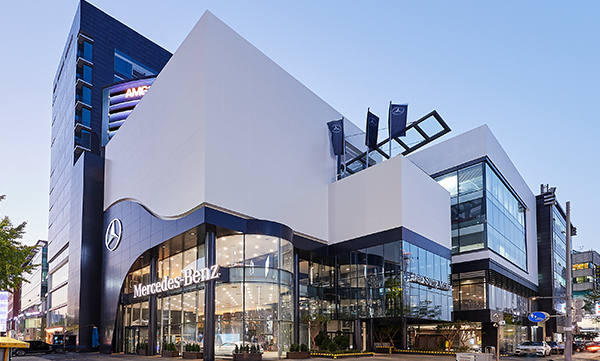
Foreign carmakers are accelerating a shift in Korea toward direct sales, cutting back the traditional role of dealers, who have long controlled inventory and pricing. By moving to company-set prices and online platforms, automakers aim to secure higher margins and build greater consumer trust, though pushback from dealers and mixed results abroad suggest the transition will be anything but smooth.
Direct sales gain momentum
Mercedes-Benz is currently taking the most visible steps.
Since August, Mercedes-Benz Korea has been promoting its online Mercedes-Benz Store, offering monthly giveaways for select models.
Unlike the common practice of offering varied pricing across multiple dealerships, vehicles are sold at a fixed, company-set price — a model that remains rare in Korea’s imported car market.
The move is seen as a precursor to the brand’s full adoption of its global “Retail of the Future” strategy in Korea.
Under models like RoF, automakers' local sales affiliates become the legal vendors of their cars, while dealers act only as delivery and service hubs. Mercedes-Benz plans to implement the system across its Korean operations by 2026.
Mercedes-Benz Korea CEO Mathias Vaitl said in June that the company is finalizing arrangements with dealers to provide a seamless online and offline purchasing experience with the best company-set prices.
The sales strategy has been adopted by other carmakers as well.
Stellantis Korea introduced direct sales for select models, starting with the Peugeot 308 mild-hybrid hatchback in April.
Honda Korea has fully transitioned to online-only sales in Korea, offering vehicles at company-set prices while maintaining offline showrooms for display and test drives.
Showrooms without pricing power
In Korea, local dealership networks remain important for imported brands. Automakers are maintaining their ties with dealers, though the dealers’ role is evolving.
Under the new system, dealers no longer purchase vehicles from automakers in advance. Automakers retain ownership of inventory, which is sold to customers through dealers.
The dealers now focus on customer support and facilitating purchases rather than negotiating prices or managing stock.
In line with this shift, Honda Korea has rebranded its dealer representatives as “Honda Curators,” highlighting their role in explaining vehicles and offering personalized test drives.
“The biggest benefit of direct sales is that automakers can protect their profits and brand image by controlling pricing and promotions rather than leaving it to dealers, while also eliminating part of the middle margin that previously went to them,” said Kim Pil-su, an automotive engineering professor at Daelim University.
Automakers also highlight the customer benefits.
“The direct sales system eliminates costs associated with dealers’ stock management, thereby reducing the margins embedded in vehicle prices,” said Stellantis Korea CEO Bang Sil in April.
Honda Korea said the shift helped boost sales, which rose from 1,385 units in 2023 to 2,507 units in 2024.
The company attributes this growth to reducing the hassle for customers of visiting multiple dealerships to secure their desired price and terms, while also building trust in pricing.
Consumers lose bargaining edge
Some argue that consumers still value the traditional dealer-based model, particularly as direct sales may reduce opportunities to benefit from dealer competition.
“While Korea’s imported car market has grown rapidly, competition among dealers has turned into a cutthroat race, occasionally allowing customers to score a deal if they find a low-priced vehicle,” said a source from the imported car industry.
Dealer opposition remains another challenge.
Carmakers emphasize that the direct sales model can also benefit dealerships, freeing them from stock costs and excessive competition. Based on this, carmakers and dealers have continued discussions to define a concrete business model in Korea.
Still, dealers worry that a reduced role could threaten their positions.
“Dealerships and automakers say there will be no problem with employment, but uncertainty remains, as companies rarely share information with dealer representatives about jobs, focusing only on operations,” said Rha Dae-gwan, head of the imported car chapter of the Korean Metal Workers’ Union.
Globally, automakers such as BMW, Volkswagen and Stellantis have pursued direct sales, but progress is slowing mainly due to dealer opposition and lukewarm customer response.
“Both direct sales and dealership models have clear advantages and disadvantages, but I think the overall trend is toward direct sales models,” said Kim.
“Ultimately, the industry will likely continue to combine elements of both models, balancing their strengths and weaknesses as needed.”
forestjs@heraldcorp.com