The Lee Jae Myung administration’s plan to merge energy and environment policies under one ministry has drawn cautious support from campaigners, who say it could strengthen South Korea’s climate response, but warn of policy conflicts.
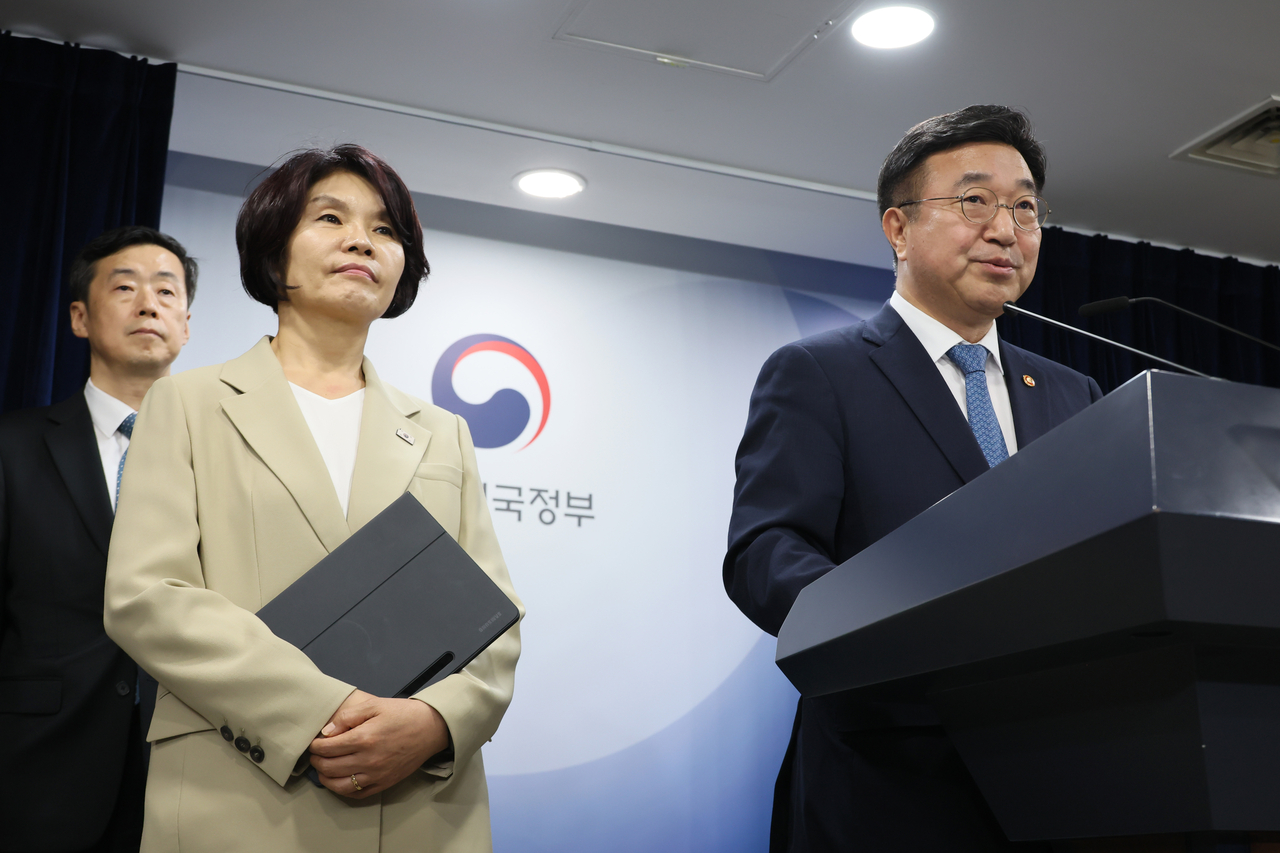
On Sunday, the government reorganization plan was finalized following the central government’s meeting with the Democratic Party of Korea, during which it was announced that the Ministry of Environment would be expanded under the tentative name of Ministry of Climate, Energy and Environment. The government said this reflected the Lee administration’s commitment to climate action and green energy transition.
The overhaul marks the biggest expansion of the Environment Ministry since it was given ministry status 31 years ago.
Repeatedly promised by Lee during his presidential campaign, the move is designed to strengthen Korea’s climate crisis response and accelerate its shift to renewable energy.
Under the reorganization plan, the Ministry of Climate, Energy and Environment will merge the climate policies previously overseen by the Environment Ministry with the energy policy responsibilities of the current Ministry of Trade, Industry and Energy, except for those related to overseas resources and nuclear projects.
“Carbon neutrality is a national priority, but under the current fragmented governmental structure, it has been difficult to coordinate strong, coherent policies,” Interior Minister Yun Ho-jung said during Sunday’s press briefing. “By integrating climate and energy policies under one roof, the government will be able to pursue stronger and more consistent carbon-neutral policies.”
Until now, Korea’s approach of having two governmental ministries each take charge of environmental and energy policies has often pitted the Environment Ministry’s emissions-reduction goals against the Energy Ministry’s management of energy supply and pricing.
This lack of coordination has long been criticized by environmental activists, who say it has made it nearly impossible for regulators to enforce carbon-cutting measures, because it left the largest sources of greenhouse gas emissions outside the Environment Ministry’s authority.
Supporters say that integrating energy and climate policies under one ministry may allow Korea to deliver on its net-zero commitments.
According to a report issued by the National Assembly Futures Institute, countries that integrated both policies under one governmental agency — such as Denmark, the United Kingdom and the Netherlands — saw greenhouse gas reductions accelerate by an average of 18 percent in the five years following the restructuring, compared with 5 percent in the five years preceding it.
However, skeptics warn that Korea's new ministry could remain torn between conflicting mandates: Promoting energy development while regulating its environmental impacts.
As a regulator, the Environment Ministry has historically been the last line of defense against unchecked industrial development. However, adding energy promotion, critics argue, “risks blurring this mission.”
For example, the government has been pushing ahead with an “energy highway,” a nationwide power grid that works to deliver renewable power to industrial hubs. Under the reorganization, the new ministry would both lead such projects and assess their environmental impact, raising doubts over conflict of interest.
"There are serious doubts about whether the upcoming ministry can properly carry out the previous Environment Ministry's core functions and authority," Green Korea United wrote in a press release.
"It is unclear whether it will effectively regulate not only energy projects under its domain but also carbon-intensive industries and environmentally destructive land development projects, while also protecting biodiversity, conserving nature and managing the environment."
lee.jungjoo@heraldcorp.com

![[Graphic News] Nuri rocket set for fifth launch](https://wimg.heraldcorp.com/news/cms/2026/10/06/news-p.v1.20261005.74d188bdaff2417ebabf4560181741f4_T1.gif?type=h&h=800)
![[Graphic News] Nuri rocket set for fifth launch](https://wimg.heraldcorp.com/news/cms/2026/10/05/news-p.v1.20261005.74d188bdaff2417ebabf4560181741f4_T1.gif?type=h&h=800)