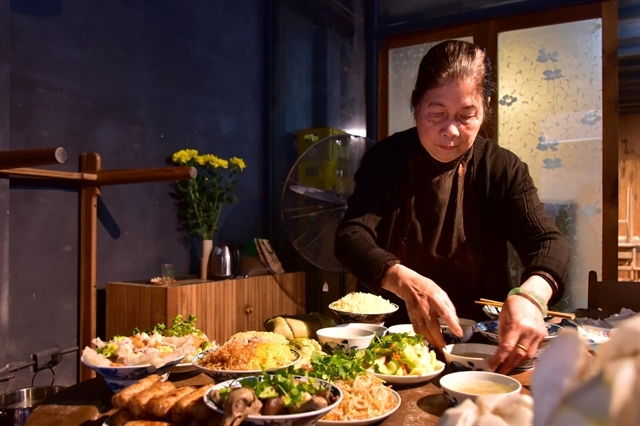
HANOI, Vietnam (Viet Nam News/ANN) -- A centuries-old culinary craft from Hanoi's famed Bat Trang Village has been officially dished up as the latest addition to the National Intangible Cultural Heritage list.
Bat Trang cooking knowledge of a traditional party dish was recently recognized as the latest National Intangible Cultural Heritage by the Ministry of Culture, Sports and Tourism.
Ways of cooking Thanh Tri steamed rolls and La Vong grilled fish were also included in the list, said an official from the ministry.
Located to the southeast of Hanoi, around 10 kilometers from the city center, the Bat Trang traditional pottery village has long been known not only for its centuries-old ceramic craftsmanship but also for its remarkable cuisine.
Local culinary expert Nguyen Thi Lam said the dishes are not only rich in nutrition, aromatic flavor and great taste but also reflecting rich culture and community inherited customs.
There are several party structures and recipes. But despite all, it still reflects spirit of respecting propriety and righteousness and high sense of aesthetics of locals, said Lam.
There are many dishes in a Bat Trang food tray but most popular are canh mang muc (dried squid bamboo soup), xu hao xao muc kho (grated kohlrabi stir-fried with dried squid shreds), cha tom nuong la lot (grilled shrimp nugget wrapped in wild betel leaf), fried pigeon spring rolls, canh bong tha (pork rind soup), and others, Lam said.
Asked a way to cook tasty squid bamboo soup, Lam said she often bought dried bamboo shoots from the north-western province of Yen Bai, soaked them in water and cleaned them several times before stewing them until they became soft, while dried squid bought from the central province of Thanh Hoa was cleaned with a mixture of ginger and white wine to release its fishing smell, torn into threads and stir-fried.
All of these ingredients were then put into a broth stewed from pig and chicken bones plus dried shrimp, creating a light savory flavor.
It is followed by kohlrabi fried with dried squid shreds. The kohlrabi is cut into threads, given a quick parboiling to keep its firmness, then mixed with grilled squid shreds, fried chicken cut into threads, pork paste and shiitake mushroom cut into threads too.
"It is of both simple and sophisticated dish, attracting foodies with light savory flavor and special fragrant," Lam said.
The next main dish is known as cha tom nuong la lot, which brings guests a special aromatic flavor: minced shrimp meat mixed with pork paste, wrapped in wild betel leaf, grilled over charcoal and dipped in roasted sesame sauce or sour and sweet fish sauce.
Different from other places where cooks make spring rolls from minced pork or minced seafood, Bat Trang cooks make another main dish from minced pigeon meat mixed with shiitake mushroom, wood ears and some other ingredients, said Lam. The rolls have been fried two times to ensure its covers crispy.
The continued main dish is canh bong tha. Ingredients include dried pork skin soaked in water for half an hour, cleaned well with white wine and cut into small square pieces, then put into a pure broth stewed from pig and chicken bones.
"Special characteristics of the soup is a good combination between pork paste balls, mushroom, carrot, kohlrabi which is carefully trimmed in flower shapes, green peas and several others, creating a colorful tasty soup," Lam said.
Other dishes in the Bat Trang party food menu include boiled chicken topped with lemon leaf threads, xoi gac (steamed momordica glutinous rice) or xoi vo (mung bean sticky rice), roasted cinnamon pork paste or banana-leaf-wrapped pork sausage, and others.
"All the dishes are displayed on Bat Trang ceramic bowls and plates to express the village's hundred-year-old pottery while making the party imbued with deep culture and art," said Lam.
The pottery village of Bat Trang receives thousands of local and foreign visitors and travelers annually. Most of them enjoy Bat Trang's special traditional culinary.
khnews@heraldcorp.com











