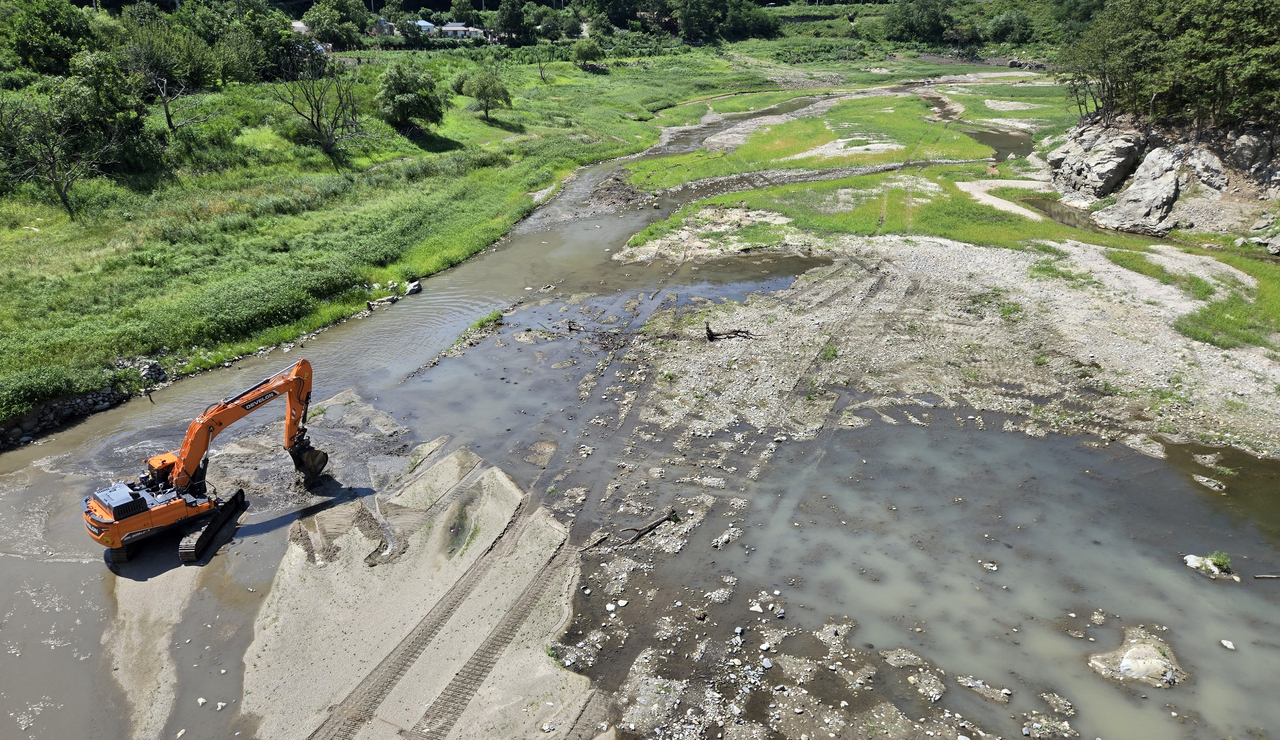
Even as many parts of South Korea were hit with flash floods and torrential rainfall in mid-July, Gangneung in Gangwon Province has been suffering from a monthlong drought, triggered by little rainfall and intense heat.
As of Friday, the Ministry of Environment stated that drought levels in Gangneung have increased to “very severe,” 50 days after the first drought level, “warning,” was issued in the city.
Drought levels in Gangneung are determined based on water reserve rates at Obong Reservoir, the largest source of water for Gangneung. The reservoir supplies 86.6 percent of Gangneung’s tap and industrial water, serving around 180,000 residents.
Water storage rates plummeted to 19 percent on Friday, the lowest ever recorded, according to the Environment Ministry.
The drought in Gangneung is being called a “flash drought” by experts, caused by scarce rainfall and record-breaking heat waves that quickly evaporated the little amounts of rain seen in the city.
According to weather records from the Korea Meteorological Administration, Gangneung’s cumulative rainfall from Feb. 21 to Aug. 20 was 386.9 millimeters -- just 49.8 percent of the average from previous years.
Additionally, as of Friday, no rain is forecast to fall in Gangneung until next month. At its current rate, the Environment Ministry anticipates there only will be enough water for the next 25 days.
As Gangneung endures one of its worst droughts in decades, residents are turning to an age-old tradition in hopes of relief.
The Gangneung Danoje Preservation Association stated on Friday that it will perform a traditional rain ritual, known as “giuje,” on Saturday at Daegwallyeong-myeon in Pyeongchang, Gangwon Province, in which offerings such as chestnuts, jujubes, dried persimmon and rice cakes accompanied by prayers for rain will be presented.
Since Monday, water supply to most of the city has fallen to 50 percent at the meter level. If storage levels at the reservoir drop below 15 percent, the city government added that it will begin to close off 75 percent of household meters. Currently, the reservoir is expected to fall to the 15 percent threshold on Aug. 28.
Should the reservoir run completely dry, officials plan to distribute 2 liters of bottled water per person, per day, while supplying neighborhoods via tanker trucks.
The Gangneung city government has also pledged to collect water from reservoirs in nearby cities to supply water to its residents for the time being. Other cities in Gangwon Province, such as Wonju and Sokcho, have collectively donated 150,000 drinkable 500-milliliter water bottles to assist Gangneung’s water shortage problems.

Meanwhile, the Environment Ministry added Friday that it is considering tapping water from Doam Dam in Pyeongchang as a possible emergency measure in dealing with Gangneung’s prolonged drought.
Doam Dam holds 30 million metric tons of water and has long been floated as an option to deal with Gangneung’s shortages. However, issues surrounding water quality and disputes over interregional use have hindered its adoption.
According to the ministry, the dam’s water quality has significantly improved in recent years.
“Since the enactment of the Act on the Management and Use of Livestock Excreta in 2006, livestock waste upstream has been strictly controlled, and the (Doam Dam) area was designated as a pollution control zone in 2007,” the ministry stated through a press release Friday.
The ministry said that “continuous pollution reduction efforts have since been carried out,” adding that the dam is “now a more viable option for securing Gangneung’s water supply.”
Mid- to long-term strategies are being brainstormed by the Environment Ministry, though such strategies won’t be able to be exercised at a quick rate. Such strategies include the construction of groundwater storage dams, expanded reuse of treated wastewater and projects to reduce leakage in aging water supply networks.
lee.jungjoo@heraldcorp.com