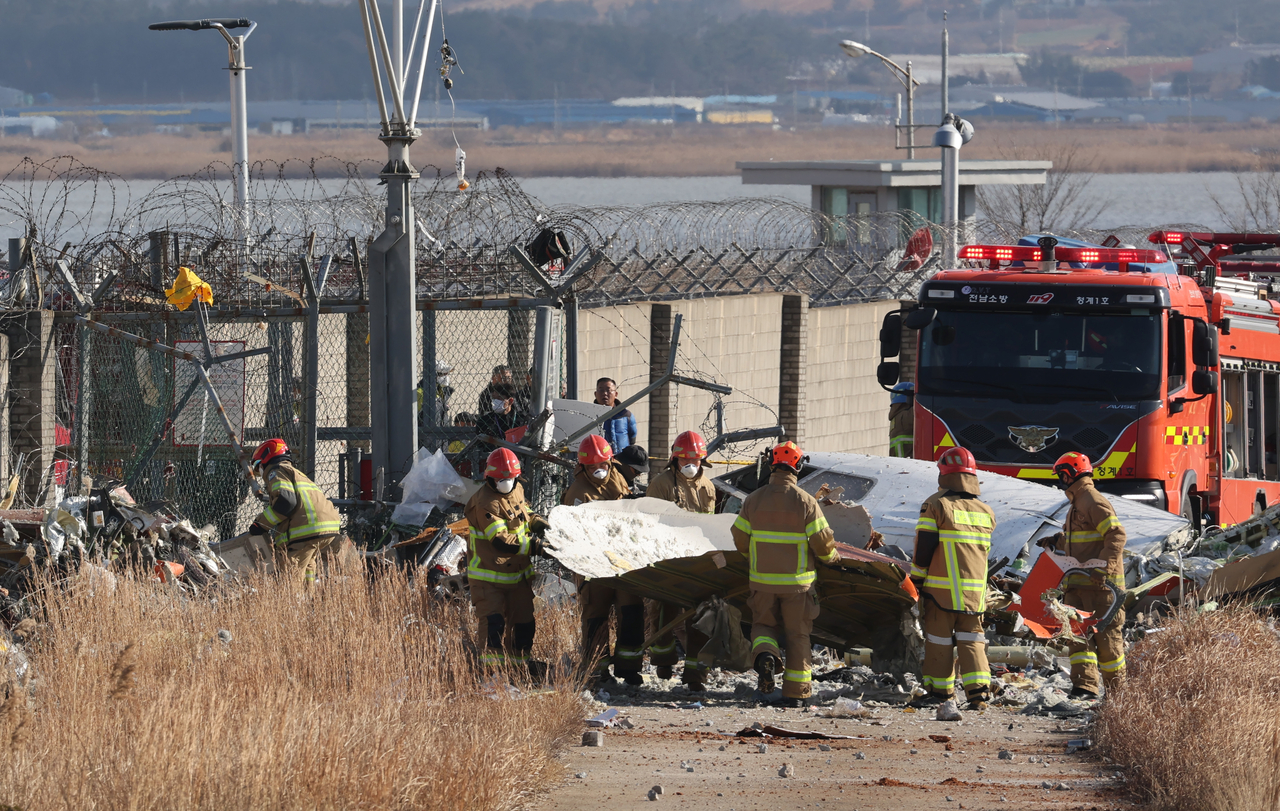
The recent suicides of two firefighters who responded to the 2022 Itaewon crowd crush have cast a harsh light on South Korea’s fragile system of mental health care for first responders.
The government’s programs, rolled out in the immediate aftermath of disasters, tend to fade quickly and rarely provide the long-term monitoring needed for those most vulnerable to post-traumatic stress and depression, observers told The Korea Herald.
On Wednesday, the body of one of the first responders at the Itaewon disaster was discovered beneath a bridge near an expressway in Siheung, Gyeonggi Province, after the man had been missing for 10 days.
According to local reports, the man, in his 30s, was diagnosed with depression after the Itaewon crowd crush that claimed 159 lives. He had received therapy and treatment provided by the National Fire Agency and the Incheon Fire Department over the last three years.
In interviews with the press conducted shortly after the incident, the firefighter stated that moving the bodies around at the site of the incident felt “unbearable” and that he kept thinking to himself: “I hope this isn’t real.”
Also, on Thursday, another firefighter who was a first responder during the Itaewon tragedy was discovered to have died by suicide on July 29 after suffering from depression and post-traumatic stress disorder for the last three years.
Firefighters are classified as “third-level” victims of disasters. While first-level victims directly experience the disaster and second-level victims are their families, first responders are recognized as suffering from the most severe form of psychological shock after an intense disaster like the 2022 Itaewon crowd crush.
Short-term help, long-term neglect
According to the National Fire Agency, a total of 1,316 firefighters were deployed to Itaewon in Yongsan-gu, central Seoul, on the night of the disaster. For nearly a year afterwards, the authorities provided emergency support programs, including initial screenings and mental health counseling.
From late October 2022 to September 2023, 1,629 screenings were conducted on 142 firefighters — with 28 classified as high-risk cases. Those at high risk received further counseling, and some were also referred to hospitals at the government's expense.
However, critics say the support largely stopped there.
“Providing mental health assistance is good, but only for the short term,” psychiatrist Baek Jong-woo of Kyung Hee University told The Korea Herald.
“They need to be closely monitored and checked on regularly. Mental health issues aren’t something that goes away after a few medical check-ups and treatments. They need to be treated and looked after for a long period of time.”
Today, counseling services in which psychologists visit fire stations across the country are also available. However, Baek said such programs are “not enough for long-term tracking of those exposed to severe trauma.”
“Not only do these programs depend on voluntary participation — which is very unlikely for firefighters working long, exhausting and irregular shifts — these programs are also temporary,” added Baek.
“The psychologists come and go over a period of only a few days. It’s difficult for the firefighters and the psychologists to build a bond with one another and for each psychiatrist to go over each firefighter's case, one by one, in detail.”
According to the fire agency, each psychologist is in charge of conducting counseling sessions with around 300 to 500 firefighters, making it difficult for them to provide systematic and focused management to each client.
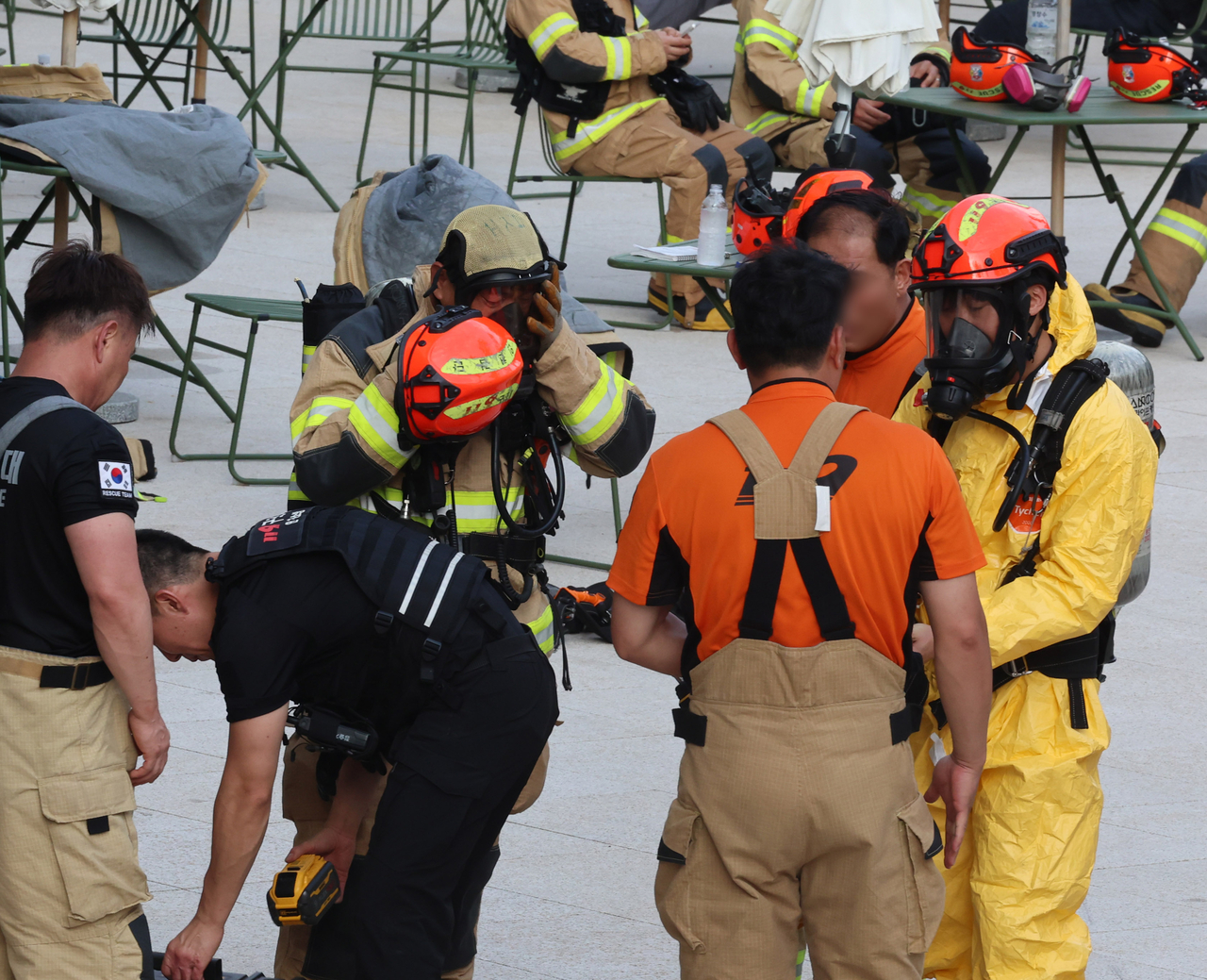
Experts point to the US as a model for how to handle disaster-induced trauma among first responders.
“Following the 9/11 terrorist attacks, the US government established separate physical and mental health support programs for first responders, in which they continue to be closely monitored by the government,” Chung Chang-seung, chairman of the Korean Society for Traumatic Stress Studies, told The Korea Herald.
Dubbed the World Trade Center Health Program, it guarantees physical and mental health monitoring for responders until 2090 and covers illnesses beyond PTSD and other mental health issues, extending to physical conditions such as cancers, respiratory illnesses and musculoskeletal disorders linked to the attacks.
“Korea needs intricate support programs that last for a long time for those at high risk of mental health issues like PTSD after responding to mass disasters,” said Chung.
“Mental health support, especially for first responders, should not be something that lasts for a year in the hope that everything can be fixed by then. A response that is sincere and truly geared toward healing those in need is the only way for responders to free themselves from survivors' guilt and find relief.”
On Tuesday, a day before the firefighter in his 30s was confirmed dead, President Lee Jae Myung pledged that South Korea will take responsibility for addressing the mental health challenges faced by disaster victims, bereaved families and responders alike.
While specific policies to support this commitment have yet to be announced, the government has decided to provide additional counseling to roughly 3,300 firefighters and paramedics who have been deployed to disaster sites, such as the Itaewon crowd crush and the Jeju Air crash at Muan Airport on Dec. 29, 2024.
- - -
If you are having thoughts of suicide, contact South Korea's Suicide Crisis hotline at 109. For foreign language assistance to connect with mental health professionals, call Danuri Portal's helpline at 1577-1366.
lee.jungjoo@heraldcorp.com