Seoul's naming of 'Fit Station,''Smart Move Station' draws backlash as example of overusing foreign terms in branding

Here’s a quick quiz. What do you think a “Fit Station” is? What about a “Smart Move Station”?
If you’re not sure, you’re not alone. Many Koreans struggle to make sense of these names — so do native English speakers — and that’s becoming a problem.
The stations are part of Seoul City’s Fun Station Project, an initiative to make subway stops more entertaining and engaging. Since 2024, select stations have been outfitted with themed spaces. At Yeouinaru Station on Subway Line No. 5, for example, Runner Station offers lockers and changing rooms for commuters who want to jog along the Han River. Ttukseom Station on Subway Line No. 2 has Fit Station, a compact workout zone. Perhaps the hardest to decipher is the Smart Move Station at Meokgol Station on Subway Line No. 7, which features an AR cycling zone and AI health check systems.
Last month, the Ministry of Culture, Sports and Tourism urged Seoul to scrap these made-up "Konglish" titles and switch them to clear, easy-to-understand Korean names. The ministry pointed out that the city already has guidelines encouraging Korean names and even passed an ordinance in 2014 requiring public institutions to set the right example in their documents and signage.
“We have already met with the Ministry of Culture, Sports and Tourism and the National Institute of the Korean Language to discuss this,” a Seoul City official told The Korea Herald. “Since these names are already in use as official project titles, it’s difficult to change them all at once. We plan to review them step by step.”
The official added that the city understands the criticism but believes simple translation into Korean is not the answer. The real challenge, she said, is coming up with Korean names that capture the character of each project while still sounding friendly and approachable, a process that will take time.
She also emphasized that the English names were not meant to target foreign nationals and were used for a good reason.
“Take a word like ‘running’ or ‘runner.’ For many Koreans, those feel more familiar and intuitive than the Korean equivalent,” she said, explaining the choice behind names like Runner Station.
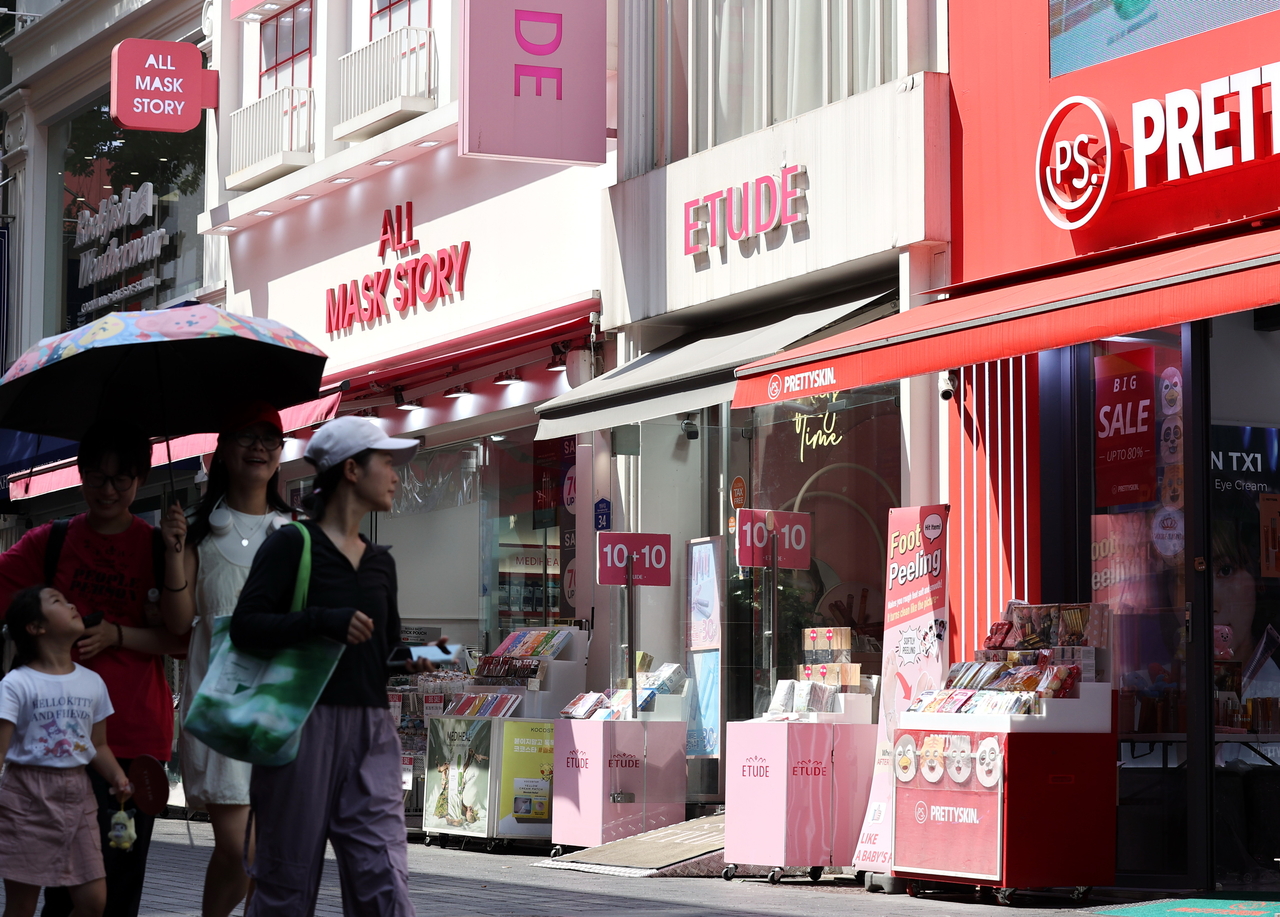
This tendency to use Konglish or English words for promotional purposes isn’t unique to Seoul City. Across industries, English is often seen as trendier, younger and more sophisticated.
“I once visited a shop in Seongsu-dong that sold coasters. I didn’t know the English word ‘coaster’ at the time, so I wasn’t sure what they were for,” said Choi Hee-sun, 29. “Later, I figured it out, but I wondered why they didn’t just use the Korean word, keopbatchim. I guess it didn’t match the hip vibe the store was going for.”
A marketer at a local advertising firm agreed.
“Basically, every industry prefers including English words,” she said. “Clients don’t demand it directly, but there’s a running joke in the business: ‘If the Korean name doesn’t work, just switch it to English.’”
Still, some experts worry about local governments adopting the same approach.
Shin Ji-young, a professor of Korean language and literature at Korea University, called the branding of public facilities evidence of what she described as a “poverty of imagination.”
She noted that language often grabs attention by being difficult, novel, or striking. While such techniques may work in marketing, she questioned whether they are appropriate for government projects.
“Local governments should focus on names that clearly convey information,” Shin said. “They shouldn’t be so confusing that they become barriers. When people see a name, they should immediately understand what it is and whether it’s useful to them. I’m not sure ‘Fun Station’ meets that standard.”
Hwang Sun-yeop, a professor of Korean language and literature at Seoul National University, offers a more nuanced view in his book “The World Words Hold” (unofficial translation).
He traces the preference for English to Koreans’ admiration for foreign terms and a vague belief that they sound more refined.
Hwang stresses that linguists should not police language but observe how it naturally evolves.
Nonetheless, he, too, acknowledges the concerns and suggests that when a trend seems misguided, it is worth pausing to ask whether it should continue.
ssh@heraldcorp.com