Over 50% of Korean workers use generative AI for work, twice the rate in US, BOK survey shows
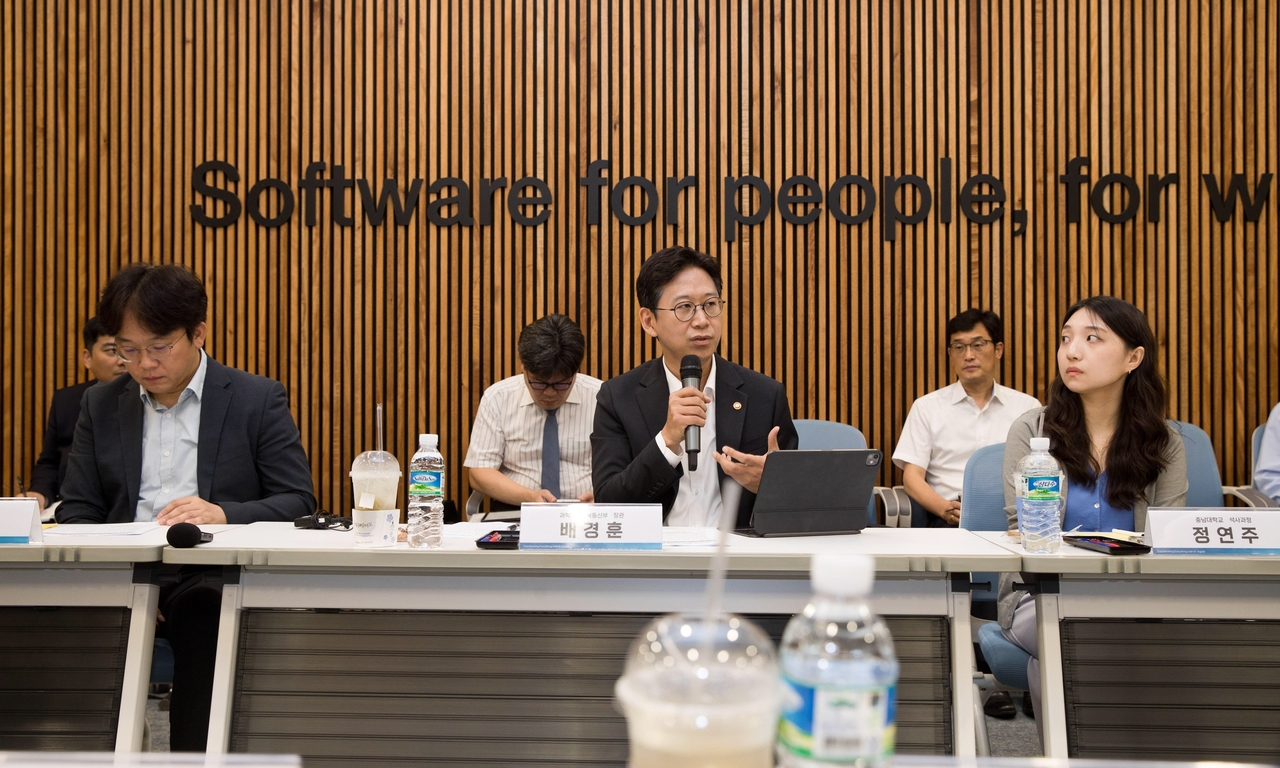
More than half of South Korea’s workforce is using generative artificial intelligence at their jobs, twice the rate seen in the US, according to a new extensive survey published Monday by the Bank of Korea.
The surge comes as ChatGPT continues to catch on worldwide. Earlier in August, OpenAI released its new GPT-5 model and announced that weekly active users of ChatGPT had reached 700 million. That represents a more than fourfold increase compared with a year ago.
But South Korea stands out as one of the countries where this growth appears to be especially intense.
According to the survey, 63.5 percent of Korean workers have tried generative AI and 51.8 percent have used it specifically for work. In the US, a late-2024 National Bureau of Economic Research working paper, titled "The Rapid Adoption of Generative AI", reported that only 26.5 percent of workers were using it on the job.
The survey was conducted by the Employment Research Team at the Bank of Korea based on interviews with 5,512 workers in May and June. The authors stress that the report reflects their own analysis, not the central bank’s official stance.
The surveys between Korea and the US were six to seven months apart, and the Korean researchers admit that the timing may exaggerate the difference, given how quickly adoption is rising worldwide.
In Korea, one hour a day with AI is the new normal
What makes Korea’s case unusual is the speed of the shift. Internet use in Korea stood at just 7.8 percent three years after it became commercially available in the 1990s. Generative AI crossed 60 percent before hitting the same three-year mark.
The researchers attribute the acceleration to Korea’s extensive digital infrastructure and the versatility of AI itself, which can be applied across nearly every occupation.
The intensity of use is just as striking. Workers who employ AI for their jobs spend five to seven hours a week on it. That equals 12 to 17 percent of a standard 40-hour week, compared with 1 to 5 percent in the US. Nearly four out of five (78.5 percent) Korean AI users spend at least an hour a day with AI, nearly 2.5 times higher than in the US (31.8 percent).
Among daily AI users, nine in 10 (90.2 percent) Koreans go beyond an hour, compared to 50.2 percent in the US.
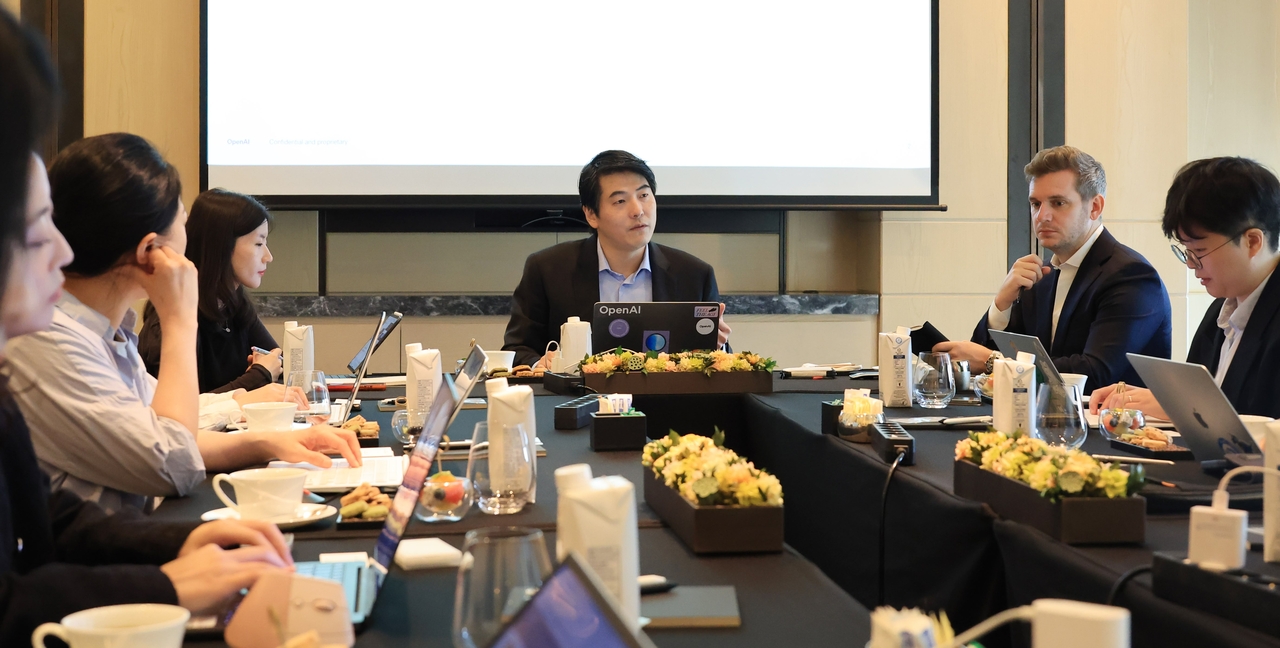
ChatGPT dominates the market. Two-thirds of Korean users (67.8 percent) said they rely on it, far ahead of Google’s Gemini (19.5 percent). OpenAI said in June that South Korea has the second-highest number of paying ChatGPT subscribers in the world, behind only the US.
AI optimism outweighs fear by nearly three to one
AI is already shaping how work is done. On average, Korean employees who use generative AI said their weekly hours fell by 1.5, equal to a 3.8 percent reduction. That is slightly below the 5.4 percent cut reported in the US.
Researchers estimate that if this freed time were directed to extra production, AI could have added about one percentage point to Korea’s gross domestic product growth since late 2022. Total GDP growth in that period was 3.9 percent.
The caveat is that workers may have used the time for leisure instead, which would lower the real effect.
The time savings were greatest among newer employees. The authors describe this as an “equalizing effect,” with AI providing knowledge that narrows the performance gap between novices and veterans.
The data also shows that many workers who tried AI did not save time. About half reported no change in working hours, and 3.2 percent said their hours actually rose, often because of the need to review and correct AI output.
Despite uncertainty about jobs, attitudes toward AI are more positive than negative. Nearly half of respondents (48.6 percent) believe AI will have a positive impact on society, compared with 17.5 percent who expect harm. Users are more optimistic than non-users, with 53.6 percent expecting positive effects.
Many are taking steps to prepare for disruption. About a third of workers (33.4 percent) said they plan to pursue further education, and 31.1 percent are considering job changes.
A similar share, 32.3 percent, said they would be willing to contribute to a national AI development fund that could raise an estimated 38 trillion won ($27.3 billion) over five years.
mjh@heraldcorp.com