Brunson warns shortcuts in OPCON transfer, citing readiness concerns
PYEONGTAEK, Gyeonggi Province — The highest-ranking military officer of the United States Forces Korea emphasized the capability of the South Korea-US military alliance over its size, amid growing speculation that the two sides are exploring options to scale down the US troop presence here.
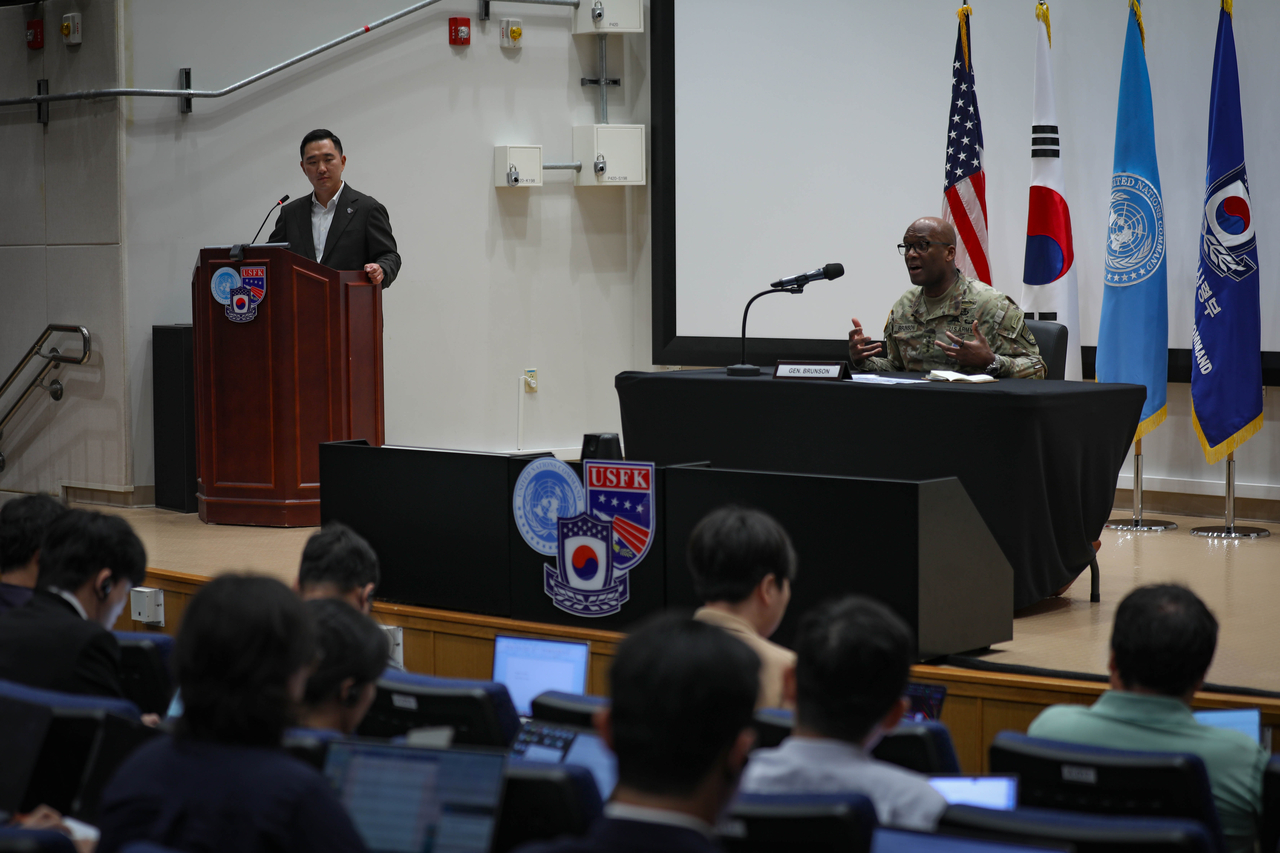
"The conversation ought not be about numbers. It ought to be about capabilities," USFK commander Gen. Xavier Brunson, who also commands the South Korea-US Combined Forces Command and the United Nations Command, said during a press conference with local reporters at Camp Humphreys in Pyeongtaek, Gyeonggi Province, Friday.
"Say, for example, you have fifth-gen fighters — there’s sort of like a coefficient of means that you could use to determine one fifth-gen fighter equals two fourth-gen fighters," he added.
The remarks came as President Lee Jae Myung and US President Donald Trump are set to meet for their first summit in Washington later this month.
According to local reports, the leaders are expected to take up reduction options as part of broader "alliance modernization" talks, including how USFK is configured and what missions it is positioned to perform within the framework of "strategic flexibility."
The modernization of the alliance encompasses a range of issues, from changes in the size and role of USFK to the expansion of the South Korean military’s role, increases in Seoul's defense budget, and the transfer of wartime operational control.
Yet the USFK commander cautioned that the wartime operational control transfer from the US to South Korea must remain conditions-based, with no shortcuts that risk the alliance's readiness.
"Now, if we choose to take shortcuts, that could endanger the readiness of the force here on the Peninsula," he said.
"So I think that our approach has to be one that is, again, bilaterally managed, bilaterally considered, and bilaterally assessed in order to get to that point. ... The hope is — the hope has always been — that OPCON transfer would happen at some point in the future when the conditions are met."
An earlier statement by a senior Seoul official also hinted at a possible recalibration of the US military presence. The official said that “the role and nature of USFK can change for various reasons.”
Brunson also mentioned the need to recalibrate, saying "context is key" when asked what should anchor such modernization.
He noted the alliance now operates in a Northeast Asia that was markedly different from when the two nations signed the Mutual Defense Treaty on Oct. 1, 1953. He pointed to North Korea's nuclear armament, deeper Russia-North Korea cooperation, and China's expanding military activities in the Indo-Pacific region.
The discussion of troop numbers has been a longer arc under the strategic flexibility framework, which first surfaced in the early 2000s.
At the time, Washington pushed to shift from anchoring overseas deployments to dynamically employing them across regions — a concept widely seen as taking shape after the Sept. 11, 2001, attacks — while Seoul worried about being pulled into conflicts it had not chosen, and possible deterrence gaps at home.
In 2006, under then-President Roh Moo-hyun’s liberal administration, Seoul and Washington agreed on language recognizing the US' need to maintain flexibility for forces in Korea while affirming that South Korea would not be drawn into a Northeast Asia contingency "against the will of the Korean people."
Signs of realignment have been visible on the ground.
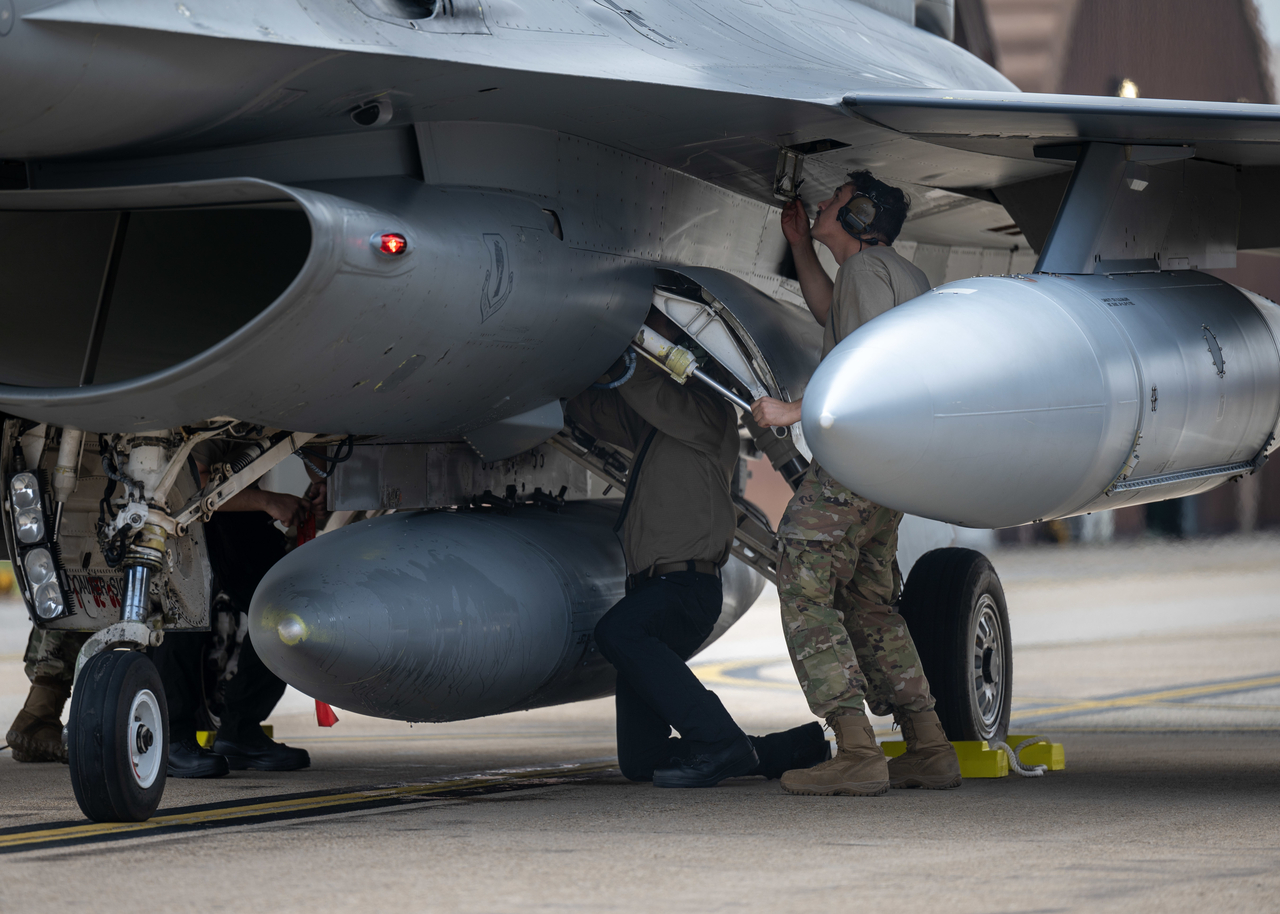
Since July 2024, the US Air Force has moved F-16 fighters, along with more than 1,000 personnel, from Gunsan, North Jeolla Province, to Osan, Gyeonggi Province, as part of an internal reorganization, with completion targeted for October.
According to a policy briefing released on July 22 by the Sejong Institute, the US Air Force is consolidating F-16s at Osan — building out two larger squadrons — while positioning Gunsan to receive F-35A units on a fixed or rotational basis. This configuration, the brief says, is meant to raise efficiency and resilience and broaden flexibility.
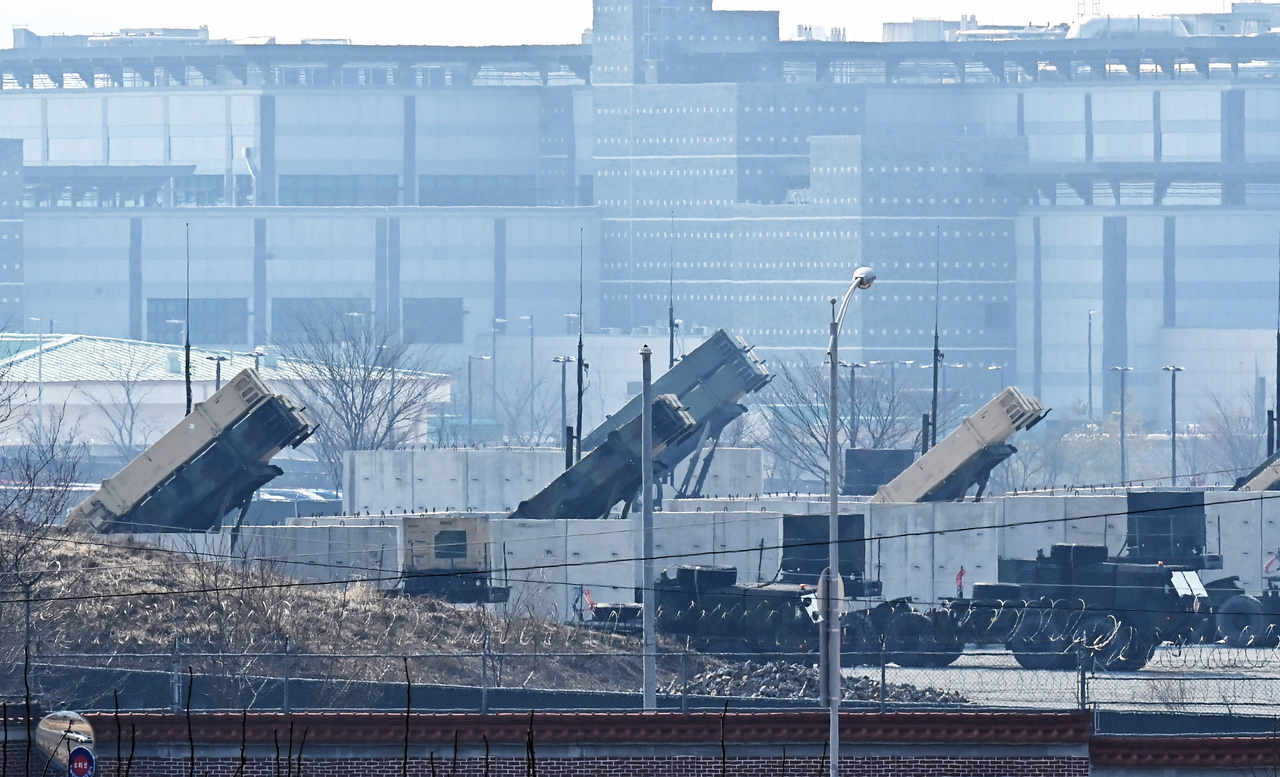
Earlier this spring, Patriot air-defense batteries under USFK were also reportedly redeployed off the peninsula to the Middle East regions under a bilateral arrangement. Brunson confirmed the shift, and said the interim gap "has been covered" by fifth-generation fighters operating in Korea in recent months. He said the Patriot units would be coming back with upgraded equipment and a new-equipment team to assist the transition.
Meanwhile, think tanks here link Washington’s moves to China-focused deterrence.
In the same brief, the Sejong Institute writes that "the Trump administration’s posture puts countering China at the very top of priorities, and the issues of USFK adjustments and strategic flexibility are reemerging as a structural reality tied to that agenda."
In a report released in July, professor Choi Woo-seon, director-general of the Korea National Diplomatic Academy, said Washington was building a "dispersed, flexible posture focused on China," with Seoul expected to take a "larger share" of conventional deterrence against North Korea.
Currently, about 28,500 US troops are stationed in South Korea, and Seoul contributes roughly 1.5 trillion won (about $1.08 billion) annually under the cost-sharing pact between the allies — another point expected to surface at the summit. Trump has demanded higher burden-sharing from allies.
Apart from the reduction discussion, the allies are set to run the annual Ulchi Freedom Shield exercise from Aug. 18-28. Some outdoor drills have been adjusted amid extreme heat and flood response, but core command-post training remains on schedule.
Brunson said he was comfortable with rescheduling, citing the hottest July on record, noting possible evacuations for heat-affected troops and soldiers assisting residents after floods.
"If the Korean people have need of the military, then we can get around that by changing our exercise a bit. ... We will still exercise fully," he said.
flylikekite@heraldcorp.com