South Jeolla, South Gyeongsang provinces to get 300 millimeters more rainfall through Saturday
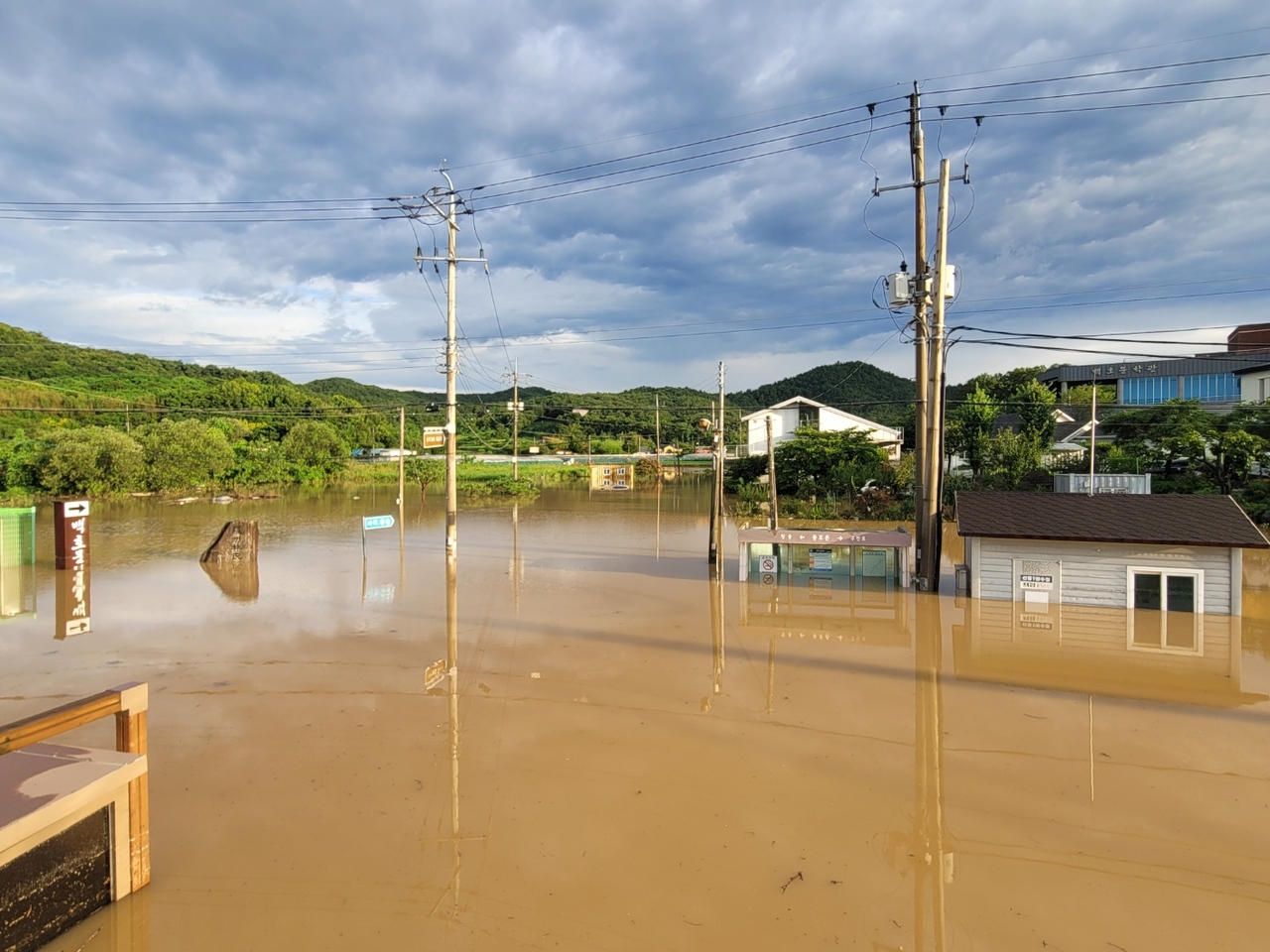
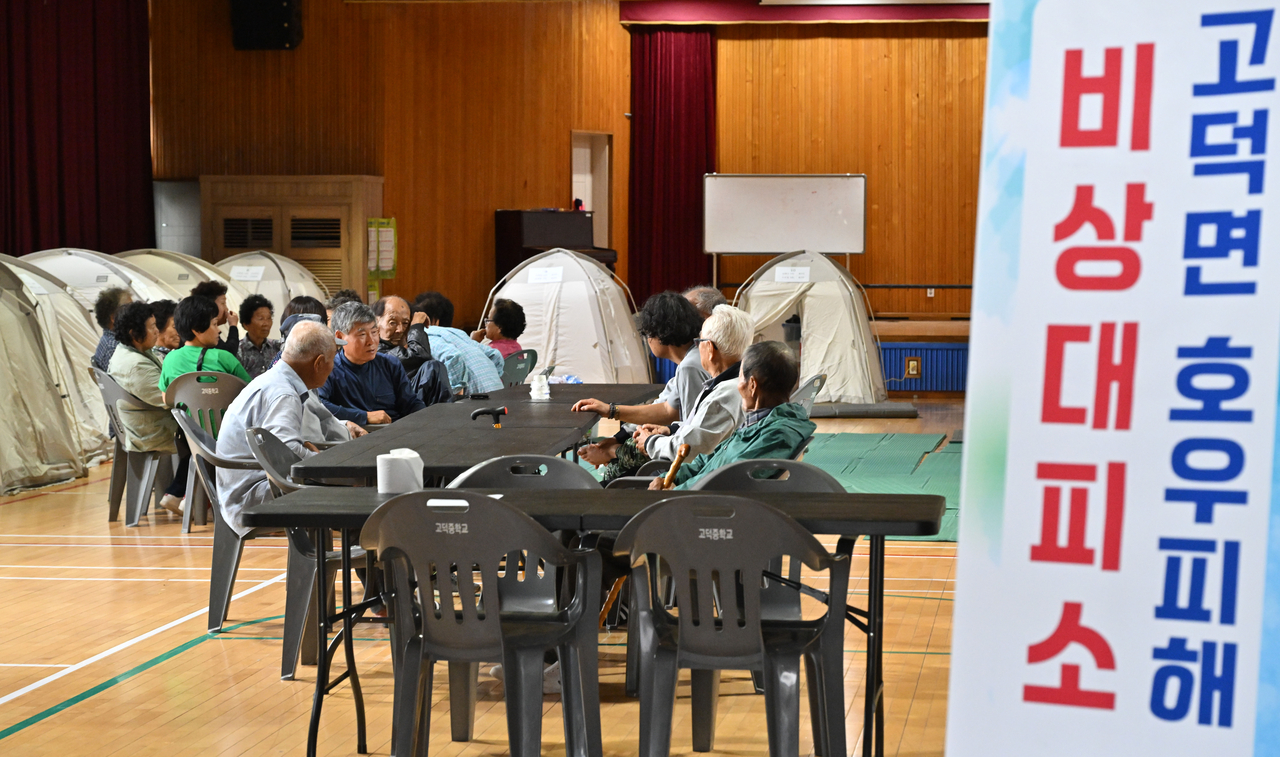
Heavy rains and flooding in the southern regions of South Korea left four dead and two missing and forced more than 5,000 to evacuate as of Friday morning. More downpours are expected through Saturday, raising fears of further risks to people, infrastructure and livestock.
According to the Central Disaster and Safety Countermeasures Headquarters, a search has been underway for two missing persons in Gwangju since 7:20 p.m. on Thursday. Gwangju was one of the hardest-hit regions over the three days of rain, receiving 426.4 mm of rain on Thursday alone, the most in a single day since records began in the city in 1939.
On Thursday, a man in his 60s was found in cardiac arrest inside a flooded vehicle on a road in Seosan, South Chungcheong Province. The man was taken to a nearby hospital but was pronounced dead, officials added.
An elderly man in his 80s was also found dead Thursday in the basement of his home in Dangjin, South Chungcheong Province. A driver in his 40s was also killed on a road in Osan, Gyeonggi Province, when a 10-meter-high retaining wall weakened by the rain collapsed onto his vehicle. A man in his 50s in Dangjin was found dead in his home, which had flooded.
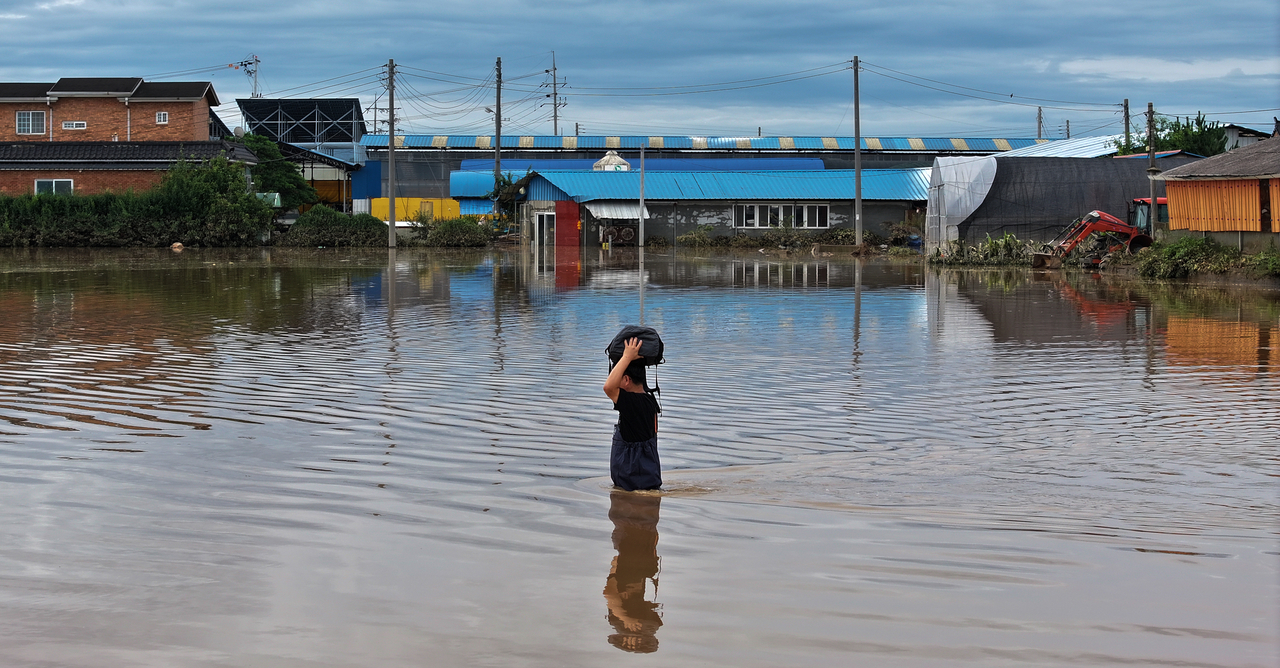
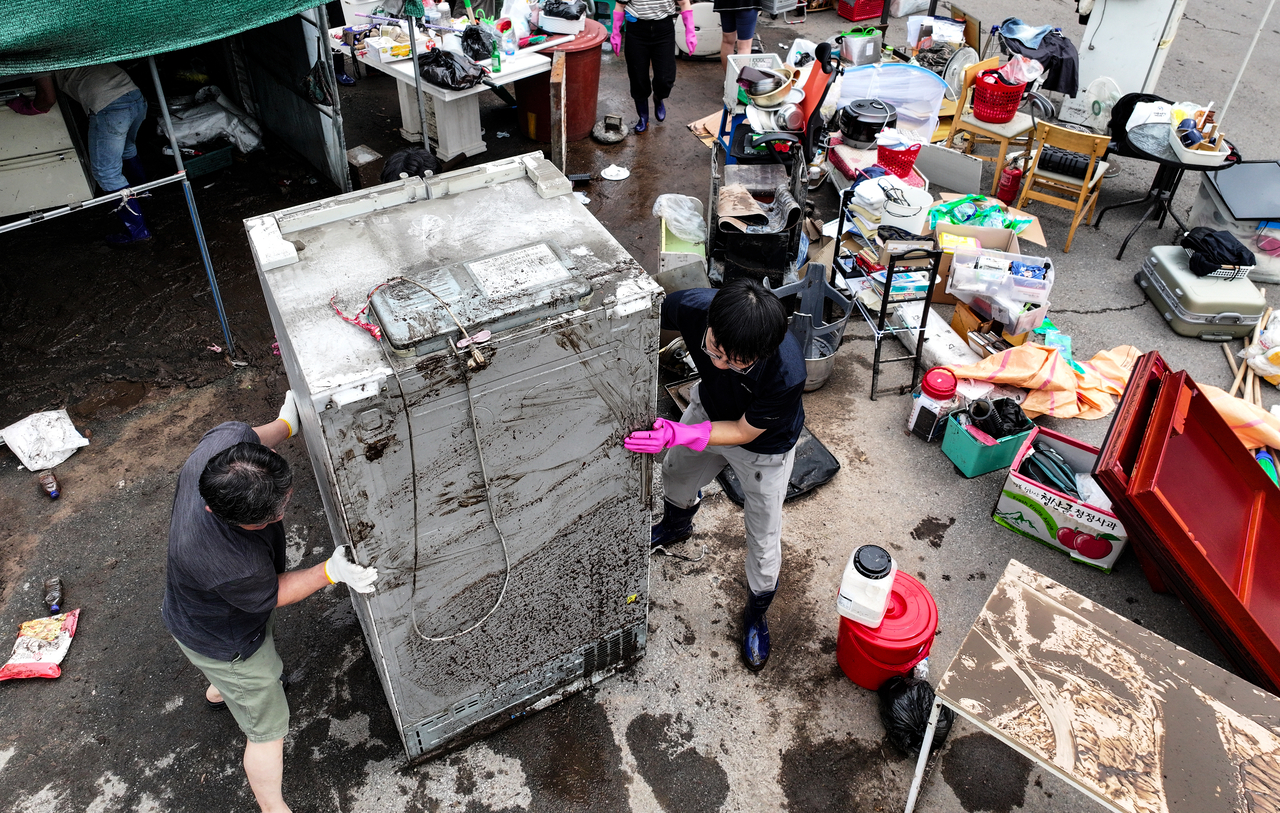
Public infrastructure sustained 499 cases of damage, with road flooding accounting for the majority of damage reports at 328. Private property damage totaled 425 cases, with 203 involving flooded buildings.
According to the Ministry of Agriculture, Food and Rural Affairs, farmland totaling up to 13,033 hectares — as large as 18,000 soccer fields — was flooded as of Friday. Rice paddies accounted for the vast majority of the damage, with 11,041 hectares affected. Flooding caused widespread damage to livestock, with 56 cattle, 200 pigs and 600,000 chickens confirmed dead.
Transportation was also disrupted, causing two passenger ferry routes to be suspended and train services on seven major lines to be partially halted. According to Korea Railroad Corp., train services on the seven lines were expected to remain halted until 7 p.m. Friday.
Forty-five blackouts were reported, 36 of which had been restored as of 11 a.m. Friday, while operations were ongoing for the remaining nine.
In response to the damage caused by torrential rainfall nationwide, President Lee Jae Myung pledged aggressive and preemptive measures “to a point that might seem excessive” to prevent further casualties and damage, during a disaster response meeting at the Central Disaster and Safety Countermeasures Headquarters on Friday.
Lee instructed the Ministry of Interior and Safety as well as other government agencies to mobilize every available resource and administrative capacity in response to the crisis. Lee also urged the KMA to “share weather alerts faster and more proactively” by region to ensure “local and central agencies have enough time” to take appropriate measures.
Lee also called on local governments to maintain round-the-clock emergency operations and emphasized the need for robust recovery plans to ensure that affected residents can quickly resume their normal lives.
“There have been cases of preventable casualties due to a lack of preparedness,” said Lee. “We must ensure such incidents are never repeated.”
The rain had mostly stopped nationwide as of 8 a.m. Friday, although parts of the country, including the Greater Seoul region and northern parts of South Chungcheong Province, were still receiving about 10 millimeters of rain per hour.
However, the Korea Meteorological Administration warned that the rain will start to intensify again Friday evening, with total rainfall of up to 300 mm expected in South Gyeongsang Province and South Jeolla Province.
Other parts of the country, including the North and South Chungcheong provinces, North Jeolla Province and North Gyeongsang Province, may see total rainfall of up to 200 mm until Saturday, while southern Gyeonggi Province, as well as central and southern Gangwon Province, could receive up to 150 mm.
While rain is expected in the southern parts of Korea, including Jeju Island, until late Saturday night, the KMA said rain will continue until Sunday morning in the Greater Seoul region and inland and mountainous regions of Gangwon Province.
Once the rain subsides, sweltering conditions are expected to return, triggering heat waves.
On Saturday, temperatures are expected to slowly rise after the rain stops, bringing hot and humid air into the Korean Peninsula. From Sunday, heat wave advisories may be issued for most parts of the country, according to the KMA.
lee.jungjoo@heraldcorp.com