Over 100 patients denied treatment at first hospital taken to, amid absence of ER doctors
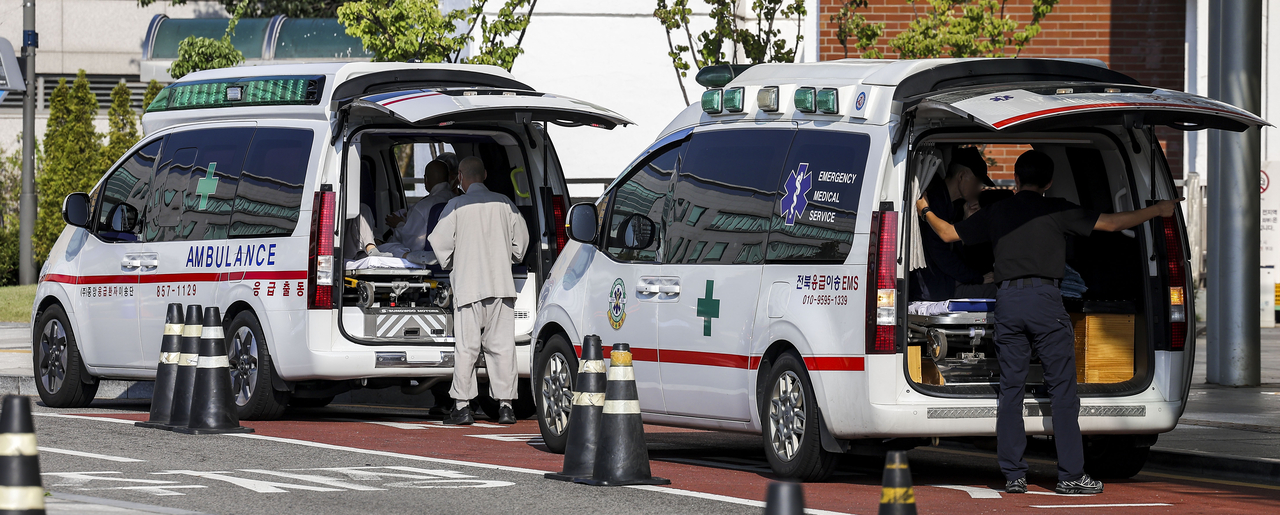
South Korea saw a sharp rise in the number of emergency patient transfered to more than one hospital during this year’s extended Lunar New Year holiday, as over 100 patients were denied treatment at the first hospital they were taken to.
This figure marks an increase of more than double the 45 cases reported during last year’s four-day Seollal holiday, reflecting the continued strain on the nation’s medical system amid the yearlong doctors' strike, started when junior doctors resigned on mass on Feb. 20, last year.
According to the National Fire Agency, around the Lunar New Year holidays Jan. 23-30, emergency services had to transfer 104 patients to a second hospital after the first facility was unable to admit them.
This figure marks the highest number of emergency room patients transfered to a second hospital during Seollal in the past five years, surpassing 62 cases in 2021, 81 in 2022, 51 in 2023 and 47 in 2024. Amid the ongoing doctors' strike, the extended holiday, made longer by the government’s designation of Jan. 27 as a special public holiday, possibly added to the pressure.
While the total number of cases jumped, the daily average -- 13 cases in 2025 versus 12 during Seollal 2024 -- remained relatively stable. Last year's Seollal holidays were both shorter than this year's, as well as occurred Feb. 9-12, before the doctors' strike began Feb. 20.
Gyeonggi Province reported the highest number of transfers to additional hospitals (29 cases), followed by: Daegu (18), Incheon (12), Gangwon (7), Jeonbuk (7), Seoul (6), Chungcheongnam-do (6), Chungcheongbuk-do (4), Gyeongnam (3), Jeju (3), Daejeon (3) and Sejong (1).
In a smaller number of instances, patients were transferred again to a third hospital. These cases happened in: Daegu (3 cases), Incheon (2), Daejeon (1), South Chungcheong Province (1) and North Chungcheong Province (1).
The fire agency did not state what it believes to be the reasons for this year’s transfers, but past trends suggest doctor shortages tend to play a major role. During last year’s Chuseok holiday, 48.2 percent of hospital transfers were due to a lack of specialists, reflecting the ongoing crisis in South Korea’s medical system.
Since February 2024, tensions over the government's plan to raise the medical school enrollment quota by 2,000 places starting this year sparked mass resignations of residents and specialists, straining emergency rooms in particular.
To ease holiday disruptions, the NFA had expanded emergency transport measures ahead of the holiday, such as distributing patients based on severity and increasing 119 emergency medical staff.
mjh@heraldcorp.com