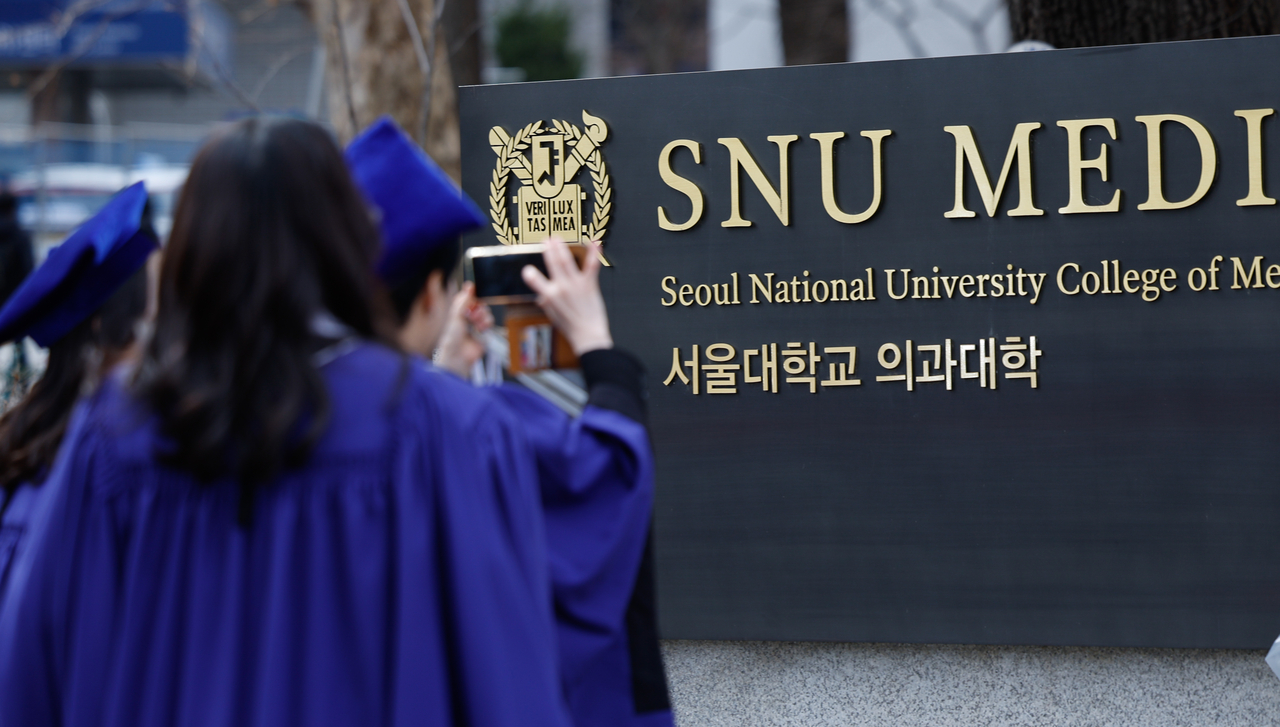
Top students in South Korea are turning away from engineering and flocking to medical schools even as the semiconductor industry remains a pillar of the national economy. Even guaranteed jobs at tech giants like Samsung Electronics and SK hynix postgraduation aren’t enough to keep them in semiconductor programs.
A recent analysis by Jongno Hangwon, a leading private education institute specializing in college entrance exam preparation, showed that 138 students admitted to South Korea’s top semiconductor departments ultimately declined their spots for the 2024 academic year. These programs offer students direct employment at major companies after graduation, yet nearly twice as many students withdrew as the number of available spots.
Doctors earn two to three times more than engineers in Korea
A major factor behind this trend is that doctors earn far more than engineers. According to South Korea’s Ministry of Health and Welfare, doctors' average annual income in 2020 was 230.7 million won ($159,000), more than three times the 70 million won ($48,000) earned by employees at large corporations, and nearly two times the 130 million won ($89,000) earned by employees in Samsung Electronics and SK hynix.
But it’s not just about the paycheck. Medicine also offers unmatched job stability and prestige in Korea. Whereas the semiconductor industry is affected by economic downturns and rapid technological shifts, becoming a doctor provides lifetime job security, as there is no official retirement age for doctors.
Adding to the shift is a major policy change: the South Korean government has been planning to increase medical school admissions by about 2,000 places starting in 2025. This move, though it has faced a major backlash from current junior doctors and medical students for the past year, has intensified the medical school craze.
Semiconductor programs struggle to attracts students
South Korea’s semiconductor contract programs -- run by top universities in partnership with Samsung Electronics and SK hynix -- are feeling the impact.
At Yonsei University and Sungkyunkwan University, which have programs tied to Samsung Electronics, 78 students declined their seats, a number 1.7 times higher than the original admissions quota of 47.
Yonsei’s Department of System Semiconductor Engineering was hit particularly hard, with 65 students backing out -- 2.6 times its available seats. Meanwhile, Sungkyunkwan University saw a 59 percent dropout rate, with 13 out of 22 accepted students walking away.
SK hynix-affiliated programs are facing similar struggles. At Korea University, Hanyang University, and Sogang University, 60 students rejected their admissions offers -- double the total available spots. Hanyang University’s program saw the worst dropout rate, with 36 students backing out -- 3.6 times its original quota of 10.
South Korea’s semiconductor industry is a global powerhouse, supplying chips for everything from smartphones to AI systems. But with top students turning away from engineering, a talent shortage in STEM fields could threaten the country’s long-term competitiveness in the field.
Despite high application rates -- competition for semiconductor programs is 7.3 applicants per spot -- the number of admitted students ultimately rejecting these offers is growing.
“Economic uncertainty in the semiconductor sector and increased medical school admissions will likely drive even more students toward medicine in the coming years,” said Lim Sung-ho, CEO of Jongno Hagwon.
mjh@heraldcorp.com