How to breathe life into fading craft traditions and incorporate time-honored works into modern-day products that people enjoy and use daily were among the topics discussed at Korea Craft and Design Foundation's first-ever Hanji Froum, held Dec. 13 at Coex in southern Seoul.
Referring to "hanji" -- traditional Korean mulberry paper -- as valuable cultural heritage, KCDF President Jang Dong-kwang, explained that the institution has been promoting the beauty of hanji through various projects.
"In an effort to elevate the cultural status of hanji, the foundation has established Hanji Cultural Industry Center in Bukchon, one of Seoul's representative traditional residential areas, and hosts contests on hanji to encourage creative works and ideas," Jang said in his opening remarks.
During the presentation session, Nakagawa Tomeo, a researcher at the Kanazawa National Crafts Museum in Japan, underscored the importance of making traditional arts accessible and relevant to modern society, citing the shrinking washi market in Japan due to the paperless trend. Washi is a traditional Japanese paper made from the fibers of the mulberry plant.
"To tackle the challenge, for example, several workshops that produce fusuma -- a sliding door partitioning an indoor space into small rooms -- started creating larger paper sheets so they could be used on sliding doors, taking in washi as a component for modern interior design," she explained.
Tomeo added that the ceiling above the bar counter at Starbucks near Takefu Central Park in Echizen City was created using traditional hand-made washi, balancing traditional and contemporary elements, noting that traditional crafts could be reflected in modern design language.
Several institutions in Japan also invite artists to experience washi at art camps. For example, the Imadate Contemporary Art Paper Exhibition and Imadate Art Camp offer lectures on traditional crafts to artists and sell raw materials used in traditional crafts. anytime.
Na Kyung-in, the CEO of Toolpress, a design studio company, said her way of weaving Hanji into modernity and promoting traditional paper was to "make products people want to buy." Among the products the company has created are calendars, posters and chocolate bar logos
"I wanted to create products that could wow people without them necessarily knowing that they were made with hanji. This could add a layer of surprise after they find out because most people do not think that items used in daily life could be made with hanji," Na said.
Lim Tae-hee, the director of LimTaeHee Design Studio, echoed that hanji can shape modern interior design driven by aesthetics.
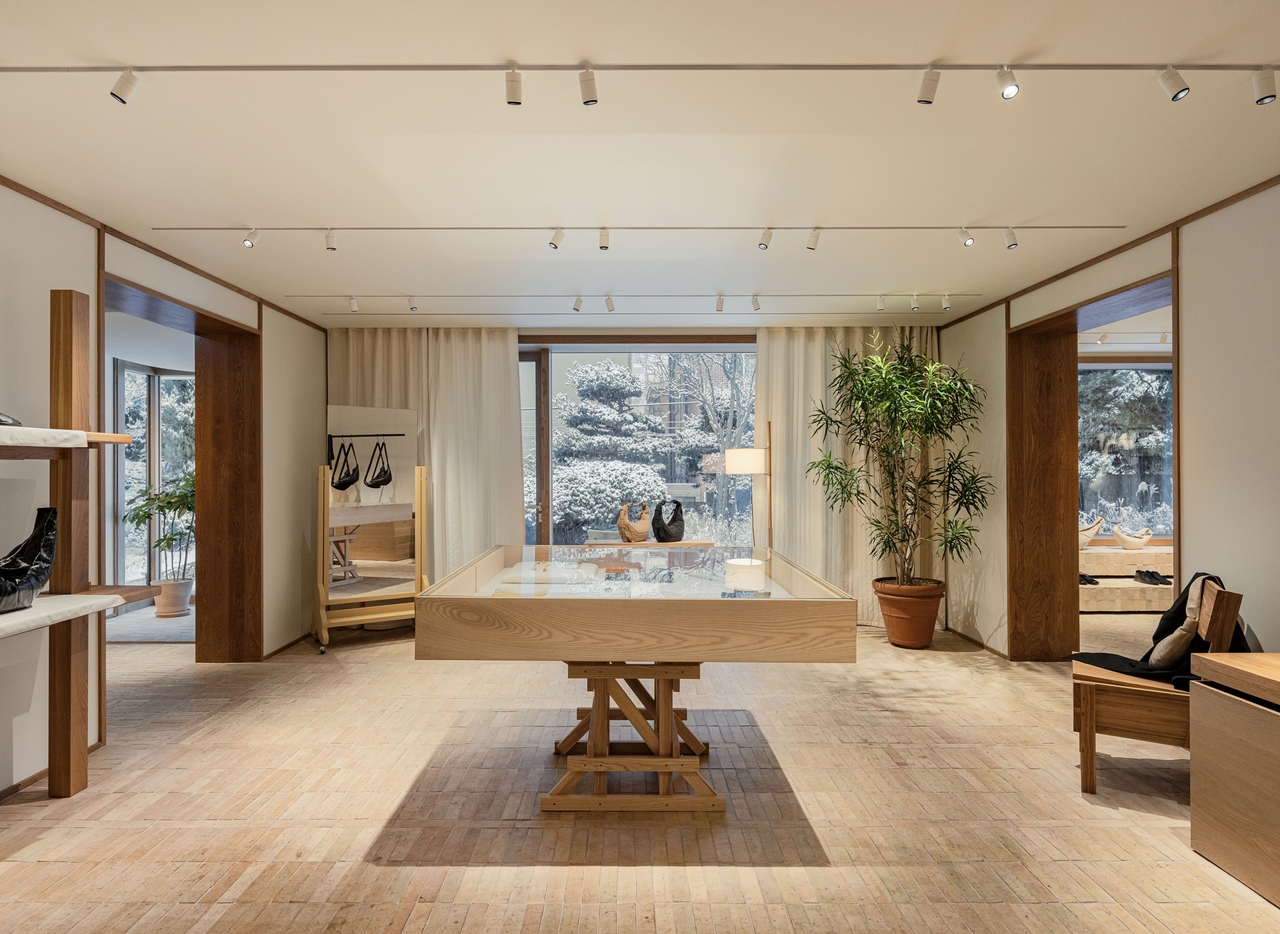
One of her well-known projects is French clothing brand Lemaire's first flagship store in Seoul that opened in November last year, for which she introduced Korean design to a modern, Western-style space.
"From the outside, the store looks like a contemporary building, but as soon as you enter, you can see that hanji is used on the walls. This brought Korean elements and warmth into the space. I believe this offered a fresh perspective on hanji's texture," Lim said.
junheee@heraldcorp.com