Kuwait Development Plan opens doors for wider commercial cooperation
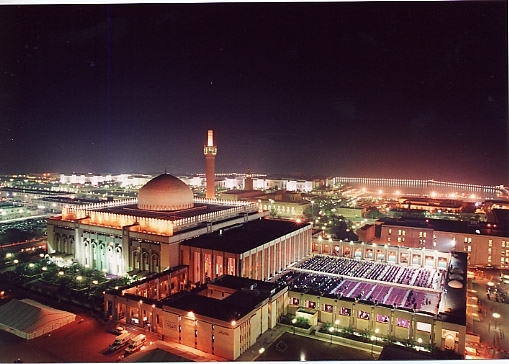
Korea and Kuwait established diplomatic relations at the ambassadorial level in June 1979. The friendly bilateral relations in the fields of politics, trade, economy and culture have developed steadily ever since.
The State of Kuwait is situated in the northeast corner of the Arabian Peninsula, bordered by the Republic of Iraq to the north and the Kingdom of Saudi Arabia to the south and west. It also shares a maritime border with the Islamic Republic of Iran. Kuwait covers an area of 18,000 square kilometers, making it one-fifth the size of South Korea, and is home to a population of about 3.9 million, including approximately 1.56 million Kuwaiti nationals.
As a member of the Gulf Cooperation Council, Kuwait has a geographically small yet wealthy and relatively open economy dominated by oil and gas production. Kuwait is the fourth-largest economy in the GCC, with nominal gross domestic product of $181.6 billion and a per capita GDP of $53,000 in 2013. Oil and petroleum account for 64 percent of the GDP, 95 percent of export revenues and 80 percent of government income. Looking ahead, real GDP growth is expected to remain at over 4 percent in 2014, driven by expansion in government expenditure, oil production and exports, boosting the GDP to $184 billion.

According to OPEC’s official figures, Kuwait has the sixth-largest oil reserves in the world, estimated at 104 billion barrels, approximately 6 percent of total global reserves, and it is the world’s seventh-richest country per capita. In his speech at the 5th Asian Ministerial Energy Roundtable Meeting in Seoul in September 2013, Kuwaiti Deputy Minister and Minister of Oil Mustafa Al-Shamali reaffirmed Kuwait’s commitment to reaching the oil production target of 4 million barrels per day (bpd) by 2020, which would help ensure stable crude oil supply to Asia. Currently Kuwait’s daily output of oil exceeds 3 million bpd.
The trade relationship between Korea and Kuwait is substantial, with strong potential for further expansion in a broad range of areas no longer limited to crude oil trading. Kuwait is eager to increase the level of bilateral, mutually beneficial cooperation; in recent years the state-run Kuwait Petroleum Corporation and Kuwait Oil Tanker Co. have established a presence in Korea. The trade volume between the two countries continues to rise, amounting to $20 billion in 2012. Kuwaiti exports reached $115.46 billion in 2013, mainly consisting of oil and refined products and fertilizers. Kuwait’s top export partners include South Korea (16 percent), along with India (15.7 percent), Japan (13.4 percent), the U.S. (11.7 percent) and China (9.2 percent). On the other hand, imports from South Korea reached $36.54 billion and most of the imported items were food, construction materials, vehicles and parts, and clothing. Top imports partners were the U.S. (11.8 percent), China (9.2 percent), Saudi Arabia (8.3 percent), Japan (8.2 percent), South Korea (7.0 percent) and India (4.6 percent).
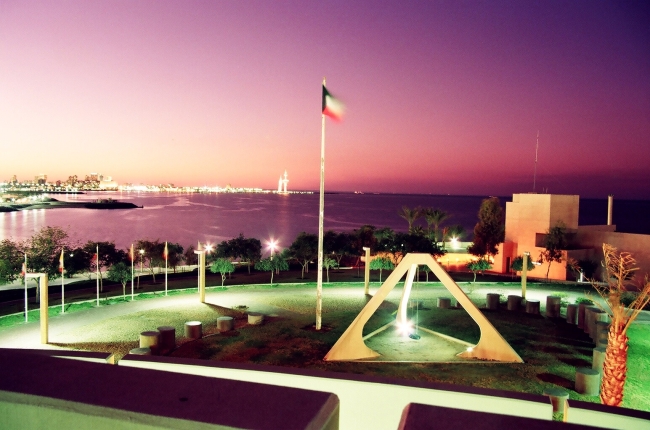
In 2010, Kuwait passed a historic and ambitious development plan called the Kuwait Development Plan, pledging to spend up to $130 billion over five years. The new plan aims to turn Kuwait into a regional trade and financial hub through economic diversification, and to modernize Kuwait’s state infrastructure, as well as bolster private sector partnerships. The plan to diversify its oil-reliant economy and modernize the country includes boosting crude and gas production; building a subway system and rail network, and new hospitals, roads and power stations; expanding the airport; and facilitating long-awaited projects such as the multi-billion dollar Silk City project, Boubyan Port and the Subiya Causeway. The Kuwait Development plan seeks the active participation of the private sector through public private partnerships to jumpstart the development of the aforementioned projects.
There is a considerable scope for Korea and Kuwait to further develop their bilateral commercial relationship in both the oil and non-oil sectors. The opportunities are enhanced by the implementation of the Kuwait Development Plan in 2014, representing significant opportunities for Korean companies, as demonstrated already in the recent case this month of Korean companies securing multi-billion-dollar oil refinery and petrochemical plant projects in Kuwait.
koreaherald@heraldcorp.com











