NEW YORK (AP) ― The youngest person in the 1965 march in Selma, Alabama, demanding voting rights for African-Americans said Sunday she still has the scars inflicted by police with attack dogs.
Lynda Blackmon Lowery was 15 when she joined Martin Luther King Jr. and thousands of other nonviolent demonstrators in the historic march now portrayed by an Oscar-nominated film. She spoke at the New-York Historical Society a day before the federal holiday marking King’s birthday.
“Steady, loving confrontation.’’ Those were the first words Lowery said she heard from King. “And those three words changed my life,’’ she said. Lowery, who still lives in Selma, wrote a memoir titled “Turning 15 on the Road to Freedom.’’
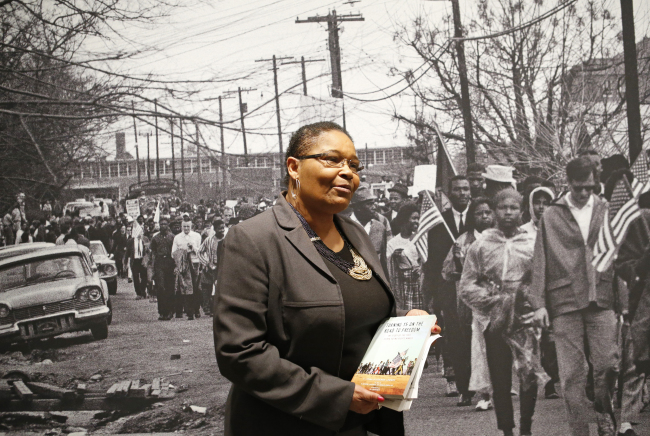
The now-64-year-old mother and grandmother showed the scar on the back of her head from a beating at the hands of an Alabama state trooper during an earlier march when she was 14. It took 28 stitches to close the gash, and seven more for a cut above her right eye.
The audience on Sunday included children who came up to her for photos, asking her with questions like, “Why didn’t you fight back?”
She explained that they would have been killed if they did ― unarmed, confronting “a sea of white men on foot and horseback,” armed with rifles, bayonets, clubs and fierce dogs, plus tear gas.
“It was terrifying,” she said.
By the time she was 15, Lowery had been jailed nine times.
On Aug. 6, 1965, President Lyndon Johnson signed the Voting Rights Act into law.
Lowery said she has gone to see the new film “Selma” but had to leave during the scene in which troopers and police attacked protesters at a march dubbed “Bloody Sunday” that preceded the famed, peaceful one on March 21, 1965.
During the earlier march, authorities ordered several hundred marchers to stop at a bridge outside Selma. And when they quietly kept walking, the authorities viciously attacked.
“I just couldn’t watch it,’’ said Lowery.
After that day, she said she had to fight her fear to join the bigger march “because I was sure they would kill me.’’
koreaherald@heraldcorp.com











