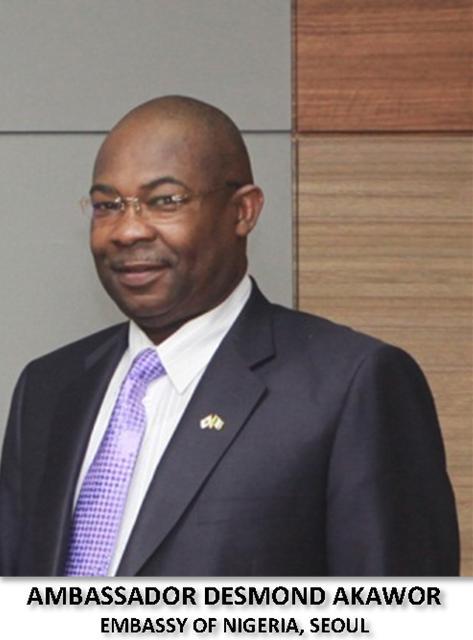
The following article was contributed by Nigerian Ambassador to Korea Desmond Akawor to celebrate the 53rd anniversary of Nigeria’s Independence Day. ― Ed.
Development experts have stressed the importance of increased investment in the face of current harsh economic realities. Nigeria’s 53rd independence anniversary celebrations on Oct. 1 provide an opportunity to highlight recent efforts that have made it a prime destination for foreign investment and one that ensures some of the highest return on investments in the world.
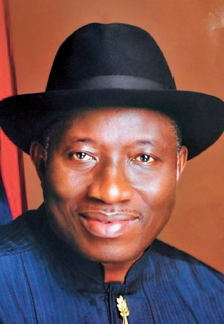
President of the Federal Republic of Nigeria Goodluck Ebele Jonathan has established an economic team that includes experienced and reputable members and has announced plans to increase transparency, diversify growth, and improve fiscal management.
On top of investment commitments of over $500 billion and reports by world industrial giants that projects are at various stages of execution in Nigeria, observers have said that the image for Nigeria has improved.
This is shown by the new interest in the Nigerian economy, with presidents and trade ministers from advanced economies visiting Nigeria to explore trade and investment relationships.
Gains so far
Recently, Nigeria was ranked as one of the four major investment destinations and growth areas in the world. KPMG, one of the world’s foremost audit, financial and tax advisory firms, said Nigeria’s newfound status followed disappointing returns in the BRICS, with the exception of China.
In the same vein, the United Nations Conference on Trade and Development’s World Investment Report 2012, subtitled “Towards a New Generation of Investment Policies,” also placed Nigeria as Africa’s biggest destination for Foreign Direct Investment in 2011. According to the report, Nigeria received $8.92 billion in FDI. South Africa was ranked second in Africa with $5.81 billion.
Nigeria’s trade position
Nigeria has embarked on a multi-focus trade strategy to tackle the various challenges for domestic, regional and international trade based on their peculiarities. This has been yielding results. For instance, the Central Bank of Nigeria said in its External Sector Report for 2012 that “Nigeria’s trade balance improved significantly from $8.62 billion in Q2, 2012 and $1.60 billion in Q3, 2011, respectively, to $12.37 billion in Q3, 2012.
“Aggregate exports rose by 8.2 percent, from $22.53 billion in Q3, 2011 to $24.37 billion in Q3, 2012 while aggregate imports declined by 42.7 percent to $11.99 billion in the review period. The trade balance position improved due to lower imports of goods and services and increased exports earnings.”
This shows that the nation is shifting gradually away from being an import-dependent nation. Increasing exports imply increased domestic production, job creation and wealth generation. And all these are linked to growth-enabling policies in key sectors of the economy.
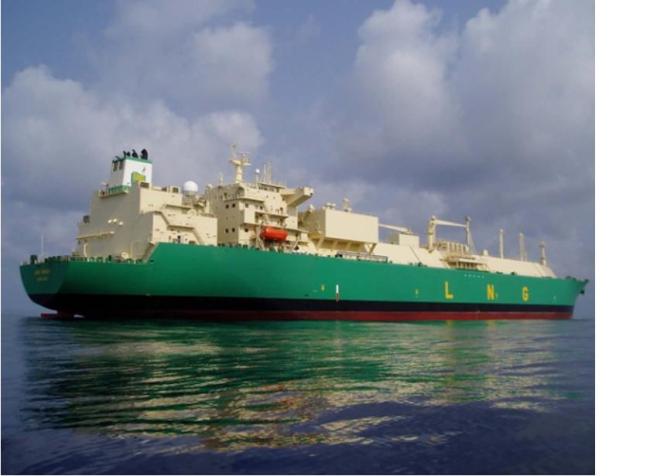
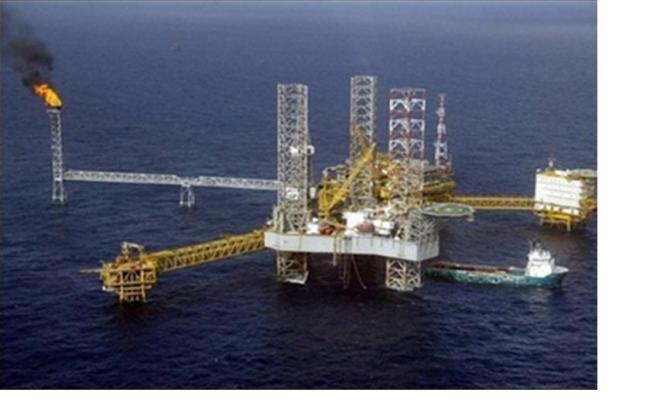
There are huge opportunities for foreign direct investment from South Korea. For instance, Bonny Gas Transport, a subsidiary of the Nigeria Liquefied Natural Gas Company Limited, has placed an order for six new LNG vessels with Samsung and Hyundai Heavy Industries, both of South Korea, at a total cost of about $3.2 billion. There are also opportunities in shipyard building, such as the Ibaka Deep Seaport, Brass LNG/Shipyard and Koo Oil & Gas Complex. Other potential areas for successful cooperation are in agriculture; mining, iron and steel development; security; construction; oil and gas; refineries and petrochemicals, diaspora fund remittance and others.
New investment promotion initiatives
Nigeria has commenced the implementation of the National Industrial Revolution Plan. The plan seeks to increase the contribution of industry to GDP; develop priority sectors to become leaders in Africa and top 10 industries globally; reduce dependence on imports; and create jobs. The aim of the plan is to place Nigerian industries in the front seat of inclusive economic growth and development.
Nigeria is rigorously implementing the backward integration policy used in the cement industry and other key sectors. It has developed a New Sugar Master Plan, which will deliver about 117,000 jobs, as well as 1.79 million metric tons of sugar, 161.2 million liters of ethanol and 411 megawatt-hours of electricity each year when fully completed.
Nigeria has also designed the Nigerian Automobile Industry Development Plan to provide the environment for the orderly development of the sector. These initiatives have already laid the foundation for ample job opportunities for those in the working group.
According to statistics by the Manufacturing Association of Nigeria, industrial capacity use has risen from 46.44 percent in 2010 to 48.24 percent to date. Capacity utilization in the textiles, apparel and footwear sector has significantly increased from 29.14 percent to 52.01 percent.
The federal government’s intervention in the textile industry has, in addition, resulted in the reopening of moribund textile mills, saved about 8,070 jobs and created 5,000 new jobs through the disbursement of the 100 billion naira ($62 million) CTG Intervention Fund. The Q1 2013 economic report of the CBN also said the federal government’s $1.13 billion non-oil sector earnings in the first quarter of 2013 were driven largely “by receipts in the industrial sector.”
SME development
Many activities point to the fact that the small and medium enterprise sector is being targeted for improved performance. First, the national SME policy is ready for launch. This is the first time such a policy will be in place. To tackle complaints about a lack of coordination of the activities of agencies in charge of developing SMEs in Nigeria, Nigeria has developed the National Enterprise Development Program. The Bank of Industry has also increased its focus on SMEs to 85 percent of its commitments in total. According to BOI, in the last year there was a 30 percent increase in the number of cumulative loans approved, a 67 percent increase in cumulative value of loans and a 161 percent increase in jobs created.
The government is working toward developing stronger public-private partnerships for roads, agriculture and power.
Nigeria’s financial sector was hurt by the global financial and economic crises, but the Central Bank governor has taken measures to restructure and strengthen the sector to include imposing mandatory higher minimum capital requirements. Nigeria clearly has a competitive edge in the international capital market, and the country’s economic growth is robust with the inflation rate projected to remain in single digits throughout 2014. The Nigerian economy grew on average above 6 percent in the last decade and is projected to grow by 7.6 percent in 2014. Total investment as a percentage of gross domestic product was 22 percent in 2012 and is projected to increase by 23.6 percent in 2013.
The risk of overheating that makes international capital sometimes undesirable is minimal, as the economy possesses deep absorptive capacity especially in infrastructure investments. In fact, there is a renewed drive for public-private partnerships as a deliberate policy of government with several incentives. There is also the opportunity for higher returns on investments on account of the interest rate differential between the country and most developed countries.
Sovereign wealth fund
The federal government has also established a sovereign wealth fund to shield the Nigerian economy from adverse global shocks. The fund of about $1 billion was created to redistribute oil wealth for the benefit of the present and future generations. It will also help in providing critical social infrastructure to stimulate private sector investments for economic growth.
Due to the various reforms, the nation’s external reserves increased from $44.2 billion in December 2012 to $46.9 billion in August 2013. Nigeria has become an investment destination in recent years because of its steady economic growth and favorable economic policies.
AMCON is consistently addressing the issue of loan repayments and the restructuring of bad debts in commercial banks. This has created a safer and less risk-prone banking system. The government is also focusing on public-private partnerships to drive the economy toward higher returns on investment.
The world’s richest economies have issues today they have not faced before ― large budget deficits, fiscal consolidation, low growth. In Africa, we are now a high-growth environment. Six of the 10 fastest-growing economies are in Africa, Nigeria being one of them. Seven of the 10 fastest growing by 2015 will be in Africa, and Nigeria will be one of them. We are in a very different economic and political situation today. Nigeria has grown at an average rate of 8.8 percent over the last 10 years. When you look at the debt-to-GDP ratio, it is under 20 percent. The average in Europe is 18.4 percent.
Nigeria is far more stable and stronger than ever. We have had unbroken democratic rule for the past 14 years. We have had three changes in government. In 2011 we had an election that was described locally and internationally as the freest and the fairest ever in the country.
Exchange rates have remained stable. So it is not a surprise that Nigeria, for the first time, was the No. 1 investment destination in Africa in 2011, attracting $8.1 billion ― 46 percent higher than in the previous year. In 2012 Nigeria retained its lead.
As a country, we have done very well in attracting investment. That is not a surprise because the United Nations Conference on Trade and Development World Investment Report ranks Nigeria at No. 4 globally in return on investment at an average rate of 35.5 percent compared to a global average of 7 percent. Based on those returns, our goal is to attract more than $30 billion worth of investment per year, because the opportunities there are huge.
In the past, we were satisfied with exporting raw materials and buying back finished products, which means exporting jobs. You use the proceeds from the sale of the raw materials to buy finished goods ― a mistaken policy that we have followed for decades. All that has changed. The game now is industrialization ― it’s about adding value.
For example, in agriculture we have a competitive advantage because we have 84 million square hectares of arable land, and only 40 percent of that is cultivated. We have very good climate for agriculture and almost anything and everything can grow in the country. If you look at cotton, it will grow in 23 states in the federation. But it is not just about cotton, cocoa, sugar cane or palm kernel. It is what you do with those commodities. Rather than just exporting the raw materials, now it is about industrial processing.
Action on Nigeria’s longstanding power shortage
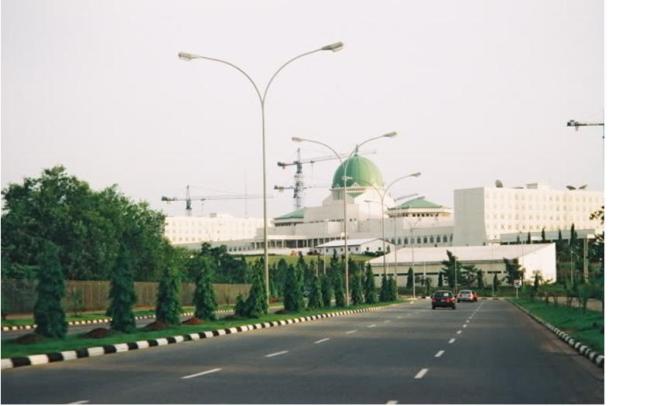
Our policies are making it very easy for investment to flow into different sectors of the economy. The bedrock of all this will be infrastructure and power. The electricity sector reform, which started in 2000 with the issuance of the National Electric Power Policy to unbundle the sector and develop a competitive electricity market, has made significant progress with the final acquisition of the power assets in the country.
For example, the ownership of 70 percent of the gas-fired Egbin Power, Nigeria’s largest generating plant (1,320 MW), and one of its best performing, was sold to KEPCO Energy, a joint venture between the Korean Electric Power Corporation and Nigeria-owned Sahara Energy, at a cost of $407 million in February 2013. The privatization process has generally been well received, attracting hundreds of bids for the other generating companies. Power China is committed to generating 20,000 megawatts of power in Nigeria in the next 10 years. That is about $20 billion in investment. Electobras from Brazil has signed an MOU to build 10,000 megawatts of hydroelectric power generation capacity at close to about $10 billion. Siemens and GE have said the same thing.
To make it easier for investors and to remove the risk, we have set up a bulk trader to buy power from the generators and work with distribution companies. For power providers, because of the bulk trader it is almost guaranteed income and is sustainable over a long period of time.
Nigeria is also examining laws affecting investment in the country. We have an insolvency bill going to the national assembly. We have anti-trust and consumer protection bills going to the national assembly. So these are some of the initiatives Nigeria is doing to make sure that we have the right environment for investors.
Nigeria emerges as Africa’s biggest destination
In 2011, Nigeria emerged as Africa’s biggest destination for foreign direct investment with FDI inflow of $8.92 billion, according to the World Investment Report 2012 by the United Nations Conference on Trade and Development. Investment in infrastructure will ensure that Africa remains on a sustainable growth curve. More FDI is likely to occur in countries with good physical infrastructure such as electricity, rail transportation and bridges, because it increases productivity. FDI inflow to Africa has exceeded official development assistance since 2005. While this is a welcome development, the rapid rate of urbanization has led to an increasingly urgent need to fill gaps in infrastructure.
So Nigeria wants its development partners in Korea, especially the private sector, to play a leading role in our commitment to localization and a genuine development partnership. The government is working hard to modernize and harmonize the regulatory environment to become more competitive, more growth-friendly and investment-friendly. Investor confidence is being strengthened by policy continuity and commitment to contracts and projects.
While underscoring the importance of investment security, there is also a strong emphasis on transparency, a strong judiciary and a good process for adjudication of disputes, law enforcement and improved civil society.
Need for Korea-Africa centered policy
Within 10-20 years, Africa’s total output will be $1.5 trillion-$2 trillion. The region has 80-90 percent of the world’s chromium and platinum group metals, 10 percent of its oil reserves and 40 percent of its gold. Our continent also has some of the largest deposits of iron, uranium and copper. It has roughly 600 million hectares of arable land, of which 15 percent is developed. Water resources amount to 4,600 square meters per capita, more than in Asia.
The African story, however, is not only about natural resources. A great revival is taking place in our telecommunications, retail, finance and other sectors. More Africans have disposable incomes and the middle class is expanding. More than 60 million Africans have an income of $3,000 a year and this figure will surpass 100 million in a couple of years. The Africa Development Bank now reports that more than 350 million Africans, a third of the population, are middle class.
The media, particularly in the West, is fixated on depicting Africa as a continent of conflict and natural disasters. This is definitely not the narrative of Africa today. More than 90 percent of countries in Africa have stable democratic regimes at peace with themselves and their neighbors. There are fewer armed conflicts now in Africa than ever before, and we are taking the lead in ensuring a quicker return to stability in countries affected by armed conflict through more robust frameworks designed and implemented by the African Union, ECOWAS and other regional organizations.
Democracy, political and economic stability are taking root in Africa. Our economies are becoming more open, our societies more tolerant, and our budgets more balanced. Our debt burdens have fallen as have the rates of inflation all over the continent. The result is greater growth than ever before. Africa’s doing business rankings and transparency indicators are increasing, as is the number of companies looking to invest. All over the continent it is becoming easier to register businesses; tax systems are becoming clearer, investment protection laws stronger, and fiscal management more prudent.
Africa is the new frontier for economic growth and investment. We are the best place for investment in the world; our consumer markets are growing; and the consciousness of return and the synergies for growth, dignity and freedom that this return could bring about are more robust. Whilst there are some remaining challenges, Nigeria, like many other countries on the continent, is moving on to ensuring international best practices in its mineral laws and providing fiscal incentives for enterprises in mining, infrastructure, agribusiness, tourism, value addition and renewable energy.
Since the Republic of Korea and the Federal Republic of Nigeria established diplomatic ties in February 1980, Nigeria has been one of the most important friends of Korea on the African continent. In 2011, bilateral trade volume between the two countries exceeded $3 million, making it the second-largest trading partner for Korea in Africa. Many of Korea’s top enterprises operate in Nigeria, in sectors such as trade and energy.
Exchanges of high-level government officials have been active as well. Since the first visit of then-President Obasanjo to Korea in 2000, President Roh Moo-hyun visited Abuja in 2006, followed by the second visit by President Obasanjo later that year. In 2010, former Korean Prime Minister Chung Un-chan visited Abuja as the special envoy to congratulate the 50th anniversary of Nigeria’s independence and the 30th anniversary of the establishment of diplomatic relations. Most recently, President Goodluck Jonathan, GCFR, visited the Republic of Korea to attend the Nuclear Security Summit.
In addition to its embassy, Korea has two other important institutions located in Abuja: the Korean Cultural Center Nigeria, and the Korea International Cooperation Agency. The former actively promotes cultural exchanges between Korea and Nigeria, while the KOICA office helps coordinate Korea’s grant aid implementation in Nigeria under the auspices of the embassy. In Lagos, Korea maintains branch offices of the embassy and the Korea Trade-Investment Promotion Agency (KOTRA).
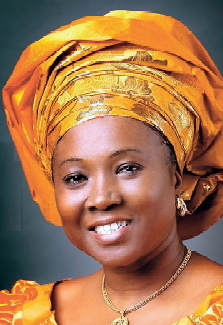
To review some agreements already entered into between Nigeria and some Korean investors in Nigeria and strengthen our commitment to sustaining the economic growth of recent years, the minister of foreign affairs, professor Viola Adaku Onwuyili has endorsed that the Fifth Joint Commission between Nigeria and Korea be held in Seoul in November.
Besides, Nigeria, in its transformation agenda, is also advocating for its firms to invest abroad. In an age of deepening relations between Korea and Nigeria, the low number of Nigerian companies investing in Korea is a cause for concern. This means the need for innovation and flexibility in taking advantage of our cultural differences through bilateral cultural exchanges, and surmounting the financial and political obstacles, in such a dynamic environment. Deepening relations could arguably promote a better flow of goods, services, technologies, ideas and resources between the two countries and unlock their potentially great markets.
By Desmond Akawor (Ambassador of Nigeria)
koreaherald@heraldcorp.com











