Recent years have witnessed deep geopolitical shifts that fundamentally changed the global landscape. Against the backdrop of global transformation processes, the role of the Asia-Pacific region is rising as a significant factor determining the mainstream of international developments, and becoming an influential player of emerging polycentric world order architecture.
Today the Asia-Pacific is a vital center of economic development and progressive political influence as well as an attractive area for cooperation, a cross point for interests of key stakeholders and major multilateral institutions.
Certainly, Russia being an integral and organic part of the region is also strengthening its presence here.
Intensification of the “Eastern” track policy, development of regional bilateral ties, and participation in intergovernmental structures are among Russia’s foreign policy priorities. This has been noted in the new edition of the Foreign Policy Concept of the Russian Federation signed by the President of the Russian Federation Vladimir Putin on Feb. 12.
The logic of Russia’s foreign policy in the Asia-Pacific proceeds from the recognition that creation of an advanced environment of international relations in the region in line with modern realities is of crucial importance.
We advocate a nondiscriminatory regional order without any imposition of unilateral approaches, any division into leaders and supporters but with interstate communication based on trust and mutual respect.
Asia-Pacific countries have made outstanding pace in this direction. The foreign ministers of East Asia Summit member states at their last meeting decided to launch multilateral consultations on regional security. In fact, consensus was reached on the necessity to develop the most reasonable approaches to strengthen security and develop interaction, to seek arrangements on mutually acceptable rules of the game.
Russia believes that such architecture should be based on the indivisibility of security, peaceful settlement of disputes, non-use of force or threat of force, rejection of confrontation and cooperation directed against third countries and partnership between multilateral organizations.
In order to achieve these goals we aim to promote and strengthen economic integration with a primary accent on the Asia-Pacific Economic Cooperation forum.
In 2012 Russia presided over the APEC forum for the first time and, according to partners’ assessments, we coped quite well with this mission.
On the eve of the forthcoming APEC summit scheduled for Oct. 7-8 in Bali, I believe it is necessary to point out that Indonesia ― the present APEC chair ― has ensured a proper succession of the forum agenda. Support of the multilateral trading system and attaining the Bogor Goals remain the key tasks.
We consider it important that free trade agreements should cope with the WTO principles and be as open as possible for all. It is counterproductive to develop free trade zones, because they ignore the interests of other countries, especially regional neighbors.
This is the approach Russia, Belarus and Kazakhstan are committed to as member states of the Customs Union. By now, we have made significant progress in establishing a powerful regional development center ― the Single Economic Space ― aiming at creating the Eurasian Economic Union by Jan. 1, 2015, and thereby forging a link between Europe and the Asia-Pacific. We believe that interaction between the Customs Union and APEC could serve our common interests.
Russia is ready to contribute to the discussion on sustainable growth with equity proposed by the Indonesian chairmanship.
Issues of energy security in the Asia-Pacific deserve special attention. In the framework of APEC constructive discussion pertaining to their “green” and environmental components continues.
We are continuously committed to further cooperation in other areas to ensure secure development in the region, first of all in the framework of the APEC consolidated counterterrorism and secure trade strategy. It is important to promote interaction in preventing corruption, illegal trade and other types of organized crime.
Another priority proposed by Indonesia for APEC ― strengthening regional connectivity to create a comprehensively integrated Asia-Pacific community ― also provides broad cooperation opportunities. Russia considers these tasks timely and reasonable.
In order to ensure innovative development we will participate in coordinating measures to facilitate cross-border movements of students, researchers and education service providers.
This year Russia became a full member of the successfully functioning APEC Business Travel Card system that was specifically set up to facilitate visa procedures. We believe that this would intensify contacts between entrepreneurs and officials responsible for economy-related matters and thus expand trade and Russia’s economic cooperation with other APEC member economies.
In short, Russia proposes a transparent policy and economic agenda for the region. Our goal is equal cooperation of all countries with no exception in order to strengthen peace, stability and prosperity in the Asia-Pacific.
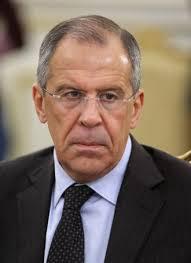
By Sergey Lavrov
(Foreign minister of Russia)
koreaherald@heraldcorp.com











