WANGQING, China (AFP) ― High in the mountains of northeastern China, conservationists looking to preserve the endangered Amur tiger ― the world’s largest living feline ― are releasing deer into the area for the big cats to kill and eat.
Hundreds of the animals, also known as Siberian tigers and scientifically as Panthera tigris altaica, once roamed the lush pine and oak forests of Manchuria, but only around 20 still survive in the wild.
Historically, China’s shamanistic Manchu people both revered and hunted tigers, with the Qing dynasty Kangxi emperor claiming to have killed 135 with bow and musket, according to Peter Dekker, an independent researcher of Qing dynasty weapons.
China was once home to several tiger subspecies, but now their legacy endures more in folklore ― “Where there are mountains, there are tigers,” goes one old saying ― than in the flesh.
Conservationists cite increased human settlement, logging and poaching of both tigers ― for use in Chinese medicine ― and prey as among reasons for the dramatic population fall.
“The prey numbers are very low in comparison to other countries,” said Rohit Singh of global conservation organization WWF’s Tigers Alive Initiative.
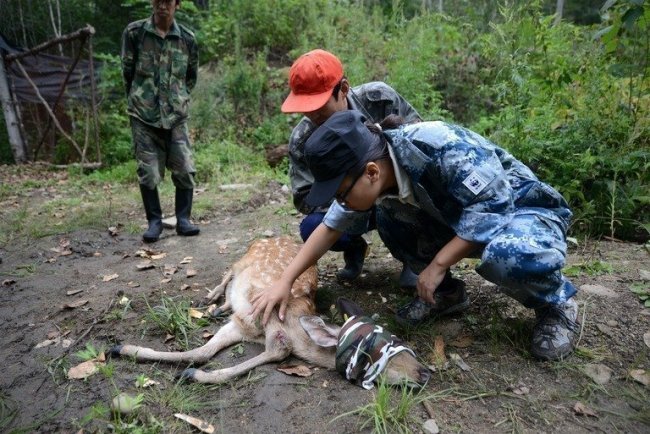
WWF has a project to increase deer numbers in the Jilin Wangqing National Nature Reserve in an effort to give the tigers ― and even more endangered Amur leopards ― a chance to thrive and multiply.
In 2012 a total of 37 deer were released into the area, while last month a similar number were let go to feed the felines.
But the tigers’ appetite is huge.
Dale Miquelle, Vladivostok-based director of the Wildlife Conservation Society’s Russia Program, said one tiger needs to kill about 50 deer or wild boar a year to survive, and a prey population about 10 times that size was needed for the kill rate to be sustainable.
“Whether it be red deer or sika deer or wild boar, you need a relatively large number of animals,” he said by phone from Russia, home to a far bigger Amur tiger population estimated at about 350-400.
“Ultimately the process will be about making sure that these (prey) animals are protected from poaching and that they have the area to expand their populations and that their habitat isn’t being destroyed by other activities,” he said.
The Wangqing reserve is part of a corridor linking the Amur tiger population in China with the one in Russia, less than 100 kilometers away.
koreaherald@heraldcorp.com











