These are fictitious accounts of events commonly encountered by women and men in a day according to their gender. ― Ed.
For Kim, a 35-year-old office worker, his day is fraught with danger ― that of being seen as biased against women or inadvertently offending them.
Although he has no intention of causing offense, he feels that there are too many opportunities for misunderstandings that could land him in trouble, particularly since sexual harassment has become a major social issue.
For Kim, riding Seoul’s jam-packed subways during rush hour is a nightmare. In order to avoid potentially offensive contact with female passengers, he keeps his hands in his pockets or grasps handles or poles with both hands at above shoulder level.
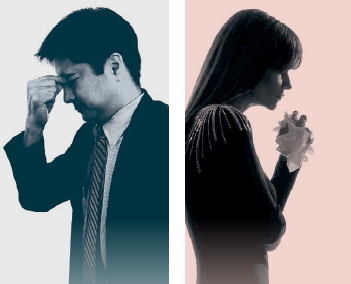
Kim says that his worries are not over even when he is lucky enough to get a seat on buses or subways, as he has to keep his legs as closely together as possible to avoid leaning on female passengers. In the summer when more revealing clothes are prevalent, trying to avoid potential misunderstandings becomes a more difficult task. When walking up stairs or riding escalators in public areas, he keeps his eyes directed at the floor if there are women walking ahead of him.
The office is no exception for Kim in presenting worrisome situations. Whereas physical contact is his primary concern in public areas, Kim becomes more concerned with verbal slipups.
He tries to use the word woman instead of female whenever possible ever since he was told by a women’s rights activist that the latter is more commonly used in derogatory sentences referring to women.
While he has no problems with anti-sexual harassment programs in general, he says that he can’t help feeling that men are being subjected to prejudice and offensive generalizations when such programs are made mandatory for all men at his company.
koreaherald@heraldcorp.com











