The South Korean government will implement plans to boost the nation’s persistently low birth rate this year, with a focus on creating favorable conditions for child-rearing, it announced Monday.
In a briefing to Prime Minister and acting President Hwang Kyo-ahn on their policy direction for 2017, the relevant ministries released a set of measures to raise the birth rate, though many of them are already in place.
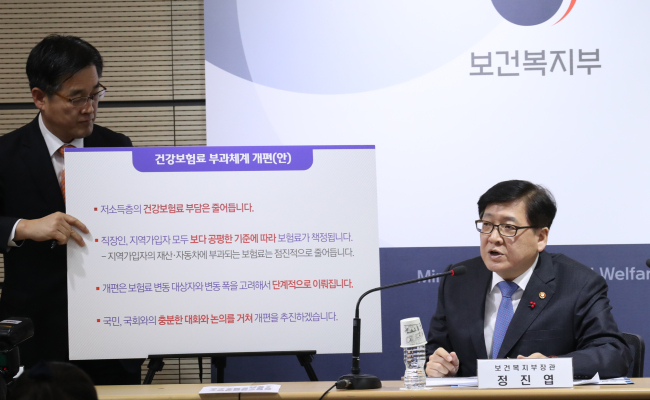
The Ministry of Health and Welfare said it will provide incentives, such as preferential treatment in the selection process for state-led projects, to private companies that create a working environment friendly to pregnant women and parents.
The ministry will also offer child care services during commuting hours in partnership with municipalities to take care of working parents’ children at public-run facilities such as libraries. It will add 410 more state-run day care centers.
For couples who have difficulties with pregnancy, the ministry will offer subsidies for infertility treatment, such as artificial insemination and external fertilization, to be covered by national health insurance, regardless of their income.
Under the plan, the ministry will also expand subsidies for families who have children aged 3 or younger to help them purchase diapers and powdered milk.
The measures come amid fears that the shrinking workforce will hurt the nation’s economic growth and raise the financial burden on the younger generation to support the aging population.
Korea has one of the lowest birth rates among the members of the Organization for Economic Cooperation and Development, with women expected to have 1.2 babies on average during their lifetime.
In addition to financial difficulties, an imbalance between work and family life as well as the social norm of women quitting their jobs once they are pregnant are cited as major reasons behind the reluctance to have babies.
To enhance work-life balance, the Ministry of Labor and Employment is set to offer subsidies to companies that allow employees to work from home or flexibly. It will also expand financial support to companies to set up day care centers at workplaces.
The Ministry of Gender and Family Affairs will also increase financial subsidies for single parent families from the low-income bracket. It will also help women whose careers were disrupted to raise children to enter the workforce again through counselling and education.
Other policies aimed at generating jobs and stabilizing people’s livelihoods are also to be put in place.
To create quality jobs and curb youth unemployment, the ministry will step up inspection on unfair labor practices to improve working conditions at small and medium-sized firms.
Through subsidies, it will encourage the firms to allow more employees to take parental leave, offer cash to the young who get a job at SMEs and crack down on employers, especially franchises, exploiting young workers.
The Gender Ministry seeks to submit a bill to more sternly punish stalking crimes, which now only carry a penalty of up to 100,000 won ($83). It will also expand education on violence against women at universities and marginalized areas including villages on mountains or islands.
The Education Ministry plans to change the current grading system to a score-based absolute grading system for the English section of the state-run college entrance exam to relieve the stress of students and curb private education.
The Health Ministry, meanwhile, will complete compensation for victims of the use of toxic humidifier disinfectants, while closely monitoring those deemed less directly affected by the toxic products. It said it will ramp up safety management on daily chemical products, amid criticism that the ministry’s lax monitoring led to 1,098 deaths caused by the use of harmful humidifier sterilizer.











